TSMC vs Intel vs Samsung: The Race to 1.4nm Chips
Key Takeaways
- All three foundries started 2nm production between mid-2025 and December 2025
- Intel pursues the most aggressive roadmap with simultaneous GAA transistors and backside power delivery
- Samsung prioritizes yield improvement over breakthrough scaling after SF2 launch
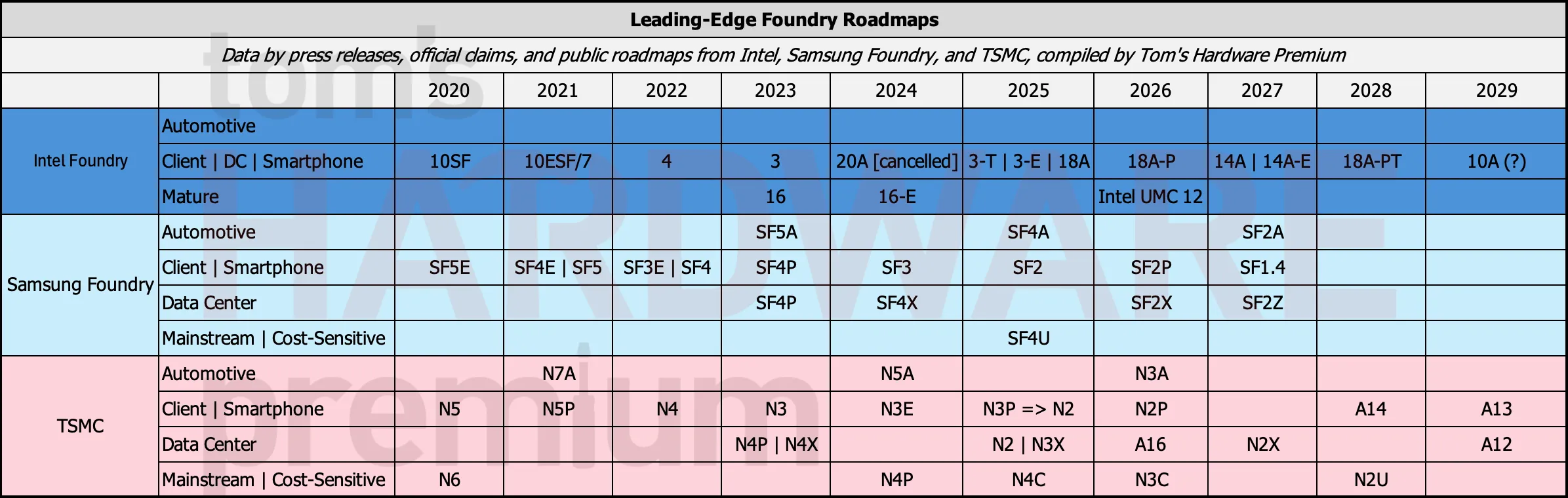
The semiconductor industry just hit a milestone. All three companies capable of manufacturing leading-edge chips have started producing 2nm-class processors within a six-month window.
Samsung fired first with its SF2 node around mid-2025. Intel followed in November with 18A production at its Oregon development lines. TSMC completed the trio in December, launching high-volume manufacturing of N2 chips at two Taiwan fabs.
What comes next separates these three companies more than their current nodes. Their roadmaps to 1.4nm and beyond reveal fundamentally different bets on technology, timing, and risk.
Why Only Three Companies Can Build These Chips
The capital, expertise, and experience required to develop leading-edge processes and build supporting fabs has narrowed the field to TSMC, Intel, and Samsung. Companies like Rapidus have yet to prove they can compete at this level.
All three foundries are shifting from traditional node scaling to a segmented, product-driven approach. But their priorities differ sharply.
Intel: Biggest Gamble, Biggest Potential Payoff
Intel's roadmap is the most ambitious and the most volatile. As both a foundry and an integrated design manufacturer, Intel needs cutting-edge fabrication to differentiate its own consumer and data center products.
The company bet on simultaneous implementation of two major technologies: gate-all-around (GAA) RibbonFET transistors and PowerVia backside power delivery network (BSPDN). Most competitors are adopting these technologies sequentially. Intel is doing both at once with 18A.
Intel also plans aggressive pursuit of High-NA EUV lithography in 2027 to 2028. That's years before rivals expect to adopt this next-generation patterning technology.
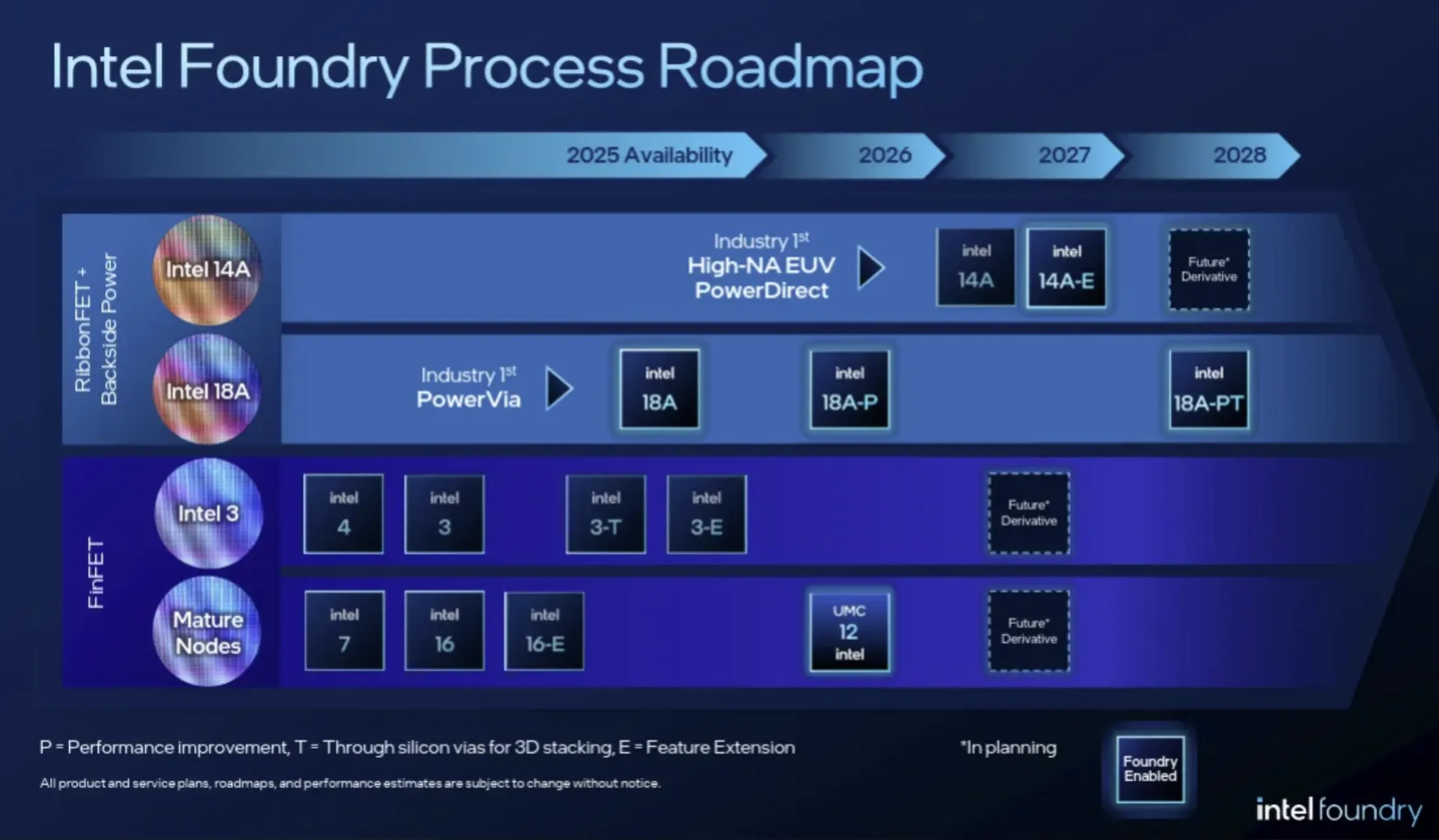
The risk: Intel's 18A production started at development lines in Oregon, not the production lines in Arizona intended for volume manufacturing. Whether the company can translate development success into high-volume yields remains unproven.
TSMC: Predictable Scaling With Strategic Splits
TSMC's approach prioritizes predictability and specialization over technological firsts. The company split its roadmap into two tracks: high-performance computing nodes with backside power delivery, and cost-optimized nodes without it.
This segmentation lets TSMC serve different customer needs. AI accelerator designers who need maximum performance can pay for BSPDN. Mobile chip makers who prioritize cost and density can use simpler processes.
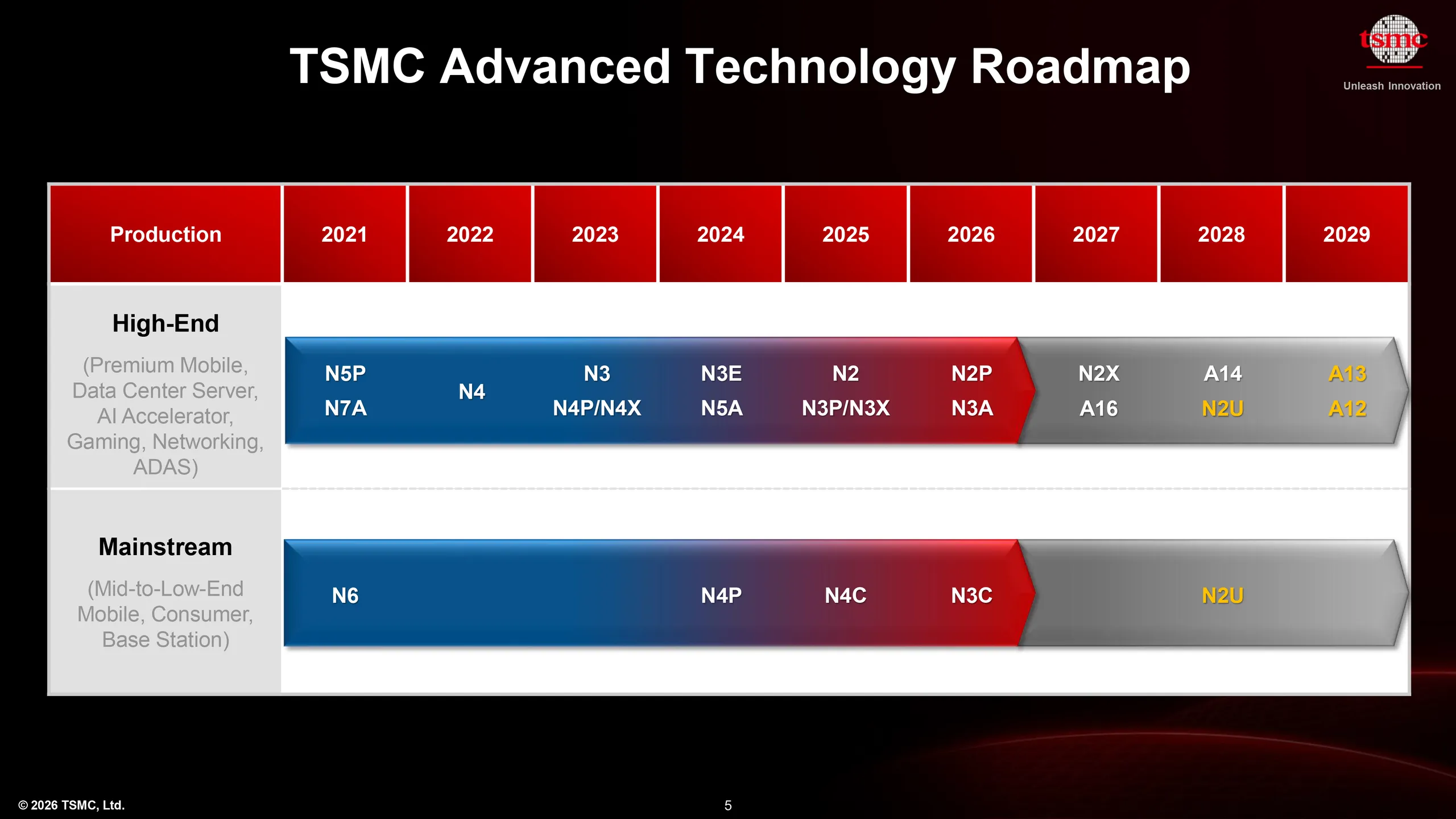
TSMC's December N2 launch at two volume fabs signals confidence in yields. Starting at multiple production facilities rather than a single pilot line suggests the company has already worked through major manufacturing challenges.
Samsung: Fixing Yields Before Chasing Breakthroughs
Samsung launched SF2 first but faces questions about whether it's a genuine new node or a rebadged version of SF3P. The company offers a wide range of node variants, but its current focus is yield improvement rather than scaling.
This pragmatic approach explains why Samsung trails competitors on backside power delivery implementation. The company appears to be prioritizing reliable production of current nodes over racing to adopt new architectures.
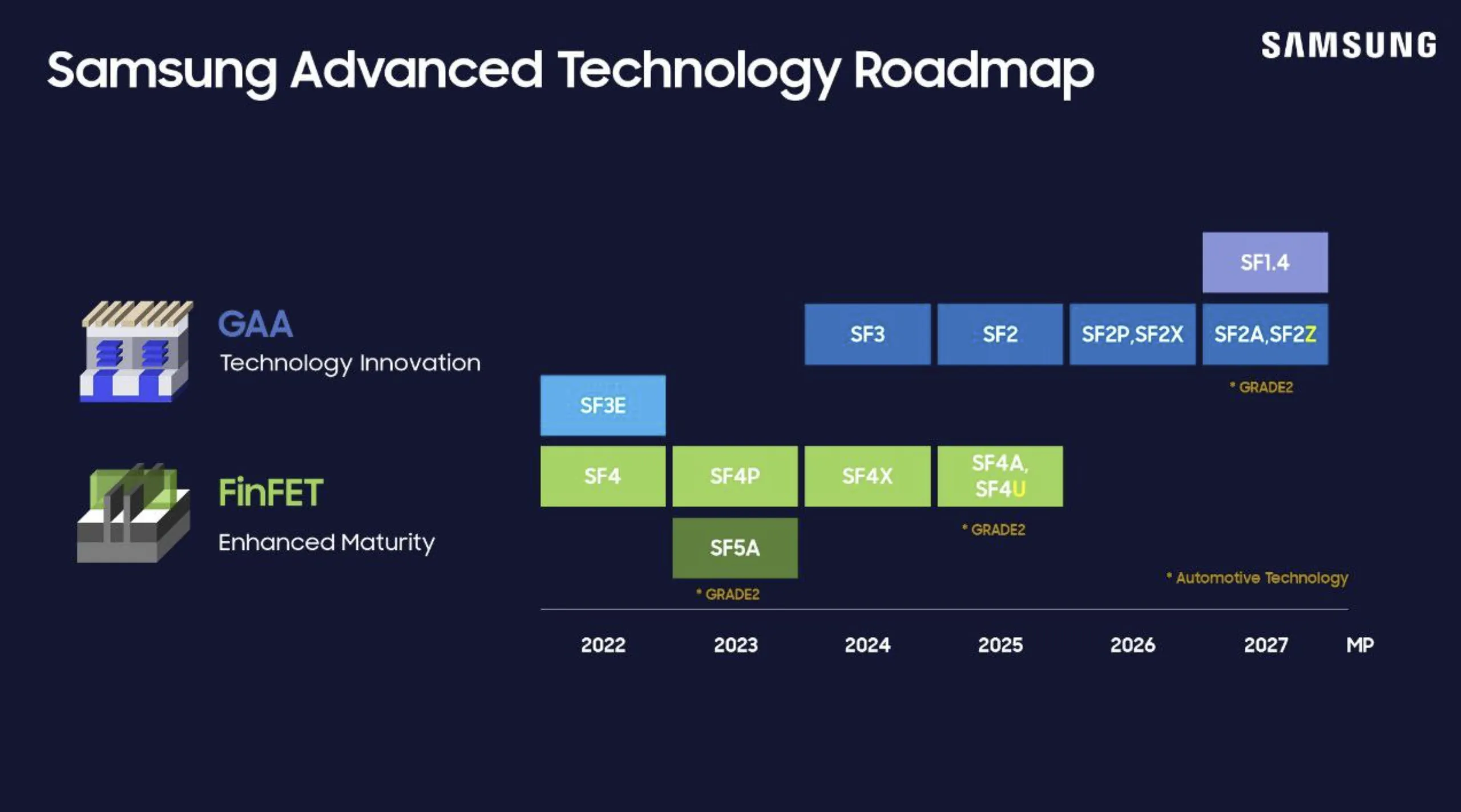
Samsung's roadmap looks more iterative than breakthrough-focused. For customers who value predictable delivery over bleeding-edge specs, that may be the right trade-off.
The Technology Bets That Matter
Three technologies will determine who leads at 1.4nm and beyond: gate-all-around transistors, backside power delivery, and High-NA EUV lithography.
- GAA transistors: All three foundries are adopting this architecture, which replaces FinFET designs. Intel calls its version RibbonFET.
- Backside power delivery (BSPDN): Routes power through the back of the chip, freeing up space for signals on the front. Intel leads with PowerVia; TSMC is splitting its roadmap around this feature; Samsung lags.
- High-NA EUV: The next generation of extreme ultraviolet lithography. Intel plans adoption in 2027-2028, well ahead of rivals.
Intel's simultaneous adoption of GAA and BSPDN is the riskiest approach. If it works, Intel could leapfrog competitors. If yields suffer, the company could fall further behind.
| Feature | Intel | TSMC | Samsung |
|---|---|---|---|
| 2nm Production Start | November 2025 (dev lines) | December 2025 (volume) | Mid-2025 |
| GAA Transistors | RibbonFET (18A) | N2 and beyond | SF2 and beyond |
| Backside Power Delivery | PowerVia (18A) | Split roadmap (HPC only) | Behind competitors |
| High-NA EUV Timeline | 2027-2028 | Later than Intel | Later than Intel |
What This Means for Chip Buyers
Companies designing chips face a strategic choice. TSMC offers the safest path with proven yields and flexible node options. Intel offers the most advanced technology for those willing to accept execution risk. Samsung offers competitive pricing and a company focused on production reliability over feature races.
The foundry you choose for a 2026 tapeout will depend on whether you prioritize time-to-market, absolute performance, or cost. No single foundry dominates all three.
Logicity's Take
Frequently Asked Questions
Which foundry started 2nm production first?
Samsung began SF2 production around mid-2025, followed by Intel's 18A in November and TSMC's N2 in December 2025.
What is backside power delivery and why does it matter?
Backside power delivery routes electrical power through the back of a chip instead of the front. This frees up space for signal routing, improving performance and density. Intel leads with its PowerVia implementation.
When will 1.4nm chips be available?
Intel plans High-NA EUV adoption in 2027-2028, which would enable 1.4nm-class production. TSMC and Samsung expect to reach this milestone later.
Why can only three companies make leading-edge chips?
The capital, expertise, and experience required to develop advanced process technologies and build supporting fabs is so high that only TSMC, Intel, and Samsung can currently compete.
Is Samsung's SF2 a real new node?
There's debate about whether SF2 is a genuinely new process or a rebadged version of SF3P. Samsung's current focus appears to be yield improvement rather than breakthrough scaling.
Need Help Implementing This?
Source: Latest from Tom's Hardware
Manaal Khan
Tech & Innovation Writer
اقرأ أيضاً

رأي مغاير: كيف يؤثر اختراق الأمن الداخلي الأميركي على شركاتنا الخاصة؟
في ظل اختراق عقود الأمن الداخلي الأميركي مع شركات خاصة، نناقش تأثير هذا الاختراق على مستقبل الأمن السيبراني. نستعرض الإحصاءات الموثوقة ونناقش كيف يمكن للشركات الخاصة أن تتعامل مع هذا التهديد. استمتع بقراءة هذا التحليل العميق

الإنسان في زمن ما بعد الوجود البشري: نحو نظام للتعايش بين الإنسان والروبوت - Centre for Arab Unity Studies
في هذا المقال، سنناقش كيف يمكن للبشر والروبوتات التعايش في نظام متكامل. سنستعرض التحديات والحلول المحتملة التي تضعها شركات مثل جوجل وأمازون. كما سنلقي نظرة على التوقعات المستقبلية وفقًا لتقرير ماكنزي

إطلاق ناسا لمهمة مأهولة إلى القمر: خطوة تاريخية نحو استكشاف الفضاء
تعتبر المهمة الجديدة خطوة هامة نحو استكشاف الفضاء وتطوير التكنولوجيا. سوف تشمل المهمة إرسال رواد فضاء إلى سطح القمر لconducting تجارب علمية. ستسهم هذه المهمة في تطوير فهمنا للفضاء وتحسين التكنولوجيا المستخدمة في استكشاف الفضاء.