Samsung Faces 18-Day Strike Over Bonus Pay Gap with SK Hynix
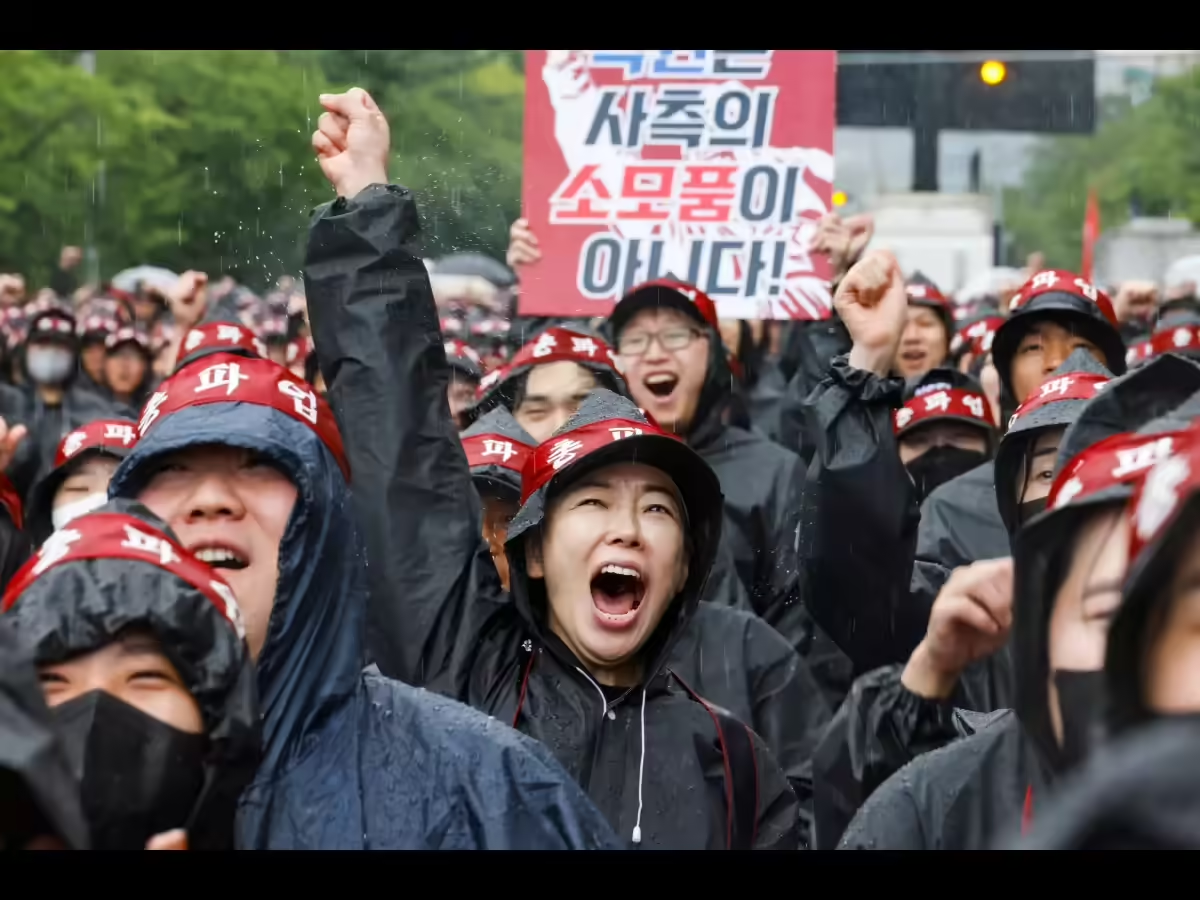
Key Takeaways
- Samsung's labor union has rejected company calls to resume pay negotiations
- An 18-day strike is planned from May 21 if demands for bonus transparency are not met
- Semiconductors now account for 37% of South Korea's exports, up from 20% a year ago
Union Rejects Samsung's Offer to Resume Talks
Samsung Electronics proposed on Thursday that its South Korean labor union return to pay negotiations. The company sent a letter to union leaders after government-mediated talks collapsed earlier this week.
The union's response was swift and negative. "There is no reason to continue the dialogue without institutionalisation and transparency," said union representative Choi Seung-ho. He was referring to the union's core demand: a complete overhaul of how Samsung calculates and distributes bonuses.
Samsung Electronics did not immediately comment on the rejection.
The SK Hynix Pay Gap at the Heart of the Dispute
At the center of this conflict is a perceived pay disparity with SK Hynix, Samsung's main rival in the memory chip business. Union members say Samsung's bonus scheme creates a massive gap compared to what SK Hynix pays its workers for similar roles.
The union isn't asking for higher base wages. It wants Samsung to make its bonus calculations transparent and to institutionalize a fairer system. Without these changes, workers say negotiations are pointless.
This isn't a new complaint. Samsung's bonus structure has been a source of worker frustration for years. But the comparison with SK Hynix has sharpened the grievance. Both companies compete for talent in South Korea's tight semiconductor labor market. Workers can see what their peers at the rival firm earn.
Strike Timeline: May 21 Deadline Looms
If talks fail, the union plans to begin an 18-day strike on May 21. That's a significant duration for any manufacturing operation. For Samsung's chip division, it could disrupt production lines that supply memory components to smartphone makers, data centers, and AI hardware builders worldwide.
South Korea's Labour Commission is trying to prevent that outcome. It has called on both sides to hold another round of government-mediated talks on Saturday. Whether the union will attend remains unclear given Choi's comments.
Why the Government Is Worried
South Korea's Finance Minister Koo Yun-cheol made the government's position clear on Thursday. A strike "should be averted no matter what," he said. He called it a significant risk to economic growth, exports, and markets.
The numbers back up his concern. Semiconductors accounted for 37% of South Korea's exports in April. That's nearly double the 20% share from April the previous year. The country's economy has become deeply dependent on chip sales, driven by AI demand and memory price recovery.
Samsung is the world's largest memory chip maker. Any production disruption would ripple through global supply chains. It would also hurt South Korea's trade balance at a time when the government is counting on chip exports to drive growth.
Samsung's Labor History
For decades, Samsung was known for avoiding unionization entirely. The company's founder built a corporate culture that discouraged collective bargaining. That changed in 2019 when the National Samsung Electronics Union formed and gained recognition.
Since then, labor actions have become more common. The union has staged walkouts and partial strikes before. But an 18-day stoppage would be the most serious action yet. It signals that workers believe they have enough leverage to force Samsung's hand.
The timing isn't accidental. Samsung is ramping up production of high-bandwidth memory chips for AI applications. Demand is strong. Prices are rising. Workers know the company can't afford extended disruptions right now.
What Happens Next
Three outcomes are possible. First, Samsung could offer concessions on bonus transparency before May 21. Second, the government-mediated talks on Saturday could produce a breakthrough. Third, the strike proceeds as planned.
The union's hard line suggests the first option is unlikely without major movement from Samsung. The company has historically resisted structural changes to compensation. Agreeing to institutionalize a new bonus scheme would set a precedent.
The government will push hard for a deal. But it can't force either side to agree. If the strike happens, expect intense pressure on both parties to settle quickly. Neither Samsung nor South Korea can afford weeks of disrupted chip production.
Logicity's Take
Frequently Asked Questions
Why is Samsung's union threatening to strike?
The union wants Samsung to overhaul its bonus scheme, demanding transparency and institutionalization. Workers say there's a major pay gap compared to rival SK Hynix.
When would the Samsung strike start?
The union has planned an 18-day strike beginning May 21 if its demands are not met.
How would a Samsung strike affect chip supply?
Samsung is the world's largest memory chip maker. A prolonged strike could disrupt global supply chains for smartphones, data centers, and AI hardware.
What percentage of South Korea's exports are semiconductors?
Semiconductors accounted for 37% of South Korea's exports in April, up from 20% a year earlier.
Need Help Implementing This?
Source: Tech-Economic Times / ET
Huma Shazia
Senior AI & Tech Writer
اقرأ أيضاً

رأي مغاير: كيف يؤثر اختراق الأمن الداخلي الأميركي على شركاتنا الخاصة؟
في ظل اختراق عقود الأمن الداخلي الأميركي مع شركات خاصة، نناقش تأثير هذا الاختراق على مستقبل الأمن السيبراني. نستعرض الإحصاءات الموثوقة ونناقش كيف يمكن للشركات الخاصة أن تتعامل مع هذا التهديد. استمتع بقراءة هذا التحليل العميق

الإنسان في زمن ما بعد الوجود البشري: نحو نظام للتعايش بين الإنسان والروبوت - Centre for Arab Unity Studies
في هذا المقال، سنناقش كيف يمكن للبشر والروبوتات التعايش في نظام متكامل. سنستعرض التحديات والحلول المحتملة التي تضعها شركات مثل جوجل وأمازون. كما سنلقي نظرة على التوقعات المستقبلية وفقًا لتقرير ماكنزي

إطلاق ناسا لمهمة مأهولة إلى القمر: خطوة تاريخية نحو استكشاف الفضاء
تعتبر المهمة الجديدة خطوة هامة نحو استكشاف الفضاء وتطوير التكنولوجيا. سوف تشمل المهمة إرسال رواد فضاء إلى سطح القمر لconducting تجارب علمية. ستسهم هذه المهمة في تطوير فهمنا للفضاء وتحسين التكنولوجيا المستخدمة في استكشاف الفضاء.