Razer Blade 18 (2026) Review: $5,400 Power Meets Heat
Key Takeaways
- The Razer Blade 18 (2026) costs $5,399.99 as tested, a $500 increase over the 2025 model
- The RTX 5090 mobile GPU runs at 175W TGP, delivering near-desktop gaming performance
- A dual-mode display switches between 4K at 240Hz and FHD+ at 440Hz, but the laptop runs hot under load
Massive Screen, Massive Price
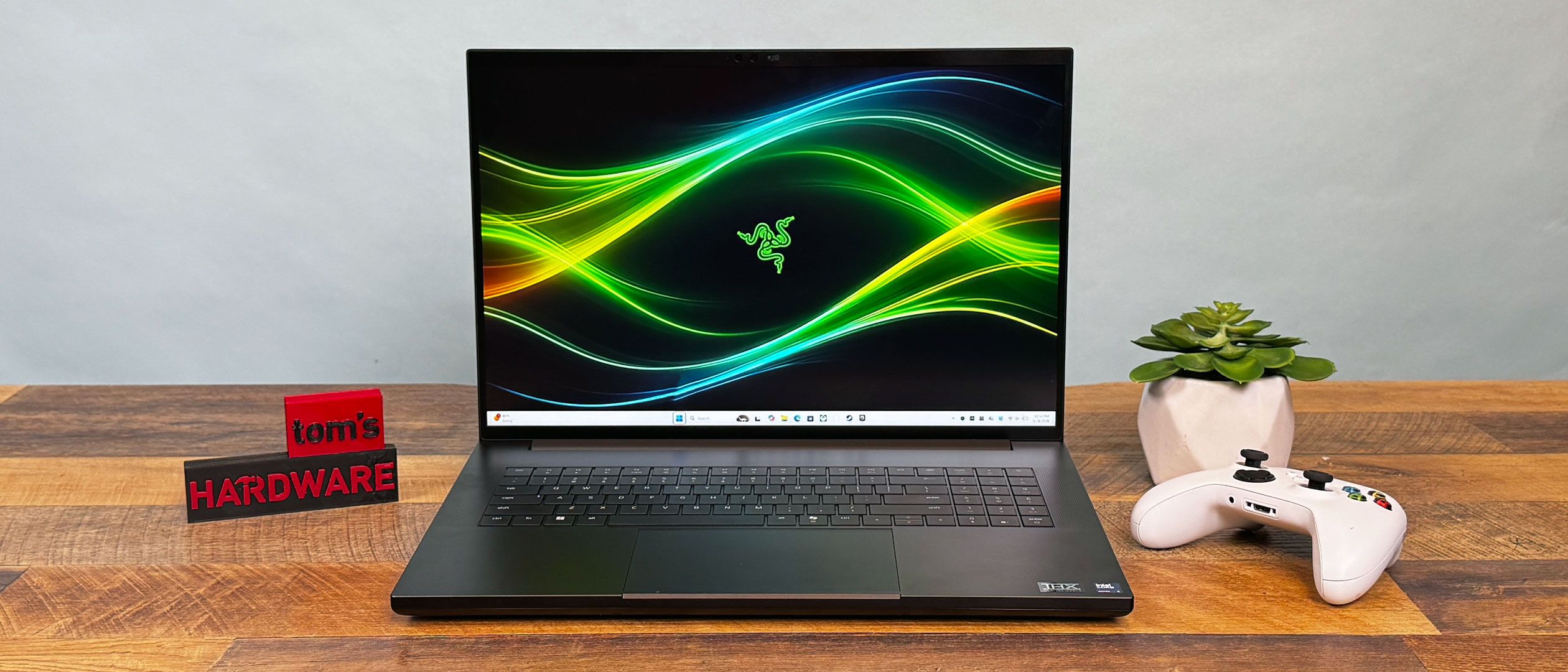
Some gamers want the biggest screen possible, even on a portable machine. The Razer Blade 18 delivers exactly that. This 18-inch beast starts at $3,999.99 and climbs to $5,399.99 as tested. That's $500 more than the 2025 model.
For that money, you get an Intel Core Ultra 9 290HX Plus processor, an Nvidia GeForce RTX 5090 mobile GPU with 24GB of GDDR7, and 32GB of DDR5-6400 RAM. The display switches between 3840 x 2400 at 240Hz for visual fidelity and 1920 x 1200 at 440Hz for competitive gaming.
The RTX 5090 runs at 175W total graphics power. That's pushing mobile gaming close to desktop territory. The trade-off? Heat. Lots of it.
Design: Premium Build, Familiar Look
Razer hasn't changed its industrial design philosophy. The Blade 18 is a CNC-machined aluminum block with a rectangular, minimalist aesthetic. The only visual flourishes are the green three-headed snake logo on the lid and per-key RGB on the keyboard.
The build quality is mostly excellent. There's some flex behind the logo on the lid, which feels out of place on a machine this expensive. Otherwise, the chassis is rock solid.
Size is the obvious caveat. At 15.74 x 10.84 x 1.1 inches and 7.06 pounds before the 400W power brick, this laptop barely fits in a standard backpack. This is a desktop replacement that happens to be portable, not a travel machine.
Ports: Nearly Everything You Need
The Blade 18 has one of the most complete port selections on any gaming laptop. The left side houses a proprietary power port, Ethernet, two USB 3.2 Gen 2 Type-A ports, Thunderbolt 4 via USB-C, and a 3.5mm headphone jack.
The right side adds Thunderbolt 5, HDMI 2.1, another USB-A port, an SD card slot, and a Kensington lock slot.

One annoyance: Razer doesn't label which Thunderbolt port is which. You have to plug in a device or look it up to tell Thunderbolt 4 from Thunderbolt 5. On a $5,400 machine, that's a small but unnecessary friction.
The Dual-Mode Display
The 18-inch display is the Blade's standout feature. It supports two modes: a 3840 x 2400 resolution at 240Hz for immersive single-player games and content work, or 1920 x 1200 at 440Hz for competitive shooters where every frame counts.
Razer says the panel is brighter than last year's version. With Nvidia G-Sync support, the display adapts to GPU output without tearing. The dual-mode approach eliminates the usual trade-off between resolution and refresh rate.
“This system looks at some of the best 16-inch gaming laptops and calls them tiny.”
— Tom's Hardware Reviewer
Performance: Strong, But Hot
The RTX 5090 at 175W delivers serious gaming performance. Combined with the Core Ultra 9 290HX Plus and fast DDR5 memory, the Blade 18 handles demanding titles at high settings with ease.
The problem is thermal management. Tom's Hardware reports the machine runs quite warm under load, with loud fans working overtime. This is the trade-off for cramming desktop-class power into a laptop chassis.
The other disappointment is storage. Despite having a PCIe Gen 5 slot, Razer ships the Blade 18 with a 2TB PCIe Gen 4 NVMe SSD. At this price, leaving Gen 5 performance on the table feels like a missed opportunity.
What the Community Is Saying
Discussion on r/Razer and r/LaptopGaming centers on two issues. First, frustration that a $5,400 laptop doesn't include a PCIe Gen 5 SSD. Second, debate over whether the RTX 5090's performance justifies the cooling challenges and $500 price increase.
The consensus: the Blade 18 is undeniably powerful, but the value proposition is harder to justify than in previous years.
✅ Pros
- • RTX 5090 delivers near-desktop gaming performance
- • Dual-mode display offers flexibility between 4K and 440Hz
- • Excellent port selection including Thunderbolt 5
- • Solid aluminum build quality
❌ Cons
- • Runs hot with loud fans under load
- • $500 more expensive than the 2025 model
- • No PCIe Gen 5 SSD despite having the slot
- • 7+ pounds before the power brick limits portability
Full Specifications
| Component | Specification |
|---|---|
| CPU | Intel Core Ultra 9 290HX Plus |
| GPU | Nvidia RTX 5090 (24GB GDDR7, 175W TGP) |
| Memory | 32GB DDR5-6400 |
| Storage | 2TB PCIe Gen 4 NVMe SSD |
| Display | 18-inch, 3840x2400 @ 240Hz or 1920x1200 @ 440Hz |
| Dimensions | 15.74 x 10.84 x 1.1 inches |
| Weight | 7.06 pounds (before power brick) |
| Price | $3,999.99 (starting) / $5,399.99 (as tested) |
The Verdict
The Razer Blade 18 (2026) is a powerful machine with real limitations. The RTX 5090 and dual-mode display deliver. The build quality is excellent. The port selection is comprehensive.
But the thermals are concerning, the price increase is steep, and the decision to ship Gen 4 storage in a Gen 5-capable machine is puzzling. If you need maximum portable gaming power and can handle the heat, the Blade 18 delivers. If you're more price-conscious, the $500 premium over last year is hard to ignore.
Logicity's Take
Frequently Asked Questions
How much does the Razer Blade 18 (2026) cost?
The Razer Blade 18 (2026) starts at $3,999.99 and reaches $5,399.99 in its fully-loaded configuration. That's $500 more than the equivalent 2025 model.
What GPU does the Razer Blade 18 (2026) use?
The laptop features an Nvidia GeForce RTX 5090 mobile GPU with 24GB of GDDR7 memory, running at up to 175W total graphics power.
Does the Razer Blade 18 have a PCIe Gen 5 SSD?
No. Despite having a PCIe Gen 5 slot, Razer ships the Blade 18 with a 2TB PCIe Gen 4 NVMe SSD. This has drawn criticism from reviewers and users.
How heavy is the Razer Blade 18?
The laptop weighs 7.06 pounds before including the 400W power brick. Combined, the total travel weight is significant.
What refresh rate does the Razer Blade 18 display support?
The dual-mode display supports 240Hz at 4K resolution (3840x2400) or 440Hz at FHD+ resolution (1920x1200), with Nvidia G-Sync.
Another high-profile laptop facing hardware challenges
Need Help Implementing This?
Source: Latest from Tom's Hardware
Manaal Khan
Tech & Innovation Writer
اقرأ أيضاً

رأي مغاير: كيف يؤثر اختراق الأمن الداخلي الأميركي على شركاتنا الخاصة؟
في ظل اختراق عقود الأمن الداخلي الأميركي مع شركات خاصة، نناقش تأثير هذا الاختراق على مستقبل الأمن السيبراني. نستعرض الإحصاءات الموثوقة ونناقش كيف يمكن للشركات الخاصة أن تتعامل مع هذا التهديد. استمتع بقراءة هذا التحليل العميق

الإنسان في زمن ما بعد الوجود البشري: نحو نظام للتعايش بين الإنسان والروبوت - Centre for Arab Unity Studies
في هذا المقال، سنناقش كيف يمكن للبشر والروبوتات التعايش في نظام متكامل. سنستعرض التحديات والحلول المحتملة التي تضعها شركات مثل جوجل وأمازون. كما سنلقي نظرة على التوقعات المستقبلية وفقًا لتقرير ماكنزي

إطلاق ناسا لمهمة مأهولة إلى القمر: خطوة تاريخية نحو استكشاف الفضاء
تعتبر المهمة الجديدة خطوة هامة نحو استكشاف الفضاء وتطوير التكنولوجيا. سوف تشمل المهمة إرسال رواد فضاء إلى سطح القمر لconducting تجارب علمية. ستسهم هذه المهمة في تطوير فهمنا للفضاء وتحسين التكنولوجيا المستخدمة في استكشاف الفضاء.