OpenAI Codex vs Claude Code: Why Developers Are Switching
Key Takeaways
- OpenAI Codex now manages 128,000 enterprise repositories autonomously as of May 2026
- Early testers report 65% faster time-to-PR compared to previous Claude models
- Anthropic's Opus 4.6 quality issues and downtime drove developers to seek alternatives
How Claude Code Lost Its Lead
At the end of 2025 and into early 2026, Claude Code held the top spot for agentic coding. Google's Antigravity had traction but couldn't match Claude's capabilities. Major companies like Spotify relied on Anthropic's platform, generating substantial API revenue through enterprise contracts.
The problem started when Anthropic got comfortable. Opus 4.5 was the clear best coding model at the time. Opus 4.6 should have extended that lead. Instead, users noticed the output quality dropped significantly below expectations. Combined with frequent downtime, developers started looking elsewhere.
Patrick Campanale, a tech journalist who followed the shift closely, noted that a colleague working at a company heavily dependent on Claude Code was spending astronomical amounts on API tokens. That kind of spending only makes sense when the tool delivers. When it stopped delivering, the search for alternatives began.
What Changed With OpenAI's Codex Refresh
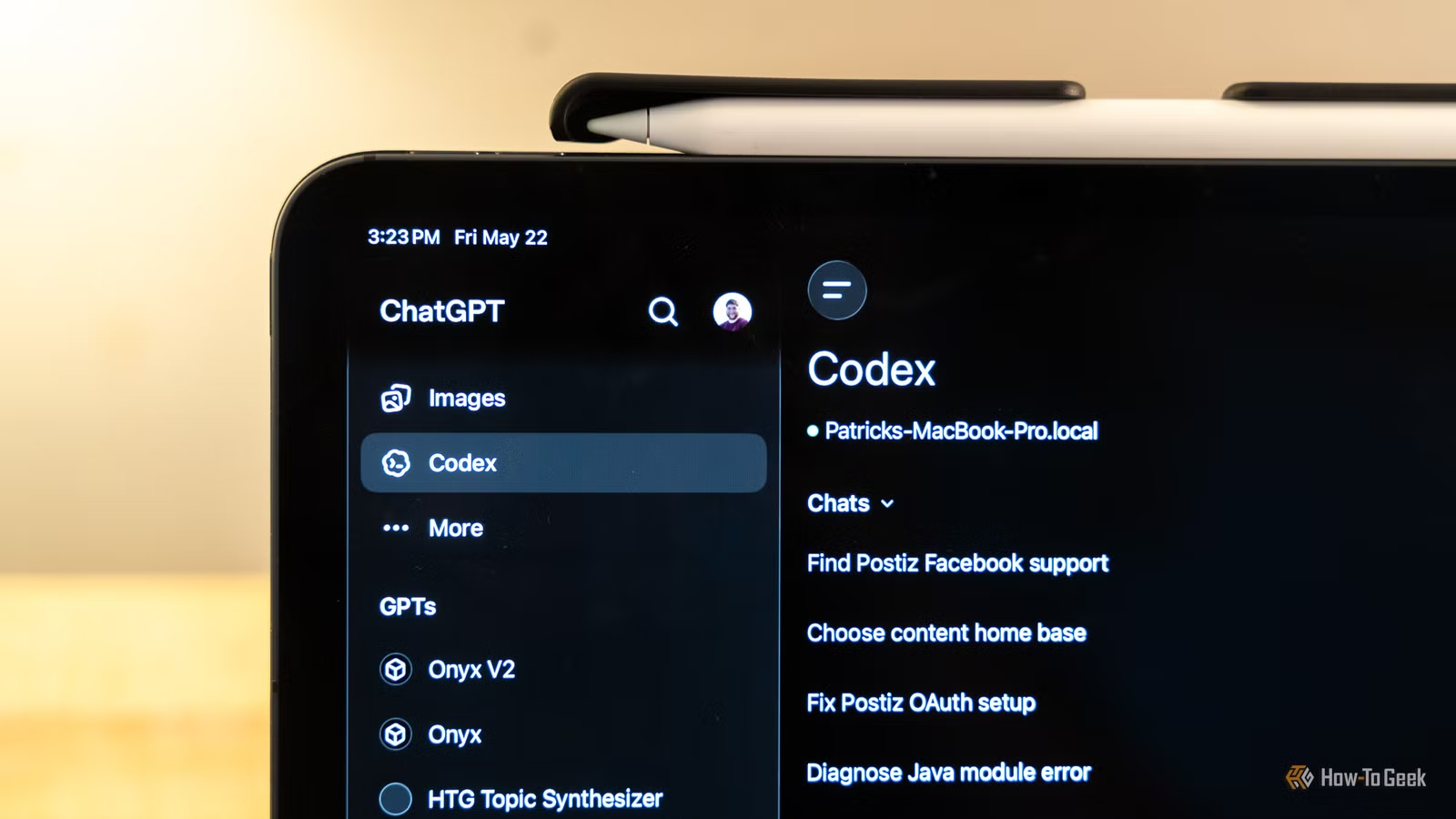
In May 2026, OpenAI transformed Codex from a code-completion tool into a full agentic development environment. The upgrade introduced multi-agent parallelism and a persistent, repository-aware memory system. Developers can now delegate complex refactoring and bug fixing to autonomous agents that work across IDEs, terminals, and browsers simultaneously.
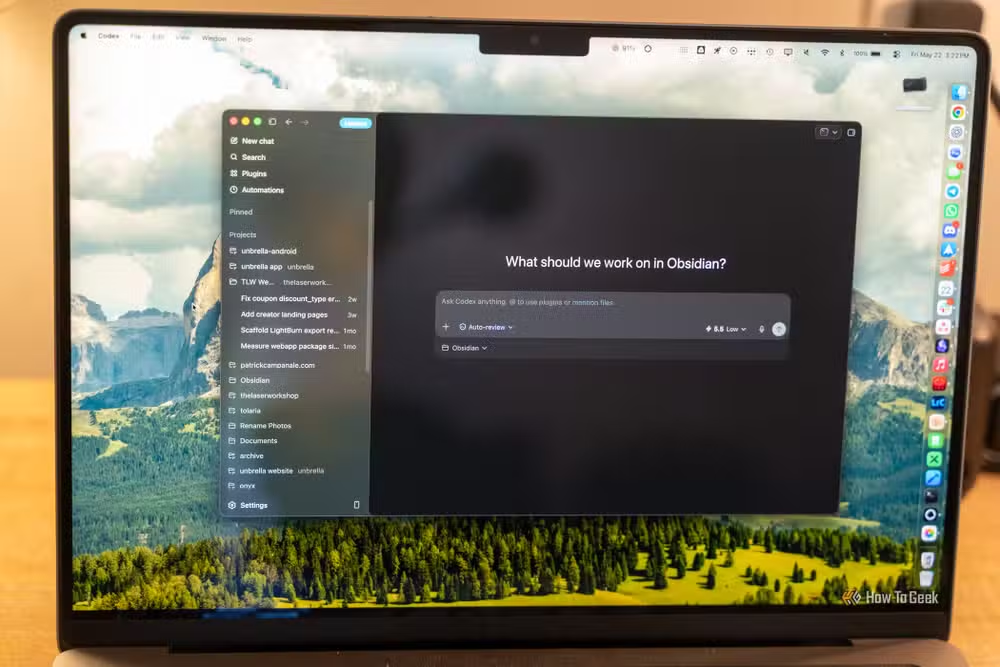
The flagship GPT-5.3 Codex model, branded Codex-Spark, offers a one million token context window. That's enough to analyze an entire codebase in a single prompt. Early testers report a 65% reduction in time-to-PR compared to previous-generation Claude models.
“The era of coding as manual labor is over; with Codex's new agentic orchestration, we are transitioning to an era where the developer is an architect, not a bricklayer.”
— Sam Altman, CEO at OpenAI
The Agentic Orchestration Approach
OpenAI's announcement highlighted the "Agentic Orchestration" upgrade's ability to manage full-stack refactoring projects autonomously. Andrej Karpathy, former Tesla AI director, called the "Goal Mode" implementation in the new Codex CLI "the most significant leap in developer productivity since the introduction of IDEs."
One feature getting particular attention is "Appshots." This capability lets Codex capture application state for debugging purposes. According to discussions on Reddit's r/programming community, this has effectively replaced traditional manual log-scouring workflows for many developers.
“Codex has moved from being a co-pilot to being a fully capable colleague that doesn't need to sleep, doesn't get frustrated by boilerplate, and understands our entire technical debt history.”
— Sarah Jenkins, CTO at WorkOS
The Tradeoffs Developers Are Debating
The shift hasn't been without concerns. On HackerNews, power users are debating the "black box" nature of multi-agent orchestration. While productivity has surged, auditing what autonomous agents actually do is becoming harder. When an agent makes changes across multiple files and systems in parallel, tracing its reasoning requires new tooling and practices.
✅ Pros
- • 65% faster time-to-PR in early testing
- • Million-token context window enables full codebase analysis
- • Multi-agent parallelism handles complex refactoring autonomously
- • Appshots feature streamlines debugging workflows
❌ Cons
- • Autonomous actions are difficult to audit
- • Black box nature concerns power users
- • Learning curve for new agentic paradigm
- • Dependency on single vendor for critical workflows
The Reddit community's sentiment mixes awe with anxiety. Developers appreciate the productivity gains but recognize they're trading visibility for speed. For teams that need to understand every change before deployment, the new approach requires adjustment.
What This Means for Enterprise Adoption
Anthropic built its business on enterprise customers willing to pay premium rates for the best coding assistance. Spotify and similar companies drove substantial API revenue. But enterprise buyers care about reliability and consistency. When Opus 4.6 delivered lower quality output than its predecessor, it broke trust that's hard to rebuild.
OpenAI's Codex now manages 128,000 enterprise repositories. That number suggests significant migration from Claude Code and other platforms. The combination of a larger context window, faster PR cycles, and autonomous task management addresses the specific pain points enterprise engineering teams face.
Logicity's Take
Frequently Asked Questions
Frequently Asked Questions
Is OpenAI Codex better than Claude Code in 2026?
Based on current benchmarks and user reports, yes. Early testers report 65% faster time-to-PR with Codex's GPT-5.3 Codex-Spark model. The million-token context window and multi-agent capabilities give it advantages Claude Code currently lacks.
What went wrong with Anthropic's Opus 4.6?
Users reported that output quality dropped significantly below Opus 4.5 levels. Combined with frequent platform downtime, developers lost confidence in Claude Code as a reliable production tool.
How does Codex's agentic orchestration work?
Codex deploys multiple AI agents that work in parallel across IDEs, terminals, and browsers. These agents share a persistent, repository-aware memory system, allowing them to handle complex refactoring tasks autonomously while maintaining context about the entire codebase.
What are the risks of using AI coding agents?
The main concern is auditability. When agents make changes across multiple systems simultaneously, tracing their reasoning becomes challenging. Teams that need full visibility into code changes may find the black box nature problematic.
How many enterprise repositories does Codex manage?
As of May 2026, Codex agents autonomously manage 128,000 enterprise-grade repositories, indicating substantial enterprise adoption.
Explore local AI development options beyond cloud-based tools
Need Help Implementing This?
Source: How-To Geek
Huma Shazia
Senior AI & Tech Writer
اقرأ أيضاً

رأي مغاير: كيف يؤثر اختراق الأمن الداخلي الأميركي على شركاتنا الخاصة؟
في ظل اختراق عقود الأمن الداخلي الأميركي مع شركات خاصة، نناقش تأثير هذا الاختراق على مستقبل الأمن السيبراني. نستعرض الإحصاءات الموثوقة ونناقش كيف يمكن للشركات الخاصة أن تتعامل مع هذا التهديد. استمتع بقراءة هذا التحليل العميق

الإنسان في زمن ما بعد الوجود البشري: نحو نظام للتعايش بين الإنسان والروبوت - Centre for Arab Unity Studies
في هذا المقال، سنناقش كيف يمكن للبشر والروبوتات التعايش في نظام متكامل. سنستعرض التحديات والحلول المحتملة التي تضعها شركات مثل جوجل وأمازون. كما سنلقي نظرة على التوقعات المستقبلية وفقًا لتقرير ماكنزي

إطلاق ناسا لمهمة مأهولة إلى القمر: خطوة تاريخية نحو استكشاف الفضاء
تعتبر المهمة الجديدة خطوة هامة نحو استكشاف الفضاء وتطوير التكنولوجيا. سوف تشمل المهمة إرسال رواد فضاء إلى سطح القمر لconducting تجارب علمية. ستسهم هذه المهمة في تطوير فهمنا للفضاء وتحسين التكنولوجيا المستخدمة في استكشاف الفضاء.