NASA Artemis III Launch Slips to Late 2027 for Earth Orbit Test

Key Takeaways
- Artemis III now targets late 2027, will test lunar landers in Earth orbit instead of landing on the Moon
- SpaceX and Blue Origin say their spacecraft could be ready for the Earth orbit rendezvous by late 2027
- The mission follows an Apollo 9 approach: test critical hardware close to home before attempting a lunar landing
NASA Administrator Jared Isaacman delivered a significant update on the agency's Moon program during congressional testimony on Monday. The Artemis III mission will launch no earlier than late 2027, he told lawmakers. More importantly, the mission will not land on the Moon at all.
Instead, NASA is redesigning Artemis III as an Earth orbit test flight. Astronauts aboard an Orion capsule will rendezvous and potentially dock with one or both of NASA's contracted lunar landers: SpaceX's Starship and Blue Origin's Blue Moon. Both companies told NASA they could have their spacecraft ready for this orbital demonstration by late 2027.
Why NASA Abandoned the Moon Landing Plan
Two months ago, Isaacman announced Artemis III would no longer target the Moon's south pole. The original mission profile tried to accomplish too much in a single flight. Under that plan, the first time humans would board a Starship or Blue Moon spacecraft would have been near the Moon, a quarter-million miles from Earth. If something went wrong, astronauts would be days away from home.
The revised approach mirrors what NASA did with Apollo. In March 1969, Apollo 9 tested the lunar module in Earth orbit. Four months later, Apollo 11 landed at the Sea of Tranquility with Neil Armstrong and Buzz Aldrin. The lesson: prove your hardware works close to home before betting lives on it far away.

With Artemis III in Earth orbit, astronauts would be minutes or hours from rescue if problems arise. That margin could mean the difference between an emergency return and a tragedy.
Open Questions About the Flight Plan
Several key details remain unsettled. NASA has not decided how high Artemis III will orbit. A low-Earth orbit mission, just a few hundred miles up, might not require NASA to use an SLS upper stage already built and in storage. Saving that unit would preserve it for a later Artemis mission that actually attempts a lunar landing.
A higher orbit would consume the upper stage but would let NASA test systems in conditions closer to what astronauts will experience near the Moon. The trade-off is real: spend hardware now for better data, or save it for the mission that matters most.
NASA is also buying a new commercial upper stage from United Launch Alliance. The Centaur V will pair with the SLS rocket after NASA flies its last existing upper stages. That transition adds another variable to long-term planning.
Starship, Blue Moon, or Both?
Another open question: which lander will Artemis III test? NASA contracted both SpaceX's Starship and Blue Origin's Blue Moon as lunar landers. The agency has not decided whether Artemis III will link up with one spacecraft or attempt to incorporate both into the flight plan.
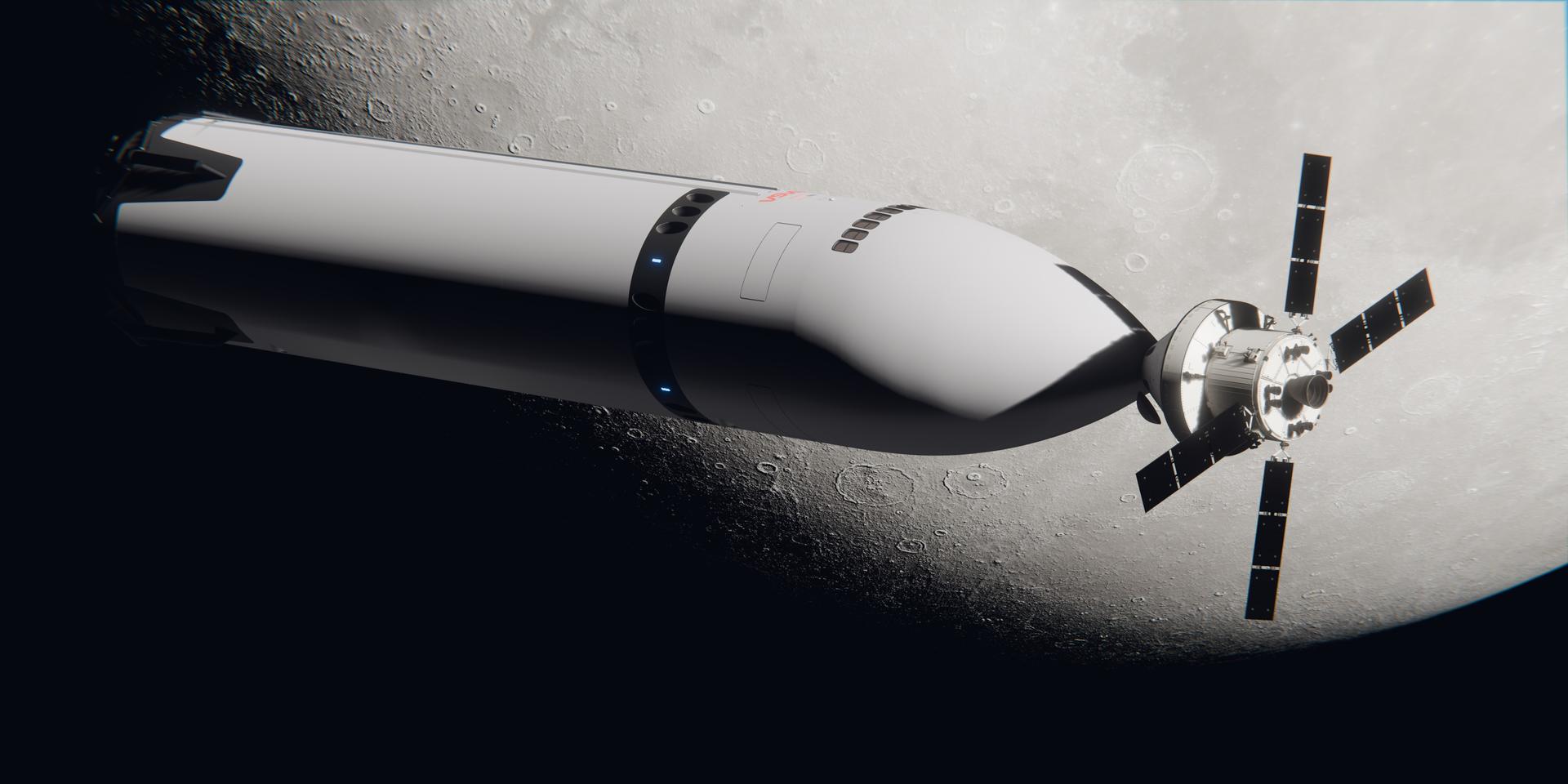
If both landers are ready by late 2027, NASA could conduct a more comprehensive test. But coordinating two commercial spacecraft with an SLS launch and Orion capsule adds complexity. The agency may choose simplicity over ambition, testing one lander now and the other on a later flight.
Keeping the Cadence
NASA wants to launch Artemis missions at least once per year. The original Artemis III plan, with all its complexity, would have meant a long multiyear gap after Artemis II. That mission flew earlier this month with what NASA called a nearly flawless performance.
By scaling back Artemis III's objectives, NASA hopes to maintain momentum. A late 2027 launch would keep roughly 18 months between missions. That pace lets engineers stay sharp and keeps public attention on the program.
Logicity's Take
Frequently Asked Questions
When will NASA's Artemis III launch?
NASA Administrator Jared Isaacman said Artemis III will launch no earlier than late 2027. The exact date depends on when SpaceX and Blue Origin have their landers ready.
Will Artemis III land on the Moon?
No. NASA changed the mission to an Earth orbit test. Astronauts will rendezvous with lunar landers in Earth orbit instead of attempting a Moon landing.
Which lunar lander will Artemis III use?
NASA has not decided. The agency contracted both SpaceX's Starship and Blue Origin's Blue Moon. Artemis III may test one or both landers.
Why did NASA change the Artemis III plan?
The original plan tried to accomplish too much. Testing landers near the Moon for the first time would have put astronauts days away from help if something went wrong.
What was the last Artemis mission?
Artemis II flew earlier in April 2026 with what NASA described as a nearly flawless performance. It was the first crewed Artemis flight.
Need Help Implementing This?
Source: Ars Technica
Manaal Khan
Tech & Innovation Writer
اقرأ أيضاً

رأي مغاير: كيف يؤثر اختراق الأمن الداخلي الأميركي على شركاتنا الخاصة؟
في ظل اختراق عقود الأمن الداخلي الأميركي مع شركات خاصة، نناقش تأثير هذا الاختراق على مستقبل الأمن السيبراني. نستعرض الإحصاءات الموثوقة ونناقش كيف يمكن للشركات الخاصة أن تتعامل مع هذا التهديد. استمتع بقراءة هذا التحليل العميق

الإنسان في زمن ما بعد الوجود البشري: نحو نظام للتعايش بين الإنسان والروبوت - Centre for Arab Unity Studies
في هذا المقال، سنناقش كيف يمكن للبشر والروبوتات التعايش في نظام متكامل. سنستعرض التحديات والحلول المحتملة التي تضعها شركات مثل جوجل وأمازون. كما سنلقي نظرة على التوقعات المستقبلية وفقًا لتقرير ماكنزي

إطلاق ناسا لمهمة مأهولة إلى القمر: خطوة تاريخية نحو استكشاف الفضاء
تعتبر المهمة الجديدة خطوة هامة نحو استكشاف الفضاء وتطوير التكنولوجيا. سوف تشمل المهمة إرسال رواد فضاء إلى سطح القمر لconducting تجارب علمية. ستسهم هذه المهمة في تطوير فهمنا للفضاء وتحسين التكنولوجيا المستخدمة في استكشاف الفضاء.