Moon hides Venus on June 17 in rare daytime occultation
Key Takeaways
- The Moon will slide in front of Venus between 3:30-5:00 p.m. EDT on June 17, 2026, visible across North America
- Venus at magnitude -4.0 is bright enough to spot in daylight with binoculars, but observers must avoid accidentally pointing optics at the sun
- The evening offers a bonus: the crescent Moon paired with the Beehive Cluster, visible through binoculars after sunset
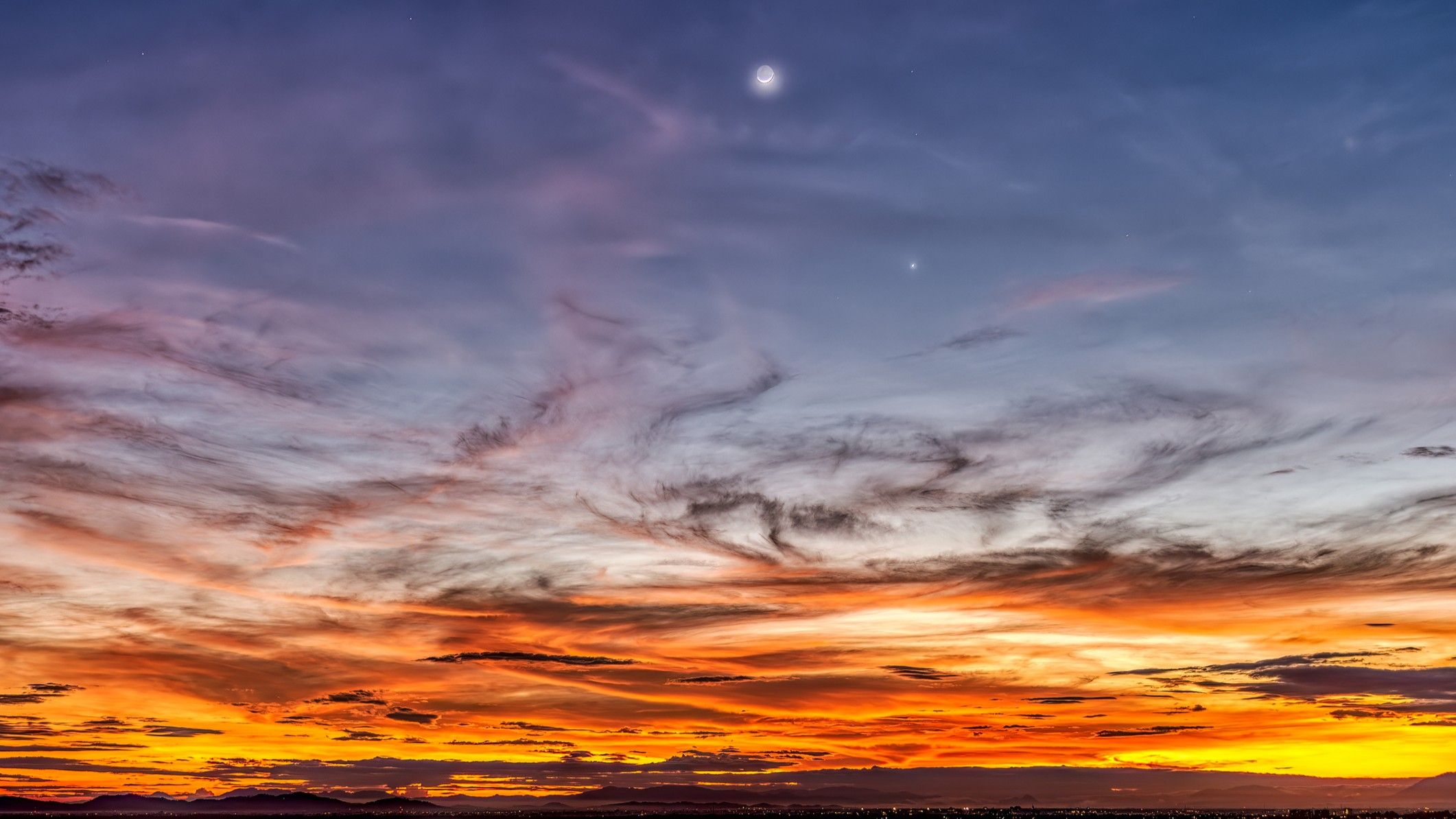
On June 17, 2026, the Moon will pass directly in front of Venus during broad daylight, creating a rare occultation visible across most of North America. The event unfolds between roughly 3:30 p.m. and 5:00 p.m. EDT, with Venus disappearing behind the unlit edge of a thin crescent Moon. It's one of the year's most unusual celestial events, and also one of the trickiest to observe safely.
The challenge is simple: the sun will be high in the sky while you're hunting for the Moon and Venus about 38 degrees away from it. Point binoculars or a telescope at the wrong patch of sky, and you risk instant, permanent eye damage. This isn't an event you casually glance up to catch.
How to watch the daytime occultation safely
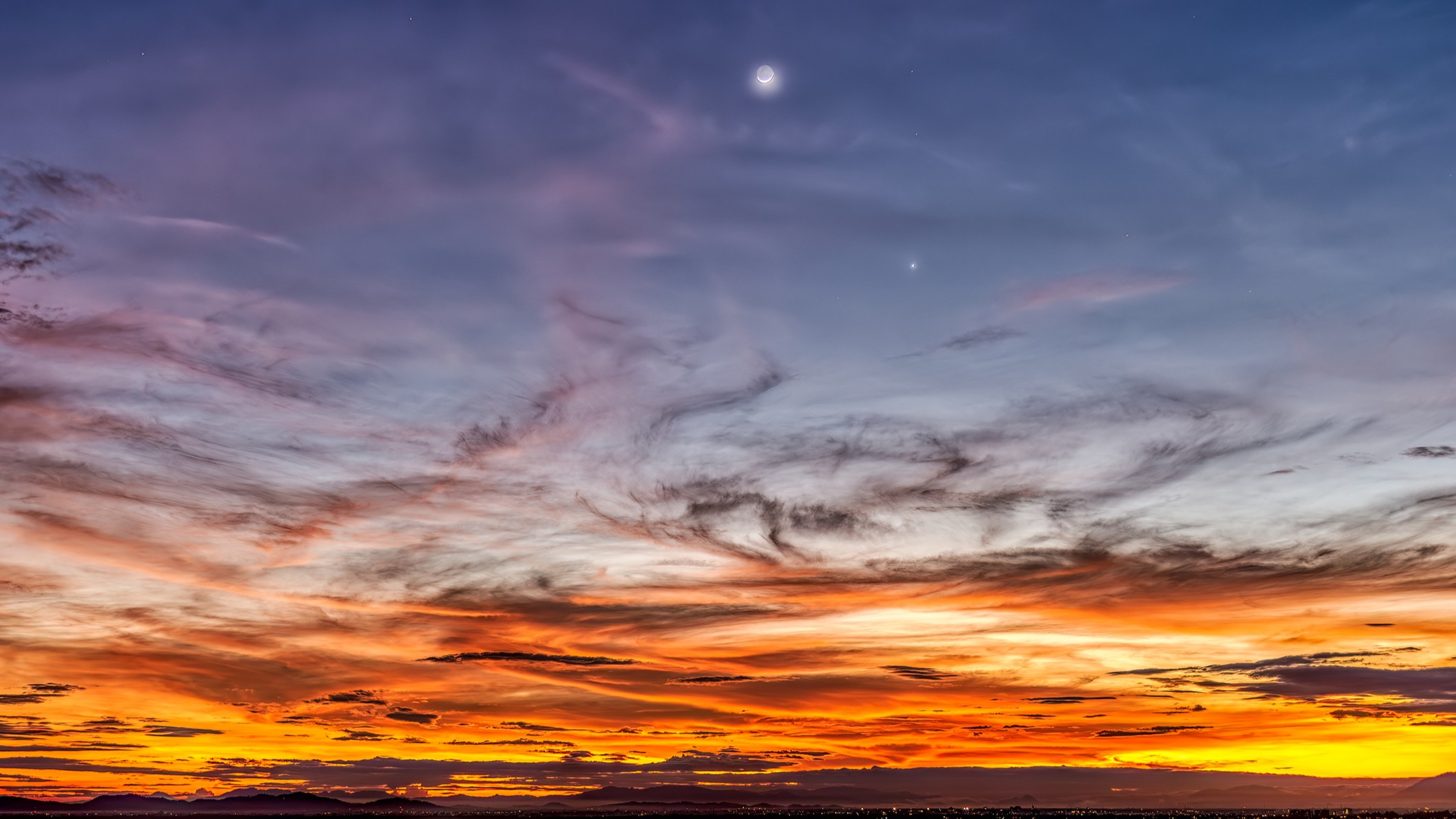
The safest approach is positioning yourself in the physical shadow of a building so the sun is completely blocked by the roofline. This eliminates any chance of accidentally sweeping your optics across the sun. A GOTO telescope mount can also help, since it will slew directly to the Moon's coordinates without manual searching.
Community discussion on CloudyNights and r/astronomy emphasizes these "shadowing" techniques as the gold standard for daytime observation. Experienced observers note that even a momentary pass near the sun can saturate your vision and make spotting faint targets nearly impossible for several minutes afterward.
Once you've solved the safety problem, the Moon becomes your guidepost. At just 11% to 14% illuminated, the waxing crescent will be thin but visible through binoculars against a clear blue sky. Venus, blazing at magnitude -4.0, sits nearby. While technically visible to the naked eye in daylight if you have perfect vision and know exactly where to look, binoculars or a small telescope make the difference between squinting at nothing and watching the show.
What you'll see through a telescope
Through magnification, the view is striking. The jagged, unlit edge of the lunar crescent slowly consumes the brilliant white disk of Venus against a blue sky. It's an unforgettable visual: the Moon's dark limb isn't smooth but textured by mountains and craters, creating an irregular silhouette as Venus slips behind it.
The reappearance on the Moon's bright side is just as dramatic, though harder to time precisely. Venus will pop back into view after several minutes of occultation, depending on your location. Exact timing varies by a few minutes across the continent.
Evening alternative: Moon meets the Beehive Cluster
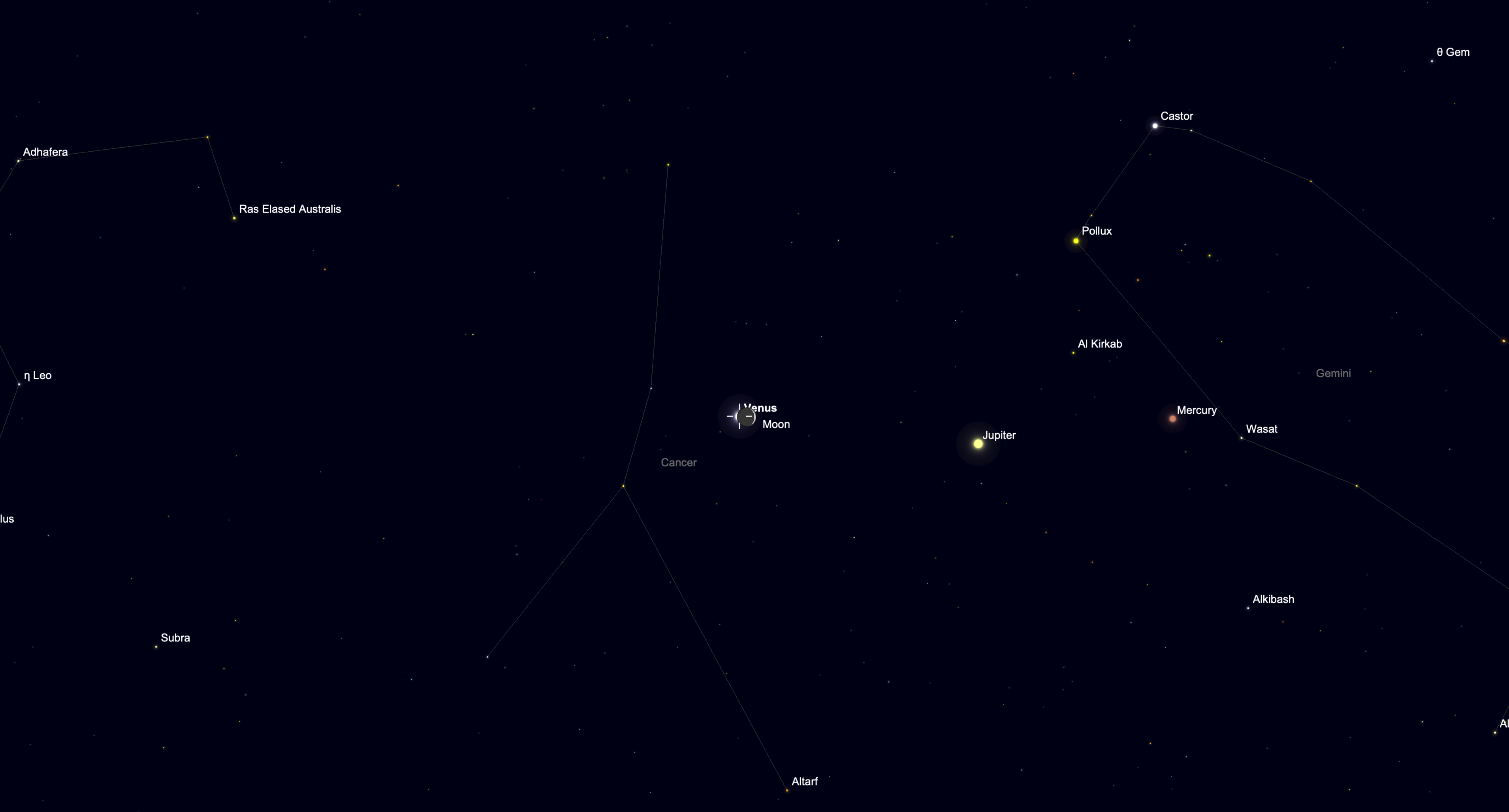
If daytime observation sounds too technical or risky, the evening of June 17 offers a simpler spectacle. The waxing crescent Moon will sit near the Beehive Cluster (M44) in Cancer. About 45 to 60 minutes after sunset, once the sky darkens, look toward the Moon. A few degrees away you'll find a faint, fuzzy patch of light.
Through binoculars, that fuzzy patch transforms into dozens of sparkling blue-white stars scattered across roughly three full-Moon widths. The cluster and crescent fit comfortably in the same binocular field of view. The Moon itself will glow with earthshine, sunlight bounced off Earth's oceans and clouds back onto the lunar surface, making the unlit portion visible and giving the Moon a three-dimensional appearance.
This pairing also makes an excellent astrophotography target. A DSLR with a 135mm lens on a tripod can capture both the glittering star cluster and the earthshine-lit crescent in a single exposure. The trick is balancing exposure time: long enough to pull in faint stars, short enough to preserve detail in the bright lunar sliver.
Equipment and conditions
For the daytime occultation, you need clear skies. Even light haze will wash out contrast and make Venus nearly impossible to spot. Binoculars (7x50 or 10x50) work well, but a small telescope at 30-50x magnification provides the most dramatic view of the actual occultation moment.
The most important equipment isn't optical but positional: know exactly where the sun is at all times and never let your optics drift toward it. Print or download a star chart showing the Moon and Venus positions for your specific time zone. Several astronomy apps can overlay the positions on your phone's camera view, helping you orient before you bring out the binoculars.
“The Moon will slide over Venus in the mid-afternoon... a rare and technically challenging skywatching event.”
— Space.com Editorial Staff
Why daytime occultations are rare
Lunar occultations of bright planets happen fairly regularly, but most occur at night when they're easy to observe. A daytime occultation of Venus visible from a populated continent like North America is far less common. The geometry has to align so the Moon passes in front of Venus while both are above the horizon and far enough from the sun to be observable.
Venus helps. It's the brightest object in the sky after the Sun and Moon, which is why it can be spotted in full daylight at all. A daytime occultation of Mars or Jupiter, both significantly fainter, would be essentially impossible to observe without specialized equipment.
Frequently Asked Questions
Can I see the Moon-Venus occultation without binoculars?
Technically yes, if you have excellent vision and know exactly where to look. But binoculars or a small telescope make the event far easier to observe and reveal the dramatic moment when Venus slips behind the lunar limb.
What time does the occultation happen on June 17?
The Moon passes in front of Venus between approximately 3:30 p.m. and 5:00 p.m. EDT across most of North America. Exact times vary by a few minutes depending on your location.
Is it dangerous to observe the occultation?
The occultation itself is safe to view. The danger is accidentally pointing binoculars or a telescope at the nearby sun, which can cause instant eye damage. Always position yourself so the sun is blocked by a building or roofline.
What if I miss the daytime event?
The evening of June 17 offers a bonus: the crescent Moon paired with the Beehive Cluster in Cancer, easily visible through binoculars about an hour after sunset.
How far apart are the Moon and Sun during the occultation?
About 38 degrees, roughly four fist-widths at arm's length. That's far enough to observe safely if you position yourself carefully, but close enough that careless optics handling is dangerous.
Logicity's Take
Daytime celestial events rarely get the attention they deserve because most people don't know they're possible. This occultation is a chance to see something genuinely unusual, but it rewards preparation. The observers who print a chart, scout a shadow location in advance, and practice locating the Moon in daylight the day before will catch the show. Everyone else will spend 90 minutes squinting at blue sky. If you've never tried daytime astronomy, this is a memorable first attempt.
Need Help Implementing This?
Planning to photograph the occultation or stream it for your audience? Reach out to the Logicity team for coverage tips, equipment recommendations, or partnership opportunities around astronomical events.
Source: Latest from Space.com
Manaal Khan
Tech & Innovation Writer
اقرأ أيضاً

رأي مغاير: كيف يؤثر اختراق الأمن الداخلي الأميركي على شركاتنا الخاصة؟
في ظل اختراق عقود الأمن الداخلي الأميركي مع شركات خاصة، نناقش تأثير هذا الاختراق على مستقبل الأمن السيبراني. نستعرض الإحصاءات الموثوقة ونناقش كيف يمكن للشركات الخاصة أن تتعامل مع هذا التهديد. استمتع بقراءة هذا التحليل العميق

الإنسان في زمن ما بعد الوجود البشري: نحو نظام للتعايش بين الإنسان والروبوت - Centre for Arab Unity Studies
في هذا المقال، سنناقش كيف يمكن للبشر والروبوتات التعايش في نظام متكامل. سنستعرض التحديات والحلول المحتملة التي تضعها شركات مثل جوجل وأمازون. كما سنلقي نظرة على التوقعات المستقبلية وفقًا لتقرير ماكنزي

إطلاق ناسا لمهمة مأهولة إلى القمر: خطوة تاريخية نحو استكشاف الفضاء
تعتبر المهمة الجديدة خطوة هامة نحو استكشاف الفضاء وتطوير التكنولوجيا. سوف تشمل المهمة إرسال رواد فضاء إلى سطح القمر لconducting تجارب علمية. ستسهم هذه المهمة في تطوير فهمنا للفضاء وتحسين التكنولوجيا المستخدمة في استكشاف الفضاء.