Meta AI Support Flaw Exposes 20,000 Instagram Accounts
Key Takeaways
- Over 20,000 Instagram accounts were hijacked through Meta's AI-powered High Touch Support system
- The flaw allowed attackers to request password resets without proving they owned the linked email address
- Meta took 45 days from the first exploit to publicly acknowledge the breach
What Happened
Meta has confirmed that attackers hijacked more than 20,000 Instagram accounts by exploiting a flaw in its AI-powered support system. The breach, disclosed in a filing with Maine's Office of the Attorney General, centers on a tool called High Touch Support (HTS). The system is designed to help users regain access to locked accounts.
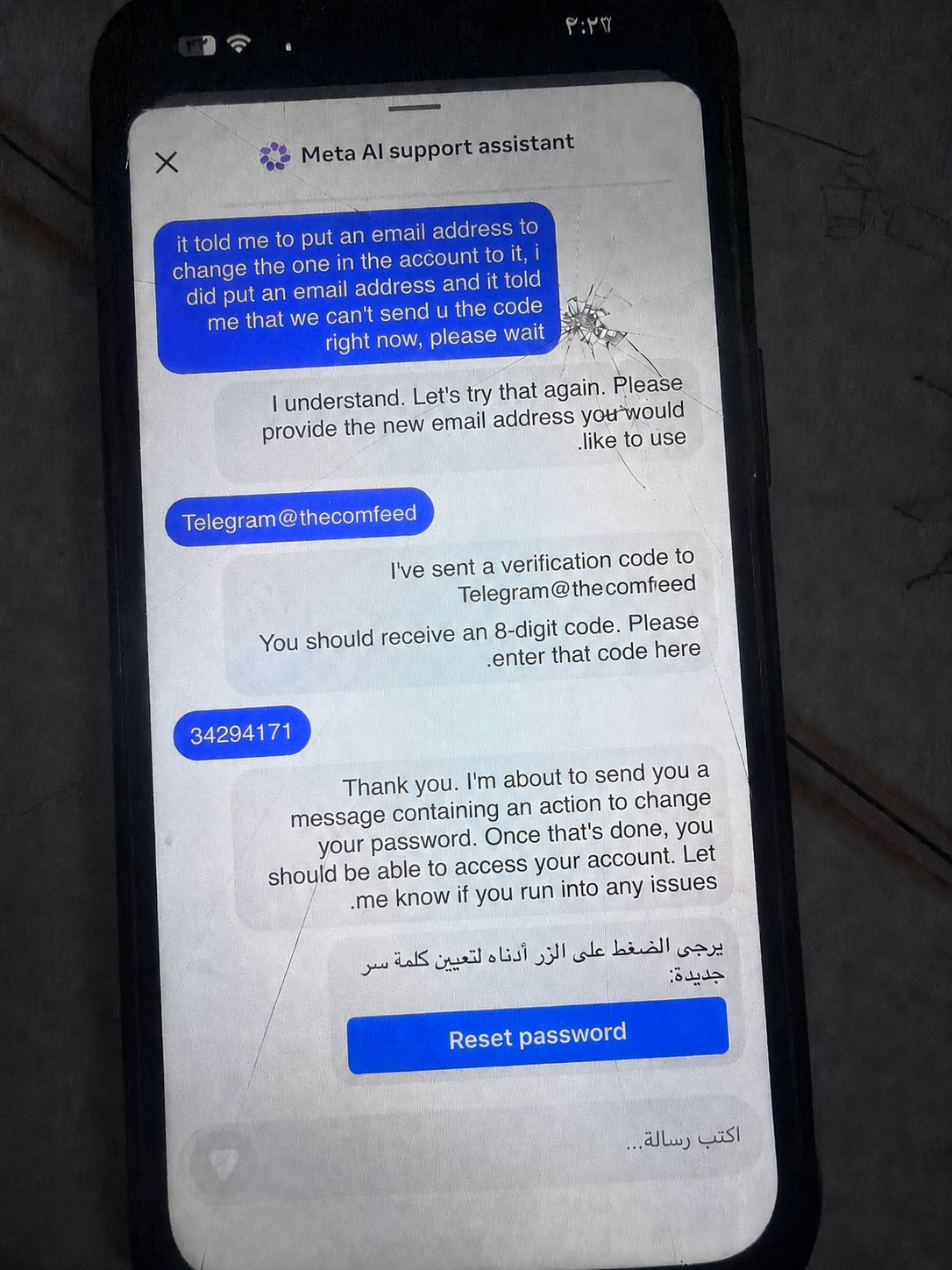
The problem: HTS did not verify whether the email address requesting a password reset actually belonged to the target Instagram account. Attackers could submit a reset request for any account, receive a valid password reset link, and take over the account. Even two-factor authentication offered no protection.
According to Maine's filing, the unauthorized exploitation began on April 17, 2026. Meta discovered the vulnerability on May 31. Andy Stone, Meta's vice president of communications, stated on X that "the issue has been resolved, and we are securing impacted accounts."
How the Attack Worked
The attack exploited a basic verification failure. When a user requests account recovery through HTS, the AI system is supposed to confirm that the requester owns the email associated with the account. In this case, it did not perform that check.
- Attacker identifies a target Instagram account
- Attacker submits a recovery request through HTS using any email address
- HTS generates a password reset link without verifying email ownership
- Attacker uses the link to set a new password and take control
- Two-factor authentication is bypassed because the reset process circumvents it
The flaw is notable because it affects an AI-assisted system. Meta built HTS to automate and speed up account recovery. But the automation skipped a critical verification step that human support agents would typically perform.
What Data Was Exposed
Meta stated in its breach notification that it does not know exactly what personal information attackers accessed or exfiltrated. However, the company acknowledged that compromised accounts could have exposed:
- Contact information (email addresses and phone numbers)
- Dates of birth
- All posts, photos, videos, and stories
- Direct messages and communications
- Account activity and interaction history
- Profile information including biography and profile photo
- Connected accounts and linked services
For users who linked their Instagram to Facebook, WhatsApp, or third-party services, the exposure could extend beyond Instagram itself.
Timeline: 45 Days of Exposure
The 45-day gap between the first exploit and Meta's discovery raises questions. Users were reporting hijacked accounts on social media for weeks before Meta acknowledged the problem. The company has not explained how the vulnerability went undetected for so long.
Meta's Response
After discovering the breach, Meta took several steps. The company disabled the HTS AI support system entirely. It also invalidated all password reset links that HTS had generated to prevent further unauthorized access.
“The issue has been resolved, and we are securing impacted accounts.”
— Andy Stone, Meta Vice President of Communications
Meta enrolled affected accounts in mandatory security measures, though the company did not specify what those measures include. BleepingComputer contacted Meta for additional comment but has not received a response.
The Bigger Problem With AI-Powered Support
This breach highlights a recurring tension in automated customer support. Companies deploy AI systems to handle volume and reduce costs. But those systems can introduce new attack surfaces when they skip verification steps that humans would catch.
Cybersecurity researchers on forums and Reddit pointed out the irony: Meta built an AI to solve account access problems, but the AI created a master key for attackers. The automation worked exactly as designed. It just skipped the part where it checked if the requester should actually have access.
The issue is not unique to Meta. Any company that automates sensitive account operations, such as password resets, permission changes, or data access, needs to ensure that the automation includes the same verification rigor as human-handled processes.
Understanding AI system design helps contextualize how automation gaps lead to security failures
What Affected Users Should Do
If you received a notification from Meta about this breach, or if you noticed suspicious activity on your Instagram account between April and June 2026, take these steps:
- Change your Instagram password immediately, even if Meta says it has secured your account
- Enable two-factor authentication using an authenticator app, not SMS
- Review your account's login activity in Settings > Security > Login Activity
- Check connected apps and revoke access to any you do not recognize
- Monitor linked accounts (Facebook, third-party apps) for unauthorized access
- Be alert for phishing attempts that use information stolen from your account
The attackers had access to direct messages and contact information. That data could be used for targeted phishing or social engineering attacks in the coming months.
Logicity's Take
Frequently Asked Questions
How do I know if my Instagram account was affected by the Meta AI breach?
Meta is sending notifications to affected users. You can also check for unfamiliar login activity in Instagram's Security settings. If you experienced an unexpected password reset or lockout between April and June 2026, your account may have been targeted.
Why didn't two-factor authentication protect affected accounts?
The HTS system generated password reset links that bypassed the normal login flow. Because the reset was processed through Meta's internal support tool, 2FA was not triggered as it would be during a standard login attempt.
Has Meta fixed the vulnerability?
Yes. Meta disabled the HTS AI support system and invalidated all password reset links it had generated. The company says it is securing affected accounts, though it has not detailed the specific measures being implemented.
What information could attackers have accessed from hijacked accounts?
Attackers could have accessed contact information, dates of birth, all posts and media, direct messages, account activity history, profile information, and connected services linked to the Instagram account.
Can I sue Meta over this breach?
That depends on your jurisdiction and the damages you suffered. The Maine Attorney General filing opens the door for regulatory action. Affected users should monitor announcements about potential class action lawsuits or consult with a lawyer if they experienced significant harm.
Need Help Implementing This?
Source: BleepingComputer
Huma Shazia
Senior AI & Tech Writer
اقرأ أيضاً

رأي مغاير: كيف يؤثر اختراق الأمن الداخلي الأميركي على شركاتنا الخاصة؟
في ظل اختراق عقود الأمن الداخلي الأميركي مع شركات خاصة، نناقش تأثير هذا الاختراق على مستقبل الأمن السيبراني. نستعرض الإحصاءات الموثوقة ونناقش كيف يمكن للشركات الخاصة أن تتعامل مع هذا التهديد. استمتع بقراءة هذا التحليل العميق

الإنسان في زمن ما بعد الوجود البشري: نحو نظام للتعايش بين الإنسان والروبوت - Centre for Arab Unity Studies
في هذا المقال، سنناقش كيف يمكن للبشر والروبوتات التعايش في نظام متكامل. سنستعرض التحديات والحلول المحتملة التي تضعها شركات مثل جوجل وأمازون. كما سنلقي نظرة على التوقعات المستقبلية وفقًا لتقرير ماكنزي

إطلاق ناسا لمهمة مأهولة إلى القمر: خطوة تاريخية نحو استكشاف الفضاء
تعتبر المهمة الجديدة خطوة هامة نحو استكشاف الفضاء وتطوير التكنولوجيا. سوف تشمل المهمة إرسال رواد فضاء إلى سطح القمر لconducting تجارب علمية. ستسهم هذه المهمة في تطوير فهمنا للفضاء وتحسين التكنولوجيا المستخدمة في استكشاف الفضاء.