Karakeep: a self-hosted Pocket alternative with full-text search
Key Takeaways
- Karakeep is a self-hosted read-later app that stores full article text, not just URLs
- Unlike Pocket, Karakeep supports notes, images, and PDF documents
- Self-hosting eliminates the risk of losing your saved content when a service shuts down
Mozilla shut down Pocket, and millions of users learned a hard lesson: your years of saved links belong to whomever runs the server. One user's response was to switch to Karakeep, an open-source, self-hosted Pocket alternative that goes beyond what Pocket ever offered. The standout feature? Full-text search across every article you save.
Pocket's closure wasn't just an inconvenience. It was a reminder that free cloud services can vanish, taking your data with them. Mozilla offered an export window, but it was brief. Users who missed it lost everything. This reality pushed many toward self-hosted solutions where they control the server, the data, and the timeline.
Why self-host a read-later app?
Alternatives like Instapaper still exist, but they carry the same fundamental risk. A company can decide to shut down, get acquired, or pivot. When that happens, your bookmarked research, reference articles, and reading list disappear or get locked behind a hasty export process.
Self-hosting removes this dependency. Karakeep runs on your own hardware. Whether that's a home server, a Raspberry Pi, or a Mac, the data stays under your control. No sunset notices, no rushed exports.
Setting up Karakeep: Docker or PikaPods
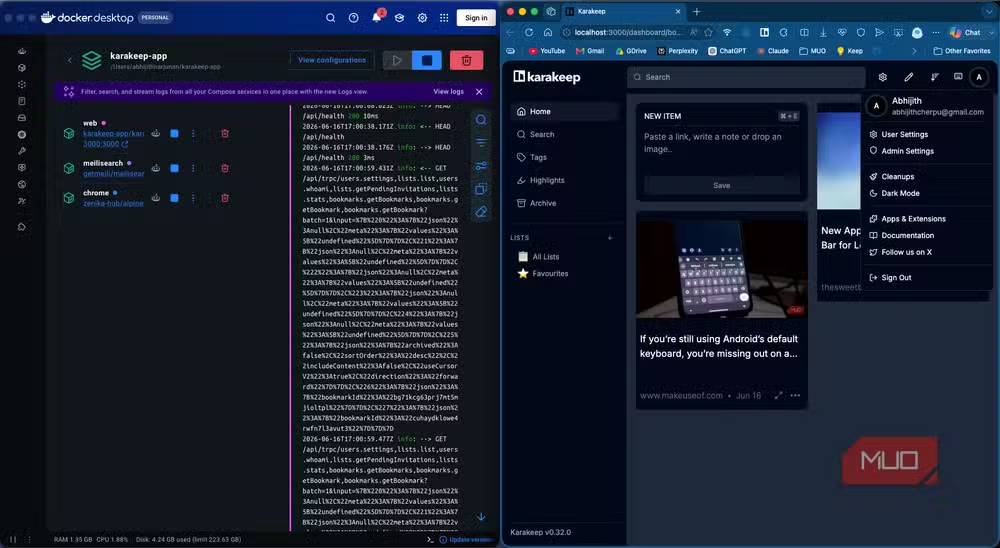
Karakeep offers two primary deployment paths. Docker is the more flexible option, though it requires some familiarity with containerized applications. For users new to Docker, the learning curve adds time to the initial setup. With clear documentation, however, the process takes only a few minutes once you understand the basics.
PikaPods provides a managed hosting option that simplifies deployment. It handles the infrastructure while still giving you control over your instance. One notable difference: AI-powered tagging worked reliably on PikaPods but failed on a local Mac setup, likely due to configuration issues with the AI integration.
If you're considering self-hosted tools, command-line utilities often offer more power and flexibility
Full-text search changes how you find saved content
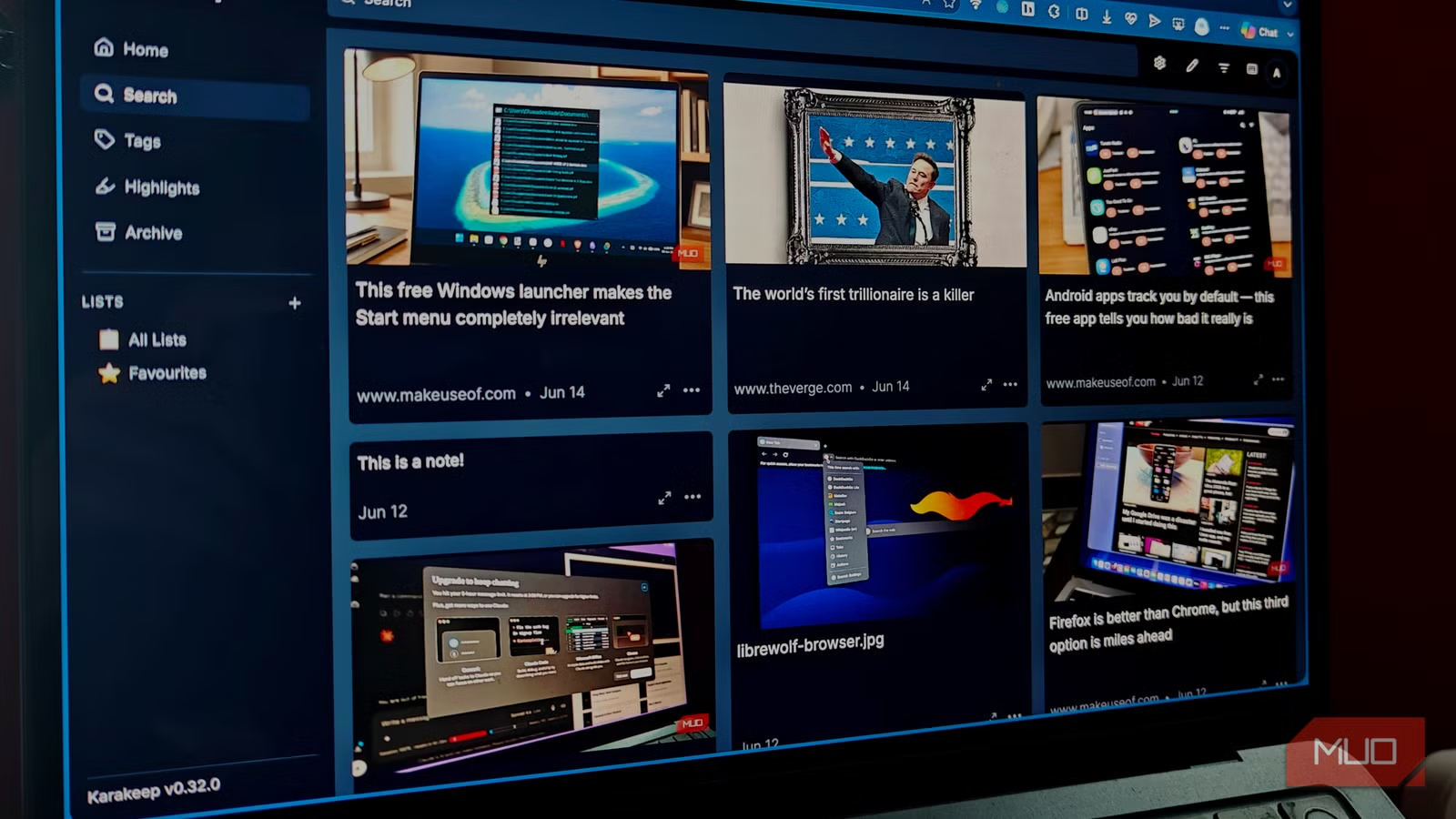
Pocket stored URLs and titles. Karakeep stores the entire article text. This difference matters when you're searching for something you read months ago but can't remember the headline.
Say you saved an article about Zen Browser, but the title was generic and the URL was a random string of characters. In Pocket, you'd never find it. In Karakeep, searching "Zen Browser" surfaces the article because the search indexes the full content, not just metadata.
This capability turns a simple bookmarking tool into something closer to a personal knowledge base. You're not just saving links. You're building a searchable archive of everything you've read.
Beyond links: notes, images, and PDFs
Pocket saved web pages. That was it. Karakeep expands the scope to include notes, images, and PDF documents. This makes it useful for research workflows where you're collecting diverse materials, not just articles.
The tagging system supports both manual tags and AI-generated ones. A dedicated tag management page lets you organize a growing library with bulk editing and drag-and-drop controls. Lists and tags work together, offering flexibility that Pocket's simpler folder structure couldn't match.
Browser extensions and mobile apps
Saving content to a self-hosted app could be clunky, but Karakeep provides a Chrome extension and mobile apps. When you add a link, you can attach notes and custom tags immediately. The workflow feels polished, not like a compromise you're making for the sake of self-hosting.
The interface offers Grid, List, and Masonry view options. It's minimal by design, but the simplicity doesn't sacrifice capability.
What Karakeep still lacks
AI tagging is optional, and configuration can be finicky depending on your setup. The self-hosted model also means you're responsible for backups, updates, and uptime. If your server goes down, so does your access to saved content, unless you've set up redundancy.
For users who want zero maintenance, a managed service like PikaPods splits the difference. You get self-hosted benefits without managing infrastructure directly.
Frequently Asked Questions
Is Karakeep free?
Yes. Karakeep is open-source and free to self-host. Managed hosting through PikaPods may have associated costs.
Can I import my Pocket bookmarks into Karakeep?
Karakeep supports importing data, though you'll need to export from Pocket first if you still have access to your archive.
Does Karakeep work offline?
Since it stores full article text, you can access saved content even without an internet connection, depending on your setup.
What are the system requirements for self-hosting Karakeep?
Karakeep runs via Docker and can operate on a Mac, Linux server, or even a Raspberry Pi with sufficient resources.
Logicity's Take
The Pocket shutdown exposed a structural problem with free cloud services: users don't own their data. Karakeep isn't just a replacement; it's a different model. Self-hosting requires more effort upfront, but it removes the risk of a company deciding your content archive no longer fits their business strategy. For anyone building a serious personal knowledge system, that tradeoff looks increasingly worthwhile.
Need Help Implementing This?
Setting up Docker for the first time? Email us at contact@logicity.in and we'll point you to resources that match your technical level.
Source: MakeUseOf
Manaal Khan
Tech & Innovation Writer
اقرأ أيضاً

رأي مغاير: كيف يؤثر اختراق الأمن الداخلي الأميركي على شركاتنا الخاصة؟
في ظل اختراق عقود الأمن الداخلي الأميركي مع شركات خاصة، نناقش تأثير هذا الاختراق على مستقبل الأمن السيبراني. نستعرض الإحصاءات الموثوقة ونناقش كيف يمكن للشركات الخاصة أن تتعامل مع هذا التهديد. استمتع بقراءة هذا التحليل العميق

الإنسان في زمن ما بعد الوجود البشري: نحو نظام للتعايش بين الإنسان والروبوت - Centre for Arab Unity Studies
في هذا المقال، سنناقش كيف يمكن للبشر والروبوتات التعايش في نظام متكامل. سنستعرض التحديات والحلول المحتملة التي تضعها شركات مثل جوجل وأمازون. كما سنلقي نظرة على التوقعات المستقبلية وفقًا لتقرير ماكنزي

إطلاق ناسا لمهمة مأهولة إلى القمر: خطوة تاريخية نحو استكشاف الفضاء
تعتبر المهمة الجديدة خطوة هامة نحو استكشاف الفضاء وتطوير التكنولوجيا. سوف تشمل المهمة إرسال رواد فضاء إلى سطح القمر لconducting تجارب علمية. ستسهم هذه المهمة في تطوير فهمنا للفضاء وتحسين التكنولوجيا المستخدمة في استكشاف الفضاء.