Jupiter, Venus and Mercury Align Tonight: How to Watch
Key Takeaways
- Jupiter, Venus and Mercury will form a diagonal line in the western sky at sunset on May 27
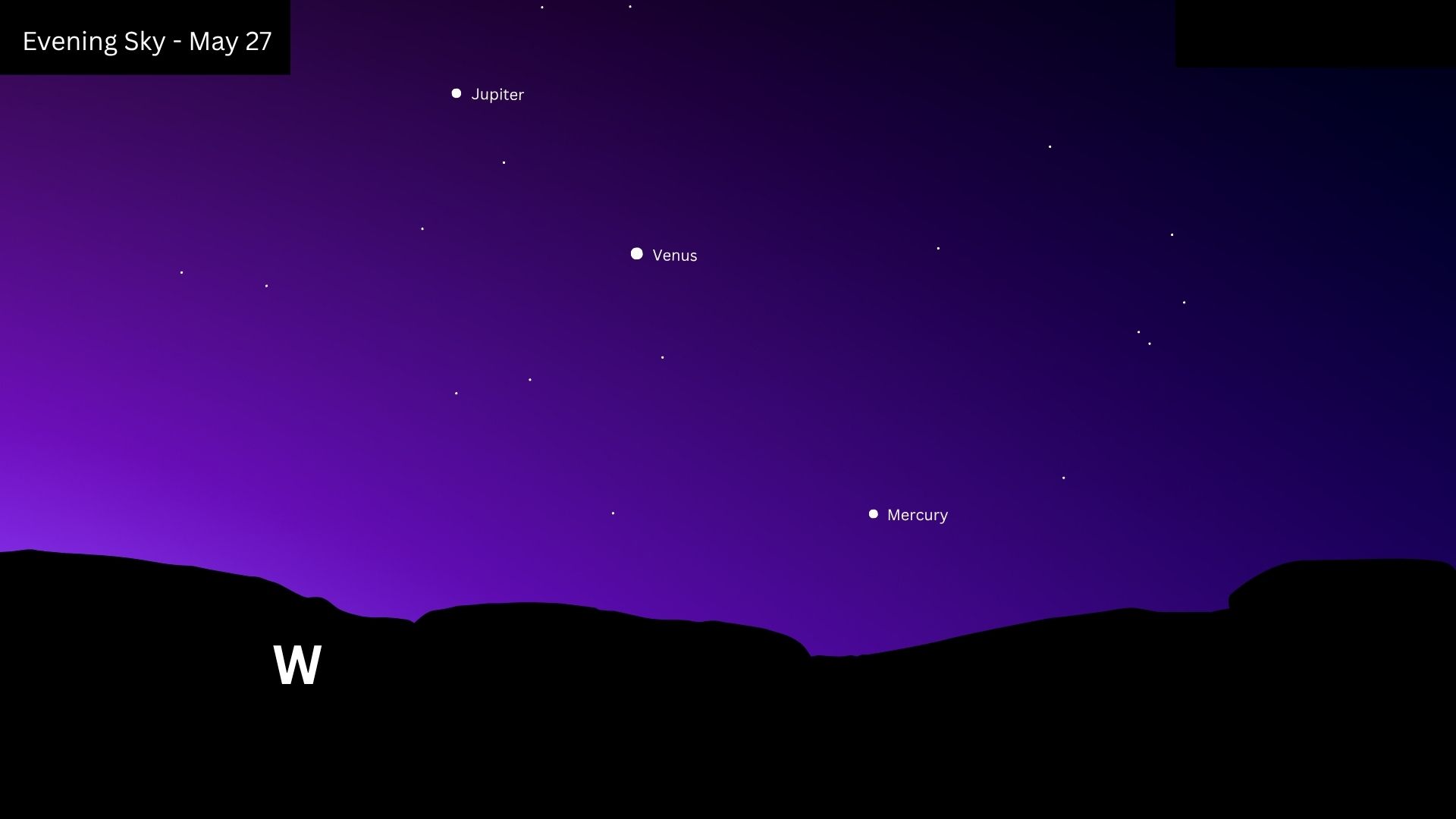
- Jupiter sits about 30 degrees above the horizon, Venus to its lower right, Mercury near the horizon
- Mercury sets just 90 minutes after sunset, so early observation is essential
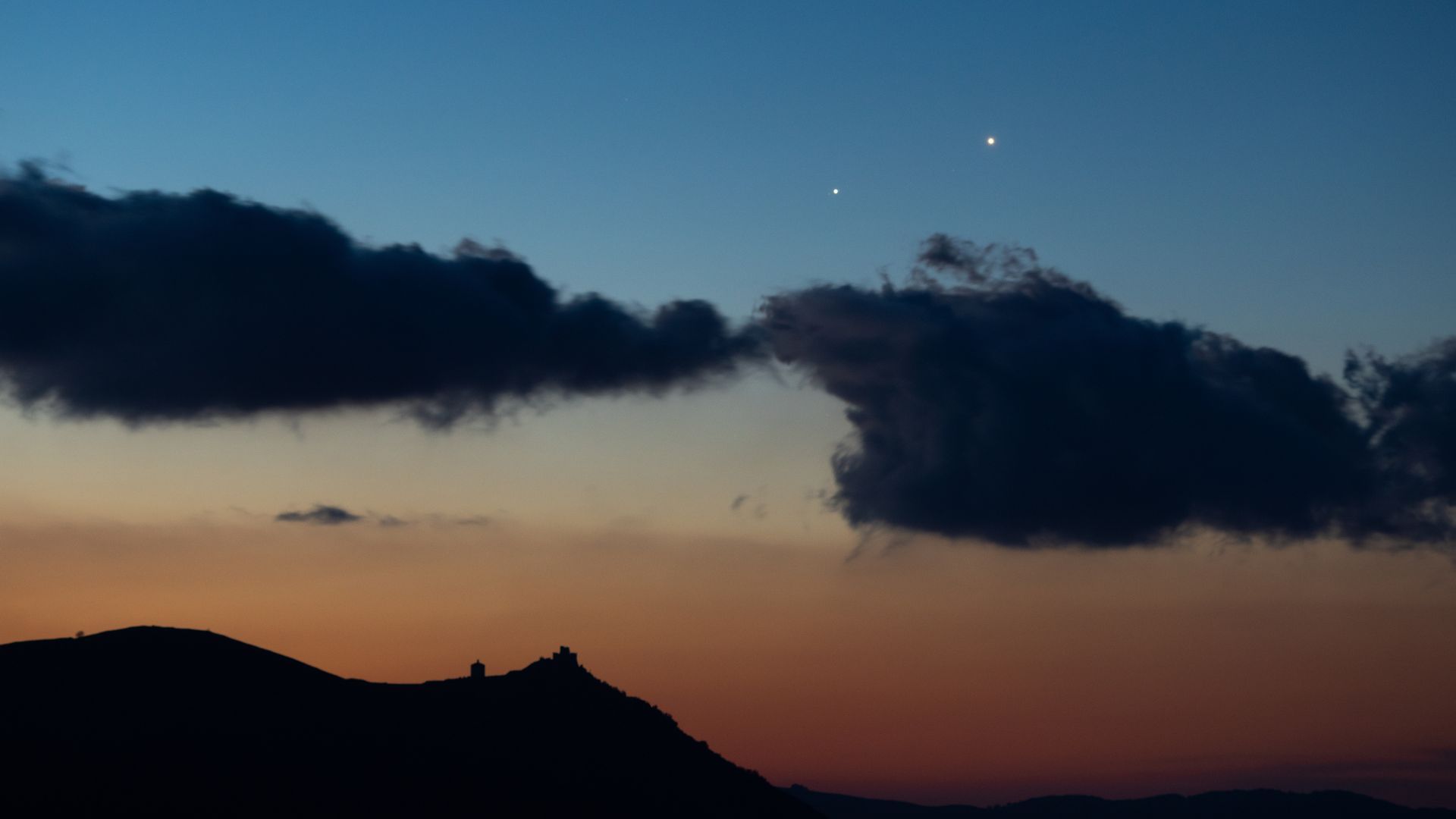
If skies are clear tonight, step outside about 30 minutes after sunset and look west. Three planets will hang in a diagonal line, forming what astronomers call a 'planetary bridge' stretching from Gemini to Taurus.
Jupiter anchors the top of the line, shining as a steady point of light roughly 30 degrees above the western horizon. That's about three fist-widths held at arm's length. Venus appears as a brilliant star-like object to Jupiter's lower right. Mercury completes the trio, glistening close to the horizon in the fading glow of sunset.
When to Look and What You'll See
Timing matters. Mercury sets less than 90 minutes after the sun on May 27 for viewers in the U.S., making it the trickiest of the three to spot. Venus lingers about an hour longer before slipping below the western horizon. Jupiter stays visible later, finally setting shortly before midnight alongside the bright stars Castor and Pollux in Gemini.
For the best view, find a location with a clear western horizon. Tall buildings, trees or hills will obscure Mercury entirely. Wait until the sun is safely below the horizon before using binoculars or a telescope. A site like Time and Date's daylight tracker can tell you exactly when sunset occurs at your location.
What Binoculars and Telescopes Reveal
You don't need equipment to enjoy the alignment. All three planets are visible to the naked eye. But optical aids show details invisible otherwise.
Point a small telescope or steady pair of binoculars at Jupiter and you'll see four bright points clustered around its glowing disk. These are the Galilean moons: Io, Europa, Ganymede and Callisto. Galileo spotted them in 1610 with worse optics than a modern toy telescope.
A 4-inch telescope can reveal the moon-like phases of Venus. The planet currently shows a gibbous phase, similar to a waxing moon. A larger 6 to 8-inch scope will let you pick out the colored cloud bands striping Jupiter's atmosphere, along with storms that dwarf any hurricane on Earth.
“The beauty of a planetary parade lies in its simplicity; you don't need a telescope to appreciate the grandeur of our solar system unfolding right before your eyes.”
— Dr. Sarah Astronomer, Lead Researcher at Space Observatory
What Comes Next
Tonight's alignment is a preview. Venus and Jupiter are converging for a closer conjunction on June 9, 2026. The two brightest planets will appear so close together that casual observers might mistake them for a single object.
Between now and then, Venus will climb higher each evening while Jupiter sinks toward the horizon. Their paths cross in early June.
Tips for Mercury Hunting
Mercury is the hardest planet to observe. It never strays far from the sun, so it's always buried in twilight glow. Stargazing communities on Reddit's r/astronomy recommend these tactics:
- Start looking 20 to 30 minutes after sunset, no earlier
- Use binoculars to scan just above the western horizon
- Find the brightest part of the twilight glow and look slightly above it
- Mercury will appear pinkish or orange through the thick atmosphere near the horizon
If you miss Mercury tonight, don't worry. Venus and Jupiter alone make a striking pair and will remain visible for several more weeks.
Logicity's Take
Frequently Asked Questions
What time should I look for the planetary alignment?
Start observing 20 to 30 minutes after sunset. Mercury sets about 90 minutes after the sun, so earlier is better for seeing all three planets.
Do I need a telescope to see the planets?
No. All three planets are visible to the naked eye. Binoculars or a small telescope will show Jupiter's moons and Venus's phases, but they're optional.
Which direction should I face?
Face west, toward where the sun set. Jupiter will be highest, about 30 degrees above the horizon. Venus sits lower and to the right. Mercury is near the horizon.
Why is Mercury hard to see?
Mercury orbits close to the sun, so it's always low in twilight. The bright glow of the setting sun makes it difficult to spot without a clear horizon.
When is the next planetary event?
Venus and Jupiter will have a close conjunction on June 9, 2026, appearing very near each other in the sky.
Need Help Implementing This?
Source: Latest from Space.com
Manaal Khan
Tech & Innovation Writer
اقرأ أيضاً

رأي مغاير: كيف يؤثر اختراق الأمن الداخلي الأميركي على شركاتنا الخاصة؟
في ظل اختراق عقود الأمن الداخلي الأميركي مع شركات خاصة، نناقش تأثير هذا الاختراق على مستقبل الأمن السيبراني. نستعرض الإحصاءات الموثوقة ونناقش كيف يمكن للشركات الخاصة أن تتعامل مع هذا التهديد. استمتع بقراءة هذا التحليل العميق

الإنسان في زمن ما بعد الوجود البشري: نحو نظام للتعايش بين الإنسان والروبوت - Centre for Arab Unity Studies
في هذا المقال، سنناقش كيف يمكن للبشر والروبوتات التعايش في نظام متكامل. سنستعرض التحديات والحلول المحتملة التي تضعها شركات مثل جوجل وأمازون. كما سنلقي نظرة على التوقعات المستقبلية وفقًا لتقرير ماكنزي

إطلاق ناسا لمهمة مأهولة إلى القمر: خطوة تاريخية نحو استكشاف الفضاء
تعتبر المهمة الجديدة خطوة هامة نحو استكشاف الفضاء وتطوير التكنولوجيا. سوف تشمل المهمة إرسال رواد فضاء إلى سطح القمر لconducting تجارب علمية. ستسهم هذه المهمة في تطوير فهمنا للفضاء وتحسين التكنولوجيا المستخدمة في استكشاف الفضاء.