Intel's cancelled Arctic Sound GPU resurfaces with 32GB HBM2E
Key Takeaways
- A rare Intel Arctic Sound Xe-HP engineering sample with 32GB HBM2E memory has appeared in the wild
- The dual-tile GPU featured 960 Execution Units and a 300W TDP before Intel cancelled it
- Arctic Sound's multi-tile technology directly influenced Intel's Ponte Vecchio and future Jaguar Shores GPUs
A prototype of Intel's cancelled Arctic Sound GPU, part of the Xe-HP (High Performance) family, has surfaced as an engineering sample. The dual-tile data center processor features 32GB of HBM2E memory and represents Intel's 2020-era bet on modular GPU architecture for AI workloads. The chip never reached commercial release, but its technology lives on in Intel's current data center graphics lineup.
Hardware enthusiast account Chips By Layers posted images of the engineering sample on X, noting they had ordered a Ponte Vecchio GPU but received this rare Arctic Sound prototype instead. The mix-up turned into a collector's find. These internal samples were never supposed to leave Intel's labs.
What specs does the Arctic Sound prototype have?
Intel developed Arctic Sound in single-tile, dual-tile, and quad-tile configurations. This particular sample is the dual-tile variant, featuring two GPU dies flanked by eight HBM2E memory chips totaling 32GB of VRAM. The original Xe-HP tile design called for 512 Execution Units each, but actual samples shipped with reduced specs. This unit has 480 EUs per tile, 960 EUs combined, translating to 7,680 shader cores.
The Integrated Heat Spreader shows "Intel Confidential" markings and indicates a 1.00 GHz clock speed with the identifier "QVS8." Total board power sits at 300W. For context, Nvidia's contemporary A100 40GB pulled 400W, while AMD's MI100 consumed 300W. Intel was targeting competitive power efficiency, at least on paper.
Why did Intel cancel Arctic Sound?
Production economics killed it. Intel's EMIB (Embedded Multi-die Interconnect Bridge) technology could connect multiple GPU tiles horizontally, but manufacturing yields and costs made the architecture unviable for commercial volumes. The company essentially used Arctic Sound as an expensive R&D testbed.
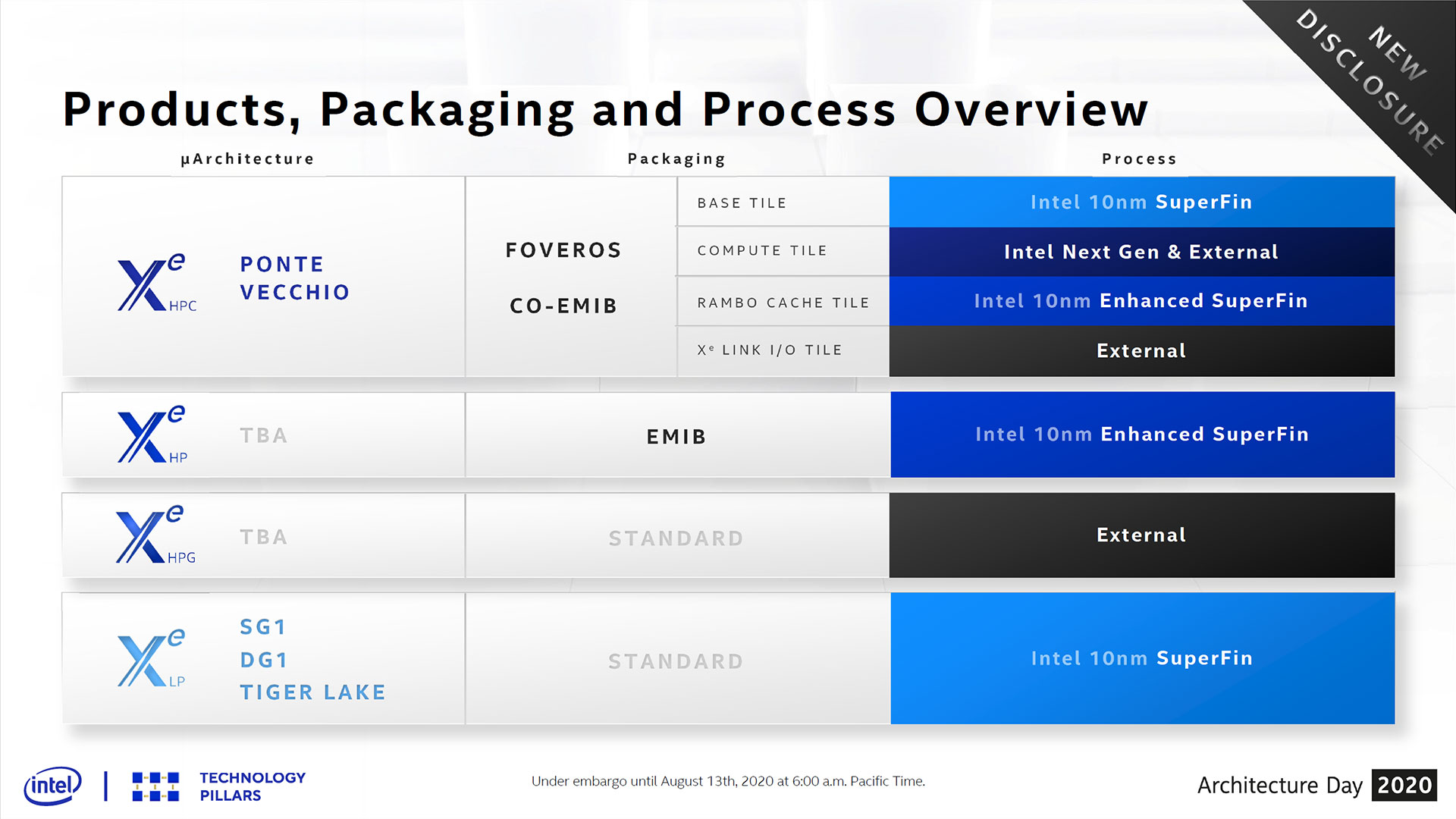
Intel salvaged what it could. The company reworked the design into "Arctic Sound-M," which became the Data Center GPU Flex series using the Xe-HPG (gaming) microarchitecture instead of the original Xe-HP. Meanwhile, the multi-tile lessons fed directly into Ponte Vecchio, a 47-tile monster built using both EMIB and Foveros 3D packaging.
What comes next for Intel's data center GPUs?
Intel's roadmap shows Jaguar Shores arriving next year. It scales the multi-tile concept further and serves as the spiritual successor to both Arctic Sound and Ponte Vecchio. Falcon Shores, which was supposed to directly follow Ponte Vecchio, met the same fate as Arctic Sound. Intel cancelled it last year.
For cost-sensitive data center compute, Intel is developing Crescent Island GPUs with LPDDR5X memory. These target the same market segment Arctic Sound originally aimed for: good-enough AI acceleration without the premium pricing of HBM-equipped flagships. Whether Intel can execute this time remains the open question.
The hardware enthusiast community reacted with a mix of fascination and resignation. Forum discussions on r/hardware highlighted the irony of these "ghost" prototypes escaping into the wild. Some collectors expressed interest in acquiring similar samples, though Intel's confidential markings suggest the company never intended these chips to see daylight.
Frequently asked questions
Frequently Asked Questions
What was Intel Arctic Sound designed for?
Arctic Sound was Intel's 2020 prototype for AI and data center workloads, using a modular multi-tile GPU design to compete with Nvidia's A100 and AMD's Instinct accelerators.
How much memory did the Arctic Sound GPU have?
The dual-tile variant featured 32GB of HBM2E memory across eight chips, with an estimated bandwidth of 1.4 TB/s.
Why was Intel's Arctic Sound GPU cancelled?
Manufacturing costs proved too high. Intel couldn't produce the multi-tile design at competitive prices, so it pivoted the technology into the Flex series and used the learnings for Ponte Vecchio.
What replaced Intel Arctic Sound?
Intel reworked the design into the Data Center GPU Flex series and applied the multi-tile technology to Ponte Vecchio. Jaguar Shores and Crescent Island represent the next generation.
Is the Intel Arctic Sound GPU available to buy?
No. Arctic Sound never reached commercial release. The surfaced unit is an engineering sample that was never intended for sale.
Logicity's Take
Intel's pattern of cancelling ambitious GPU projects (Arctic Sound, Falcon Shores) while competitors ship product explains why the company remains a distant third in data center AI. The technology was never the problem. Execution was. Each cancelled project becomes an expensive lesson that feeds into the next attempt, but Nvidia keeps widening the gap. Intel needs Jaguar Shores to actually ship, not just exist on roadmaps.
How another tech giant is approaching AI infrastructure
Need Help Implementing This?
Evaluating data center GPU options for your AI workloads? Logicity can connect you with infrastructure specialists who track Intel, Nvidia, and AMD roadmaps. Contact our team for vendor-neutral guidance on your compute strategy.
Source: Latest from Tom's Hardware
Manaal Khan
Tech & Innovation Writer
اقرأ أيضاً

رأي مغاير: كيف يؤثر اختراق الأمن الداخلي الأميركي على شركاتنا الخاصة؟
في ظل اختراق عقود الأمن الداخلي الأميركي مع شركات خاصة، نناقش تأثير هذا الاختراق على مستقبل الأمن السيبراني. نستعرض الإحصاءات الموثوقة ونناقش كيف يمكن للشركات الخاصة أن تتعامل مع هذا التهديد. استمتع بقراءة هذا التحليل العميق

الإنسان في زمن ما بعد الوجود البشري: نحو نظام للتعايش بين الإنسان والروبوت - Centre for Arab Unity Studies
في هذا المقال، سنناقش كيف يمكن للبشر والروبوتات التعايش في نظام متكامل. سنستعرض التحديات والحلول المحتملة التي تضعها شركات مثل جوجل وأمازون. كما سنلقي نظرة على التوقعات المستقبلية وفقًا لتقرير ماكنزي

إطلاق ناسا لمهمة مأهولة إلى القمر: خطوة تاريخية نحو استكشاف الفضاء
تعتبر المهمة الجديدة خطوة هامة نحو استكشاف الفضاء وتطوير التكنولوجيا. سوف تشمل المهمة إرسال رواد فضاء إلى سطح القمر لconducting تجارب علمية. ستسهم هذه المهمة في تطوير فهمنا للفضاء وتحسين التكنولوجيا المستخدمة في استكشاف الفضاء.