Instructure Pays Hackers After Two Breaches Hit 275M Students
Key Takeaways
- ShinyHunters breached Instructure twice, stealing data on 275 million students and staff across 9,000 schools
- Instructure paid an undisclosed ransom for hackers to delete stolen data, despite government guidance against such payments
- Similar ransom payments by PowerSchool in 2024 failed to prevent further extortion of its customers
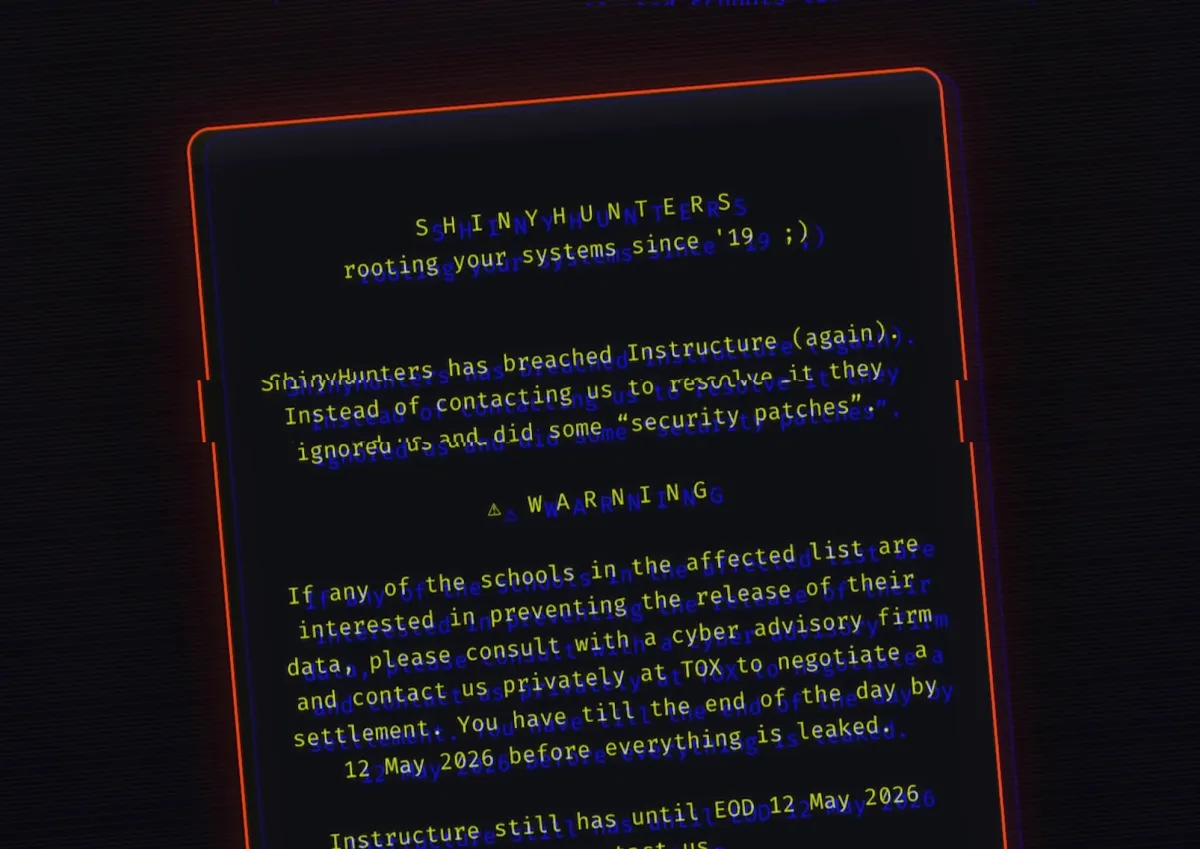
Instructure, the company behind the widely used Canvas learning management system, announced Tuesday it has reached an agreement with the hackers who breached its systems twice in two weeks. The deal comes after the cybercrime group ShinyHunters stole personal information on 275 million students and staff.
The company said hackers provided evidence that stolen data was destroyed. Instructure also stated that Canvas customers would not be extorted going forward. But the announcement raises serious questions about whether paying ransoms actually protects anyone.
What happened
ShinyHunters, a financially motivated cybercrime group, claimed responsibility for the April 29 data breach. The group said it compromised Canvas, which nearly 9,000 schools use to manage student data and coursework. The stolen information included personal details on students and staff.
One week later, the hackers breached Instructure again. This time they defaced Canvas login pages on school websites. The move was designed to pressure the company into paying their ransom demand.
On its incident page late Monday, Instructure acknowledged there is "never complete certainty" when negotiating with cybercriminals. The company noted that customers should not have to engage with hackers directly.
Financial terms of the agreement were not disclosed. Instructure spokesperson Brian Watkins did not respond to requests for comment or answer questions about the deal.
Hackers claim data destroyed
Before the agreement, ShinyHunters threatened to publish the stolen data on its leak site if Instructure did not pay. As of Tuesday, that listing had been removed. This suggests a ransom was paid.
“The data is deleted, gone. The company and it's [sic] customers will not further be targeted or contacted for payment by us.”
— ShinyHunters representative to TechCrunch
The FBI said last week it was "aware" of the system disruption affecting schools and educational institutions around the United States.
Why paying ransoms is risky
The U.S. government has long urged cybercrime victims not to pay ransoms. These payments help criminals profit from attacks and fund future operations.
Security researchers argue victims cannot trust malicious hackers to keep their word. Some cybercriminals have held onto stolen data despite claiming they deleted it. They then continue extorting victims or sell the data to other groups.
The Instructure situation echoes a 2024 cyberattack on PowerSchool. That company, which also makes school information software, suffered a massive breach affecting 70 million students and staff. PowerSchool paid hackers to return stolen data. But several of its customers were later extorted by another crime group that possessed data from the breach. The data had not been destroyed.
The education sector's growing vulnerability
Schools and educational technology companies have become prime targets for cybercriminals. These organizations hold vast amounts of sensitive data. Personal information on minors is particularly valuable on dark web marketplaces.
Canvas serves nearly 9,000 schools. A single breach at Instructure can expose students and staff across thousands of institutions. These organizations often lack the security resources of large enterprises but hold equally sensitive data.
The PowerSchool and Instructure breaches both demonstrate a troubling pattern. EdTech companies that consolidate student data become single points of failure. When they get breached, the impact cascades across the entire education system.
Logicity's Take
What schools should do now
Schools that use Canvas should assume their data was compromised. Instructure has not disclosed which specific institutions were affected or what data was taken.
- Monitor student and staff accounts for signs of identity theft
- Review data sharing agreements with EdTech vendors
- Consider credit monitoring services for affected individuals
- Document the incident for potential regulatory reporting
- Evaluate vendor security practices before renewing contracts
The breach also highlights the need for schools to understand exactly what data they share with third-party platforms. Many institutions have limited visibility into how vendors store and protect sensitive information.
Frequently Asked Questions
How many people were affected by the Instructure Canvas breach?
ShinyHunters claimed to have stolen personal information on 275 million students and staff across nearly 9,000 schools that use Canvas.
Did Instructure pay a ransom to the hackers?
Instructure did not disclose financial terms, but the removal of stolen data from ShinyHunters' leak site and the hackers' statement suggest a payment was made.
Is the stolen student data actually destroyed?
ShinyHunters claims the data is deleted, and Instructure says hackers provided evidence of destruction. However, security experts warn that cybercriminals often retain copies despite such claims. The 2024 PowerSchool breach showed that paying ransoms does not guarantee data deletion.
What should schools using Canvas do now?
Schools should assume their data was compromised, monitor for identity theft, review vendor security agreements, and consider credit monitoring for affected students and staff.
Why do cybercriminals target schools?
Educational institutions hold large amounts of sensitive personal data, including information on minors. This data is valuable on dark web marketplaces, and schools often have fewer security resources than large corporations.
Need Help Implementing This?
Source: TechCrunch / Zack Whittaker
Huma Shazia
Senior AI & Tech Writer
اقرأ أيضاً

رأي مغاير: كيف يؤثر اختراق الأمن الداخلي الأميركي على شركاتنا الخاصة؟
في ظل اختراق عقود الأمن الداخلي الأميركي مع شركات خاصة، نناقش تأثير هذا الاختراق على مستقبل الأمن السيبراني. نستعرض الإحصاءات الموثوقة ونناقش كيف يمكن للشركات الخاصة أن تتعامل مع هذا التهديد. استمتع بقراءة هذا التحليل العميق

الإنسان في زمن ما بعد الوجود البشري: نحو نظام للتعايش بين الإنسان والروبوت - Centre for Arab Unity Studies
في هذا المقال، سنناقش كيف يمكن للبشر والروبوتات التعايش في نظام متكامل. سنستعرض التحديات والحلول المحتملة التي تضعها شركات مثل جوجل وأمازون. كما سنلقي نظرة على التوقعات المستقبلية وفقًا لتقرير ماكنزي

إطلاق ناسا لمهمة مأهولة إلى القمر: خطوة تاريخية نحو استكشاف الفضاء
تعتبر المهمة الجديدة خطوة هامة نحو استكشاف الفضاء وتطوير التكنولوجيا. سوف تشمل المهمة إرسال رواد فضاء إلى سطح القمر لconducting تجارب علمية. ستسهم هذه المهمة في تطوير فهمنا للفضاء وتحسين التكنولوجيا المستخدمة في استكشاف الفضاء.