Humanity Just Returned to the Moon After 54 Years — And the Landing Was Absolutely Wild

Four astronauts splashed down in the Pacific Ocean on Friday evening after an epic 10-day journey around the Moon, marking humanity's first lunar voyage since 1972. The Artemis II crew survived a harrowing reentry at 30 times the speed of sound, with temperatures outside their capsule reaching a scorching 5,000 degrees Fahrenheit. This mission shattered records and made history in ways nobody expected.
Key Takeaways
- Four astronauts successfully completed humanity's first journey to the Moon since December 1972, traveling over 700,000 miles total
- The crew set a new record for human distance from Earth at 252,756 miles, surpassing the previous Apollo 13 record
- Victor Glover became the first person of color, Christina Koch the first woman, and Jeremy Hansen the first non-American to travel beyond low Earth orbit
In This Article
- A Fiery Homecoming That Had Everyone Holding Their Breath
- Meet the Crew Who Just Made History
- The Mind-Blowing Numbers Behind This Mission
- It Wasn't All Smooth Sailing (Or Floating)
- The Navy's Precision Recovery Mission
- The Road to Actually Landing on the Moon
A Fiery Homecoming That Had Everyone Holding Their Breath
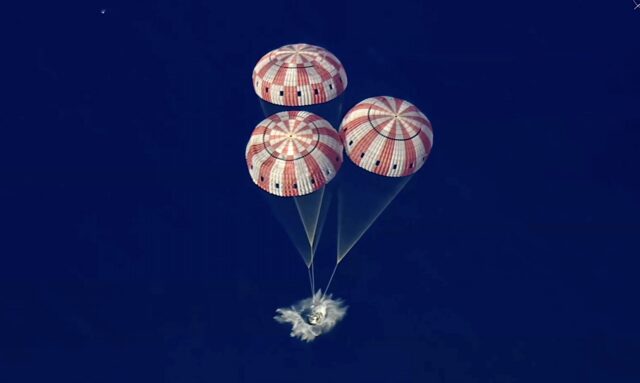
Picture this: a spacecraft hurtling toward Earth at roughly 25,000 miles per hour, surrounded by a glowing envelope of superheated plasma reaching 5,000 degrees Fahrenheit. For six agonizing minutes, all communication with the crew went completely silent. That's what the Artemis II astronauts experienced on Friday evening as they punched through Earth's atmosphere at more than 30 times the speed of sound.
- The Orion spacecraft, nicknamed 'Integrity,' blazed a fiery trail across the Pacific Ocean before deploying its massive parachutes — each covering 10,500 square feet of canopy
- In just 14 minutes, the capsule shed nearly 25,000 mph of velocity, subjecting the crew to two intense periods of approximately 3.9 Gs of force
- The spacecraft touched down at precisely 8:07 PM Eastern Time, landing within less than a mile of the target zone southwest of San Diego
Meet the Crew Who Just Made History
This wasn't just any spaceflight — the Artemis II mission rewrote the history books in multiple ways. The four-person crew represented a diverse group of trailblazers, each claiming a historic first.
- Victor Glover became the first person of color to venture beyond low Earth orbit and travel to lunar distance
- Christina Koch made history as the first woman to fly toward the Moon, breaking barriers that have stood for over five decades
- Jeremy Hansen became the first Canadian astronaut and first non-American to journey to the Moon — this was also his first trip to space
- Commander Reid Wiseman, a seasoned NASA veteran, led the mission and became the oldest person to travel beyond low Earth orbit
The Mind-Blowing Numbers Behind This Mission
When it comes to space travel, the statistics alone can leave you speechless. The Artemis II mission delivered some truly jaw-dropping figures that highlight just how ambitious this journey was.
- The crew traveled a total of 700,237 miles during their 10-day odyssey around the Moon
- At their farthest point, the astronauts reached 252,756 miles from Earth — smashing the previous distance record held by Apollo 13 since 1970
- Peak velocity hit an incredible 24,664 miles per hour, with the spacecraft nailing its flight path angle target within just 0.4 percent accuracy
- The entry range covered 1,957 miles across Earth's atmosphere before the final splashdown
It Wasn't All Smooth Sailing (Or Floating)
Space travel rarely goes exactly according to plan, and Artemis II had its share of unexpected challenges. Despite the triumphant outcome, the crew faced some awkward technical hiccups that tested their resilience and problem-solving skills.
- The spacecraft's drinking water system experienced valve problems that required creative workarounds
- The propellant systems also encountered valve issues during the mission
- Perhaps most inconvenient: toilet troubles prevented the crew from using it for urination during most of the trip, forcing them to rely on backup bags and funnels — just like the Apollo astronauts did decades ago
The Navy's Precision Recovery Mission
Getting astronauts safely home doesn't end at splashdown. The USS John P. Murtha, an amphibious transport dock ship, was positioned in the recovery zone to execute a carefully choreographed extraction operation.
- Navy divers and helicopters moved quickly to reach the bobbing capsule in the Pacific waters
- Christina Koch was the first to exit, stepping onto an inflatable raft positioned next to the spacecraft
- Following protocol, Commander Wiseman — as captain of the ship — was the last to leave the capsule
- Within two hours of splashdown, all four astronauts were safely aboard the recovery vessel and undergoing medical evaluations
The Road to Actually Landing on the Moon
While Artemis II was a monumental achievement, it was still just a flyby mission — the astronauts orbited around the Moon but didn't touch down on its surface. That milestone is coming on a future Artemis mission, and NASA is already preparing for that next giant leap.
- This mission served as the first crewed test flight of NASA's Space Launch System rocket and Orion spacecraft, validating the systems for deeper space exploration
- Future Artemis missions will involve landing astronauts on the lunar surface using spacecraft developed by SpaceX and Blue Origin
- The success of Artemis II paves the way for establishing a sustained human presence on and around the Moon
- NASA Administrator Jared Isaacman watched the splashdown from a nearby vessel, praising the crew as 'ambassadors from humanity to the stars'
“What a journey. We are stable. Four green crewmembers.”
— Reid Wiseman, Artemis II Commander
“These were the ambassadors from humanity to the stars. I can't imagine a better crew that just completed a perfect mission right now.”
— Jared Isaacman, NASA Administrator
“I think about our crew members that we've all had an opportunity to observe over the last 10 days, absolutely professional astronauts and wonderful communicators, almost poets.”
— Jared Isaacman, NASA Administrator
Final Thoughts
After 54 years, humanity has finally returned to lunar space — and what a return it was. The Artemis II mission proved that NASA's next-generation hardware can safely transport humans to the Moon and back, setting the stage for even more ambitious missions ahead. With SpaceX and Blue Origin working on lunar landers and NASA pushing forward with its Artemis program, we're witnessing the beginning of a new era in space exploration. The four astronauts who just survived that 5,000-degree reentry aren't just returning heroes — they're pioneers who've opened the door for all of us to follow.
Sources & Credits
Originally reported by Ars Technica
Huma Shazia
Senior AI & Tech Writer
Also Read

رأي مغاير: كيف يؤثر اختراق الأمن الداخلي الأميركي على شركاتنا الخاصة؟
في ظل اختراق عقود الأمن الداخلي الأميركي مع شركات خاصة، نناقش تأثير هذا الاختراق على مستقبل الأمن السيبراني. نستعرض الإحصاءات الموثوقة ونناقش كيف يمكن للشركات الخاصة أن تتعامل مع هذا التهديد. استمتع بقراءة هذا التحليل العميق

الإنسان في زمن ما بعد الوجود البشري: نحو نظام للتعايش بين الإنسان والروبوت - Centre for Arab Unity Studies
في هذا المقال، سنناقش كيف يمكن للبشر والروبوتات التعايش في نظام متكامل. سنستعرض التحديات والحلول المحتملة التي تضعها شركات مثل جوجل وأمازون. كما سنلقي نظرة على التوقعات المستقبلية وفقًا لتقرير ماكنزي

إطلاق ناسا لمهمة مأهولة إلى القمر: خطوة تاريخية نحو استكشاف الفضاء
تعتبر المهمة الجديدة خطوة هامة نحو استكشاف الفضاء وتطوير التكنولوجيا. سوف تشمل المهمة إرسال رواد فضاء إلى سطح القمر لconducting تجارب علمية. ستسهم هذه المهمة في تطوير فهمنا للفضاء وتحسين التكنولوجيا المستخدمة في استكشاف الفضاء.