Hubble Captures Hypnotic Spiral Galaxy M88 in New Image
Key Takeaways
- Hubble captured M88, an active spiral galaxy 63 million light-years from Earth
- The galaxy hosts a supermassive black hole estimated at 100 million solar masses
- M88 is losing its star-forming gas through ram-pressure stripping as it moves through the Virgo Cluster
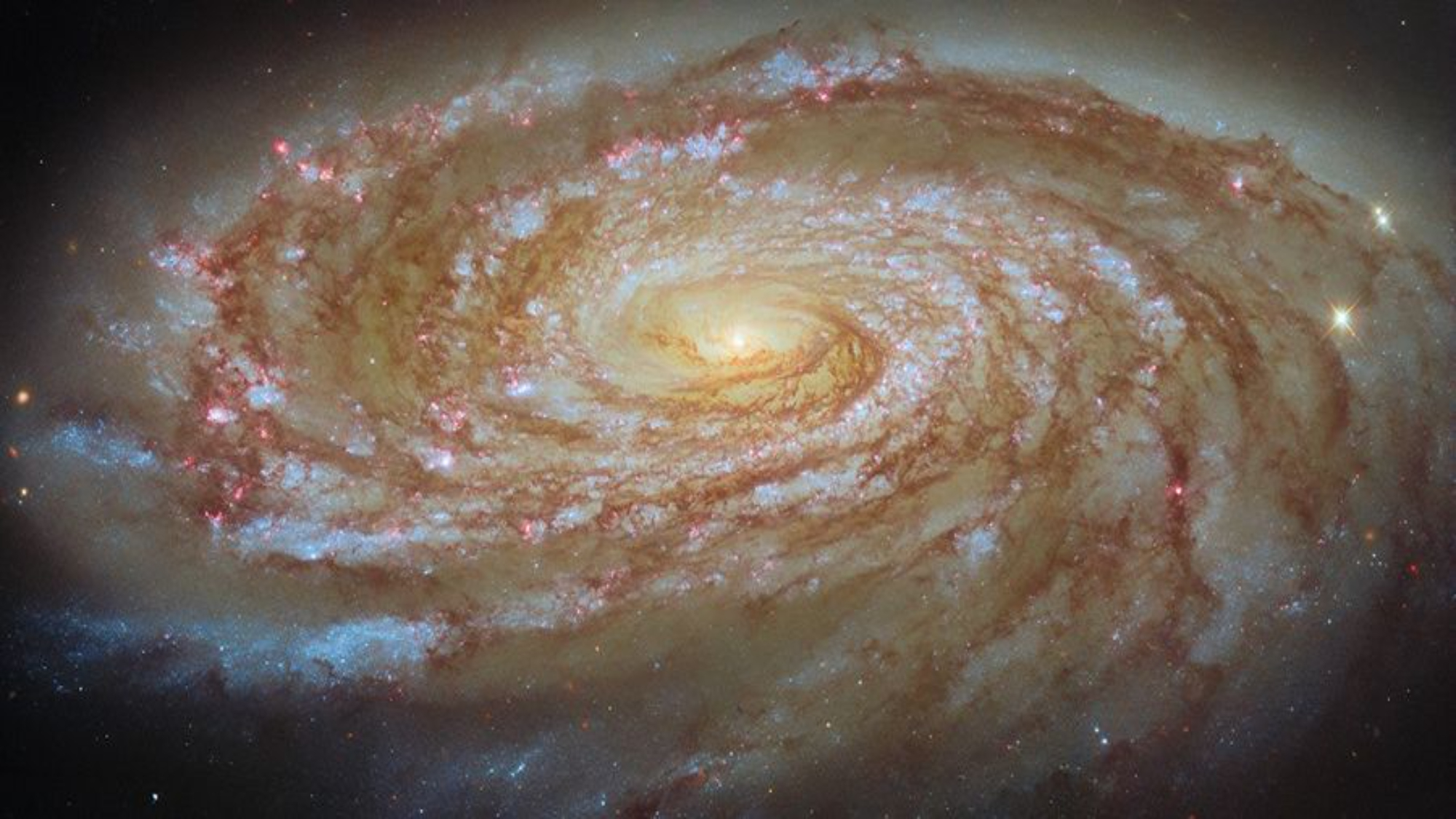
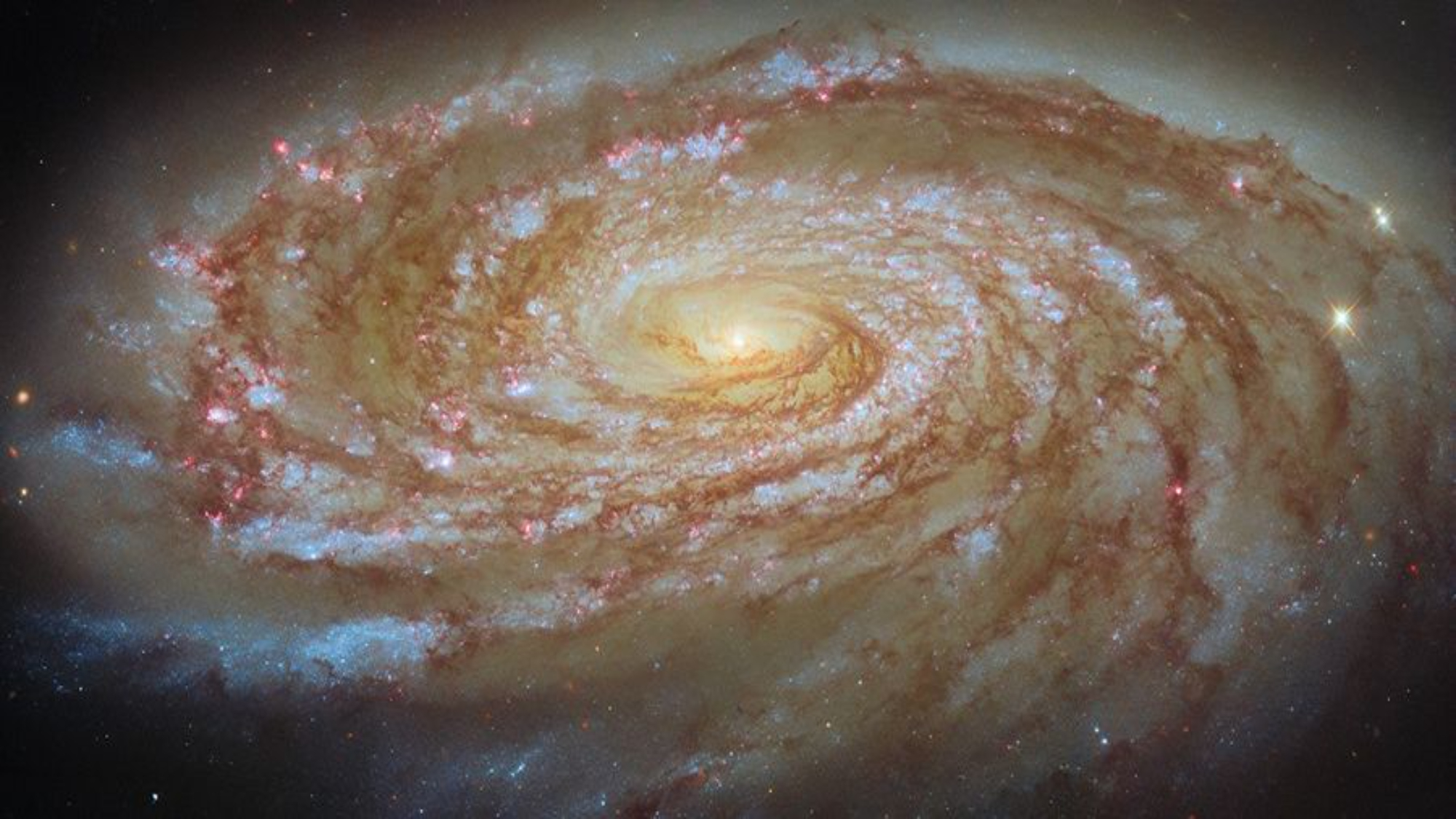
The Hubble Space Telescope has delivered another cosmic gem. A new image shows Messier 88 (M88), also known as NGC 4501, a spiral galaxy whose tightly wound arms create an almost hypnotic swirl of light blue, red, and brown hues punctuated by millions of stars.
M88 sits roughly 63 million light-years away in the constellation Coma Berenices, which translates to "Berenice's Hair." The galaxy is one of over 1,000 members of the Virgo Cluster, a massive collection of galaxies that gives astronomers a natural laboratory for studying galactic evolution.
What Makes M88 an Active Galaxy
At the heart of M88 lies a supermassive black hole estimated at 100 million solar masses. This black hole's gravity pulls in enormous amounts of gas and dust from the surrounding space, making M88 what astronomers call an "active galaxy." The material falling toward the black hole releases energy across the electromagnetic spectrum, from radio waves to X-rays.
The galaxy's spiral structure is unmistakable in the Hubble image. Two distinct arms wind outward from the bright central core, their blue tones indicating regions of active star formation where hot, young stars dominate the light output.
A Galaxy Losing Its Gas
M88 is not just sitting still in the Virgo Cluster. It is moving through the cluster's hot intergalactic medium, a thin soup of gas that fills the space between galaxies. This motion has consequences.
“M88 is currently on a perilous journey... as it moves through the cluster, it experiences ram-pressure stripping, a process where the gas between galaxies sweeps away its own gas.”
— ESA/Hubble Science Communication Team
Ram-pressure stripping acts like a cosmic headwind. As M88 plows through the Virgo Cluster, the intergalactic gas pushes against the galaxy's own gas supply, gradually stripping it away. Since gas is the raw material for star formation, this process will eventually slow or halt the galaxy's ability to create new stars.
This makes M88 a valuable target for researchers studying galactic evolution. By observing galaxies at different stages of ram-pressure stripping, astronomers can piece together how dense cluster environments transform spiral galaxies over billions of years.
Hubble's Ongoing Mission
Astronomers captured this image using Hubble's Wide Field Camera 3, an instrument capable of resolving fine details in objects tens of millions of light-years distant. The observation was part of a broader investigation into how spiral galaxies behave in different cosmic environments.
Hubble has been observing the cosmos since 1990. Over 36 years later, the telescope continues to produce images that reveal the universe in ways impossible from the ground. While newer instruments like the James Webb Space Telescope and the upcoming Nancy Grace Roman Space Telescope focus on infrared wavelengths and wide-field surveys, Hubble's visible-light observations remain essential for understanding nearby galaxies like M88.
The Virgo Cluster's Scale
The Virgo Cluster is the closest major galaxy cluster to our own Local Group, which contains the Milky Way and Andromeda. With more than 1,000 galaxies spread across about 15 million light-years, the cluster is massive enough to influence the motion of nearby galaxy groups through its gravitational pull.
M88 is one of the brighter members of this cluster. Its relatively close proximity and face-on orientation, meaning we view it from above rather than edge-on, make it an ideal target for detailed study. The face-on view is what gives the Hubble image its striking spiral appearance.
Logicity's Take
Frequently Asked Questions
How far away is the Messier 88 galaxy?
M88 is located approximately 63 million light-years from Earth in the constellation Coma Berenices.
What is ram-pressure stripping?
Ram-pressure stripping occurs when a galaxy moves through hot intergalactic gas in a cluster. The gas acts like a headwind, gradually sweeping away the galaxy's own gas supply and reducing its ability to form new stars.
How big is the black hole at the center of M88?
The supermassive black hole at M88's center is estimated at 100 million solar masses.
What is the Virgo Cluster?
The Virgo Cluster is a collection of over 1,000 galaxies located in the Virgo constellation. It is the closest major galaxy cluster to our Local Group.
Is the Hubble Space Telescope still operating?
Yes. Hubble has been observing the cosmos since 1990 and continues to capture detailed images of galaxies, nebulae, and other astronomical objects.
Need Help Implementing This?
Source: Latest from Space.com
Huma Shazia
Senior AI & Tech Writer
اقرأ أيضاً

رأي مغاير: كيف يؤثر اختراق الأمن الداخلي الأميركي على شركاتنا الخاصة؟
في ظل اختراق عقود الأمن الداخلي الأميركي مع شركات خاصة، نناقش تأثير هذا الاختراق على مستقبل الأمن السيبراني. نستعرض الإحصاءات الموثوقة ونناقش كيف يمكن للشركات الخاصة أن تتعامل مع هذا التهديد. استمتع بقراءة هذا التحليل العميق

الإنسان في زمن ما بعد الوجود البشري: نحو نظام للتعايش بين الإنسان والروبوت - Centre for Arab Unity Studies
في هذا المقال، سنناقش كيف يمكن للبشر والروبوتات التعايش في نظام متكامل. سنستعرض التحديات والحلول المحتملة التي تضعها شركات مثل جوجل وأمازون. كما سنلقي نظرة على التوقعات المستقبلية وفقًا لتقرير ماكنزي

إطلاق ناسا لمهمة مأهولة إلى القمر: خطوة تاريخية نحو استكشاف الفضاء
تعتبر المهمة الجديدة خطوة هامة نحو استكشاف الفضاء وتطوير التكنولوجيا. سوف تشمل المهمة إرسال رواد فضاء إلى سطح القمر لconducting تجارب علمية. ستسهم هذه المهمة في تطوير فهمنا للفضاء وتحسين التكنولوجيا المستخدمة في استكشاف الفضاء.