Huawei Watch Buds 2: Wearable Tech Convergence Strategy
Key Takeaways
- Device convergence reduces enterprise hardware costs by eliminating separate earbud purchases
- Titanium construction cuts weight 18% while maintaining durability for field workers
- Health monitoring features align with corporate wellness program requirements
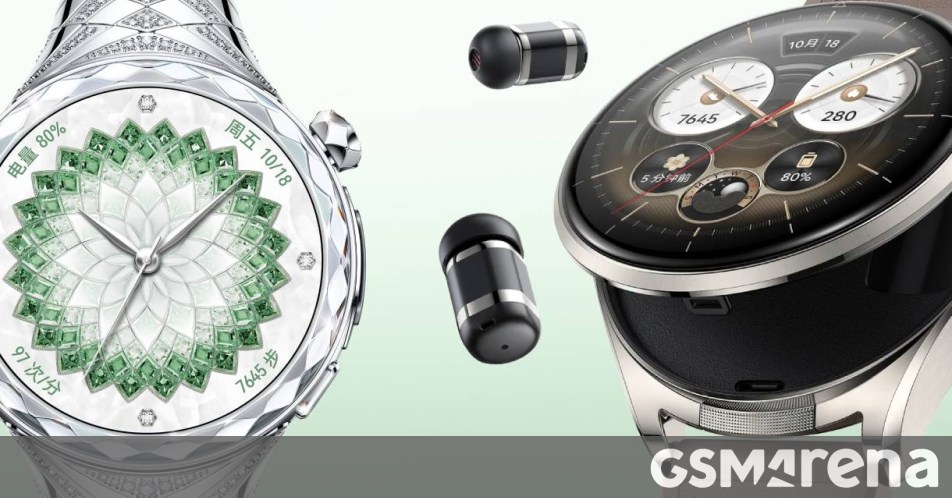
According to [GSMArena](https://www.gsmarena.com/lighter_huawei_watch_buds_2_unveiled_diamondstuddedhuawei_watch_ultimate_brings_the_bling-news-72453.php), Huawei has unveiled the Watch Buds 2, a refined smartwatch that houses TWS earbuds inside its case, now 18% lighter than its predecessor thanks to titanium alloy construction.
Read in Short
Huawei's Watch Buds 2 packs earbuds inside a smartwatch, cutting two devices into one. For enterprises managing hundreds of employee devices, this convergence trend could slash procurement costs and simplify IT asset management. The real story isn't the gadget itself. It's what device consolidation means for your hardware strategy.
Why Should Business Leaders Care About Smartwatch Earbud Combos?
On the surface, the Huawei Watch Buds 2 looks like another consumer gadget announcement. But underneath the specs and diamond editions lies a trend that CTOs and procurement officers should pay attention to: device convergence is accelerating.
Think about your current enterprise wearable situation. Sales teams carry smartwatches for notifications. They also carry earbuds for calls. Field workers might have fitness trackers for safety monitoring. Each device means separate procurement, separate charging infrastructure, and separate IT support tickets.
When one device can replace two, the math changes. Not just on hardware costs, but on total cost of ownership. Fewer devices to lose. Fewer chargers to manage. Fewer compatibility issues when employees switch phones.
Huawei Watch Buds 2 Specs: What Matters for Enterprise Use
Let's break down the specifications through an enterprise lens. Consumer tech reviews will obsess over screen brightness and sports modes. Business buyers need to know if this device can survive a workday and meet compliance requirements.
| Specification | Watch Buds 2 | Enterprise Relevance |
|---|---|---|
| Weight | 54.5g (titanium alloy) | Comfortable for all-day wear by field staff |
| Battery Life | 3 days (includes earbud charging) | Survives long shifts without charger access |
| Earbud Playback | 4 hours (3 with ANC) | Covers most meeting schedules |
| Water Resistance | Watch: None, Buds: IP54 | Indoor/office use only, not field-rated |
| Display | 1.5" LTPO OLED, 3000 nits | Readable in bright warehouse lighting |
| Health Sensors | Heart rate, sleep, 12 emotional states | Corporate wellness program compatible |
The critical limitation here is water resistance. The watch itself has no water rating, which immediately rules out field deployment in wet environments. For office-based staff, sales teams, or warehouse workers in dry conditions, that's not a dealbreaker. For anyone working outdoors or in manufacturing, it's a non-starter.
The Device Convergence Trend: What It Means for IT Procurement
Huawei isn't alone in pursuing device convergence. Apple's AirPods increasingly integrate with Apple Watch. Samsung bundles wearables together. The industry is moving toward fewer, more capable devices rather than specialized single-purpose gadgets.
Procurement Calculation
Consider a 500-person sales team. Current setup: smartwatch ($300) + TWS earbuds ($150) = $450 per employee, $225,000 total. Converged device at estimated $400 = $200,000 total, plus reduced IT support tickets for lost or mismatched earbuds. The savings compound when you factor in replacement cycles.
The clever engineering in Watch Buds 2 solves a real annoyance: left-right earbud confusion. The buds automatically detect which ear they're in. For IT support teams tired of explaining to executives which earbud goes where, that's one less ticket category.
Corporate Wellness Programs: Health Features That Actually Matter
The health monitoring features deserve attention from HR leaders running corporate wellness initiatives. The Watch Buds 2 includes 24/7 heart rate monitoring, sleep quality assessment, and an unusual feature: emotional state recognition across 12 moods.
Now, emotional tracking through a watch raises obvious questions about employee privacy and data handling. Any enterprise deployment would need clear policies about data ownership and opt-in consent. But the underlying capability points to where wearables are heading: from step counting to genuine health insights.
- Heart rate variability tracking can indicate stress levels across teams
- Sleep quality data correlates with productivity and safety incident risk
- 90+ sports modes support diverse wellness program incentives
- AI-powered performance analysis could personalize wellness recommendations
For companies self-insuring or negotiating group health premiums, aggregated (anonymized) wellness data from wearables can demonstrate workforce health improvements. Some insurers already offer premium discounts for companies with active wellness tracking programs.
If you're streamlining hardware, consider streamlining administrative processes too
The Luxury Market Signal: What Diamond Editions Tell Us
Huawei also announced the Watch Ultimate Star Diamond Edition, covered in 98 natural diamonds with a diamond-studded crown. This isn't enterprise hardware. But it's a market signal worth noting.
Luxury tech is growing faster than the broader consumer electronics market. When Huawei invests in diamond-encrusted smartwatches, they're chasing high-margin segments while the commodity smartwatch market commoditizes. For investors tracking Huawei's strategy, this diversification matters.
The Diamond Edition does include serious health features: ECG sensor, blood pressure measurement via the X-TAP Smart Button, and 60-second comprehensive health checks. Even at the luxury tier, health monitoring is the value proposition. That tells you where the entire wearable industry sees growth.
HarmonyOS Ecosystem: Enterprise Compatibility Considerations
The Watch Buds 2 runs HarmonyOS, Huawei's in-house operating system developed after Google services became unavailable on Huawei devices. For enterprise buyers, this raises practical questions about ecosystem compatibility.
✅ Pros
- • Works with Android and iOS devices for basic functions
- • NFC payments functional in supported regions
- • Independent ecosystem reduces reliance on Google/Apple infrastructure
- • Tight integration with Huawei smartphones for full features
❌ Cons
- • Limited third-party app ecosystem compared to Wear OS
- • Some features restricted by region (NFC transit cards China-only)
- • Enterprise MDM (Mobile Device Management) integration unclear
- • Long-term software support uncertain given geopolitical factors
For companies already using Huawei enterprise solutions, the ecosystem lock-in might actually be attractive. Single-vendor environments simplify support. For mixed-device enterprises, the compatibility constraints could create friction.
Should Your Company Invest in Converged Wearables?
The Watch Buds 2 itself may or may not fit your specific needs. Water resistance limitations and HarmonyOS ecosystem constraints are real factors. But the broader trend it represents deserves a place in your technology roadmap discussions.
- Audit your current wearable footprint: How many device categories do employees carry?
- Calculate total cost of ownership: Include support tickets, replacements, and charging infrastructure
- Evaluate wellness program integration: Can converged devices provide better health data?
- Assess ecosystem lock-in risks: Single-vendor vs multi-vendor strategies
- Plan refresh cycles: Converged devices may justify accelerated replacement of older separate devices
The companies that get ahead of device convergence will have cleaner asset inventories, simpler support matrices, and employees who actually use their issued technology because carrying one device beats carrying three.
Subscription models are reshaping hardware economics across industries
Frequently Asked Questions About Enterprise Wearables
Frequently Asked Questions
How much does the Huawei Watch Buds 2 cost for enterprise deployment?
Pricing hasn't been officially announced for all markets yet. Consumer pricing typically ranges $350-450 for similar converged devices. Enterprise bulk pricing would need negotiation with Huawei business sales. Factor in 15-25% savings for volume purchases of 100+ units.
Can converged wearables like Watch Buds 2 integrate with enterprise MDM systems?
HarmonyOS MDM support is limited compared to Wear OS or Apple Watch. Huawei offers its own enterprise management tools, but integration with third-party MDM platforms like VMware Workspace ONE or Microsoft Intune requires verification with Huawei enterprise sales.
Is the health data from smartwatches HIPAA compliant for corporate wellness programs?
Consumer smartwatches are generally not HIPAA-compliant medical devices. For corporate wellness programs, use them for general fitness tracking and wellness incentives only. Clinical applications require FDA-cleared medical wearables with appropriate data handling certifications.
How long do converged smartwatch-earbud devices typically last before replacement?
Expect 2-3 year useful life for enterprise deployment. The earbuds, with their small batteries experiencing frequent charge cycles, often degrade before the watch does. Budget for mid-cycle battery replacements if the manufacturer offers them.
Are there security risks with smartwatches that include earbuds and microphones?
Any device with microphones and wireless connectivity presents potential security considerations. For high-security environments, treat these devices like smartphones: restrict from sensitive meetings, implement usage policies, and evaluate data transmission practices with your security team.
Logicity's Take
We build AI agents and automation systems at Logicity, not consumer hardware. But we pay attention when device form factors shift, because it changes how people interact with the systems we build. The Watch Buds 2's integrated approach mirrors what we see in software: clients don't want five separate tools, they want one system that handles multiple workflows. That's why we build with composable architectures using Next.js and Sanity CMS rather than monolithic platforms. The hardware convergence trend will eventually affect interface design too. Voice-first interactions through always-available earbuds, quick glances at watch notifications that link to full dashboards, health data feeding into workplace safety systems. For Indian enterprises specifically, Huawei's strong presence in the subcontinent means this ecosystem is worth watching. We've seen clients in manufacturing and logistics evaluating wearables for workforce management. The key question isn't whether to adopt wearables. It's whether the ecosystem plays nicely with your existing Microsoft, Google, or hybrid infrastructure. That integration layer is where we spend our time, and where most enterprise wearable deployments actually succeed or fail.
Need Help Implementing This?
Logicity helps businesses integrate new technologies into existing workflows. Whether you're evaluating wearables for corporate wellness programs, building dashboards to visualize health data, or automating device management processes, our team can help you move from evaluation to deployment. We specialize in AI agents, automation systems, and enterprise integrations using Claude API, n8n, and custom Next.js solutions. Contact us to discuss your technology strategy.
Source: GSMArena.com / Peter
Manaal Khan
Tech & Innovation Writer
اقرأ أيضاً

رأي مغاير: كيف يؤثر اختراق الأمن الداخلي الأميركي على شركاتنا الخاصة؟
في ظل اختراق عقود الأمن الداخلي الأميركي مع شركات خاصة، نناقش تأثير هذا الاختراق على مستقبل الأمن السيبراني. نستعرض الإحصاءات الموثوقة ونناقش كيف يمكن للشركات الخاصة أن تتعامل مع هذا التهديد. استمتع بقراءة هذا التحليل العميق

الإنسان في زمن ما بعد الوجود البشري: نحو نظام للتعايش بين الإنسان والروبوت - Centre for Arab Unity Studies
في هذا المقال، سنناقش كيف يمكن للبشر والروبوتات التعايش في نظام متكامل. سنستعرض التحديات والحلول المحتملة التي تضعها شركات مثل جوجل وأمازون. كما سنلقي نظرة على التوقعات المستقبلية وفقًا لتقرير ماكنزي

إطلاق ناسا لمهمة مأهولة إلى القمر: خطوة تاريخية نحو استكشاف الفضاء
تعتبر المهمة الجديدة خطوة هامة نحو استكشاف الفضاء وتطوير التكنولوجيا. سوف تشمل المهمة إرسال رواد فضاء إلى سطح القمر لconducting تجارب علمية. ستسهم هذه المهمة في تطوير فهمنا للفضاء وتحسين التكنولوجيا المستخدمة في استكشاف الفضاء.