How to Read the Sun Eater Books in Order
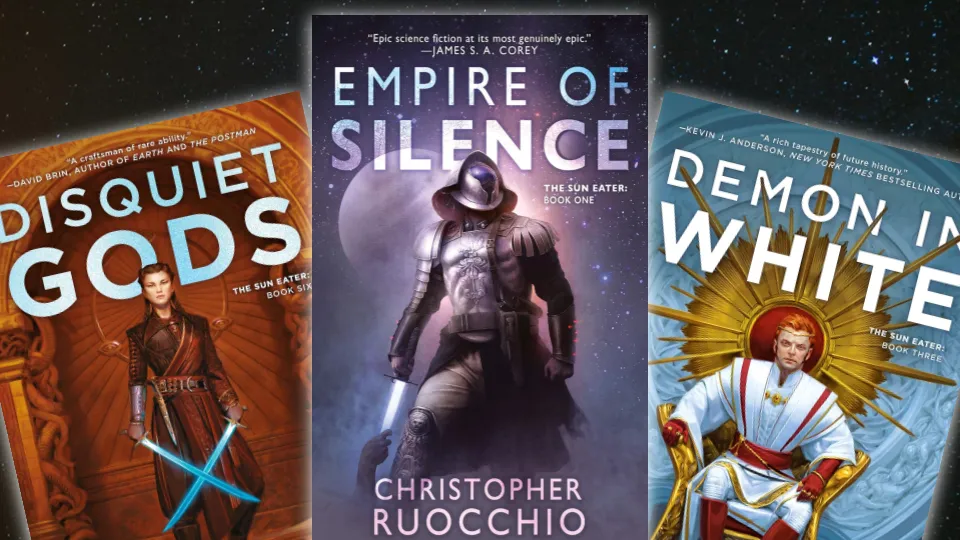
Key Takeaways
- The Sun Eater series consists of seven main novels told through protagonist Hadrian Marlowe's confessional first-person narrative
- The series blends far-future science fiction with Victorian-era social structures and draws from Greek mythology and Arthurian legend
- With a 4.5/5 Goodreads rating and a passionate online community, the series experienced a sales surge following BookTube coverage
Christopher Ruocchio's Sun Eater series tells the story of Hadrian Marlowe, a man who will one day destroy a sun, a planet, and an alien race. Set far in humanity's future, long after Earth was lost in a war against artificial intelligence, the series spans seven main novels and multiple novellas. The complete saga totals more than 1.5 million words.
The world Ruocchio has built is strange and compelling. Humanity has faster-than-light travel and "fugue" technology that suspends aging during long journeys. But society has regressed in other ways. The Sollan Empire and the Terran Chantry, a powerful religious institution, share control over the known universe. Nobles use gene-editing to extend their lifespans, but they need imperial approval to have children.
“The Sun Eater is not merely a space opera; it is a confession. It is the story of a man who loved his enemy, and in doing so, condemned his own species.”
— Christopher Ruocchio, Author of the Sun Eater series
All seven main novels are written as Hadrian's own account of his life, penned long after the events occurred. From the first pages, readers know where this story ends: with Hadrian destroying a sun. The journey to that moment is what matters.
The Main Series in Order
The core Sun Eater saga follows Hadrian from noble youth to legendary figure. Each book is substantial, and the series rewards patient readers willing to invest in its dense, literary approach to space opera.
1. Empire of Silence
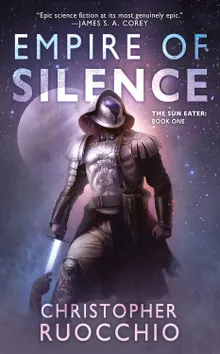
The series opener introduces Hadrian Marlowe, the second son of a noble house. When his father's plans for his future conflict with his own desires, Hadrian's life takes an unexpected turn. He finds himself far from home, stripped of his privilege, and forced to survive in a world he never knew existed. The book establishes the series' confessional tone and introduces the alien Cielcin, humanity's greatest enemy.
2. Howling Dark
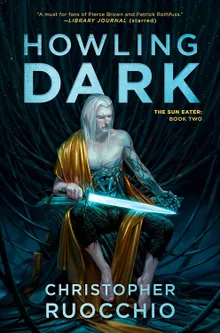
The second novel expands the universe considerably. Hadrian ventures beyond the Empire's borders in search of something that might end the war with the Cielcin. The book deepens the series' exploration of faith, duty, and the costs of violence.
3. Demon in White
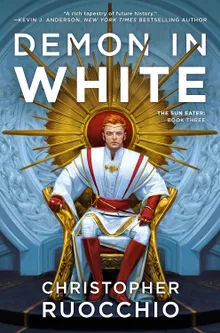
Hadrian returns from his journey to find the war has worsened. His newfound knowledge and abilities make him both an asset and a threat to the Empire's powers. The political machinations of the Sollan court and the Chantry come into sharper focus.
4. Kingdoms of Death
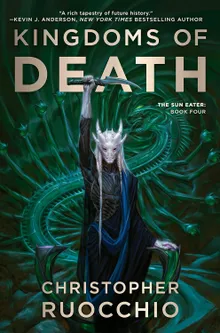
The war against the Cielcin intensifies. Hadrian faces impossible choices as the stakes rise for humanity's survival. This volume pushes the series toward its darker themes, examining what people will sacrifice when extinction looms.
5. Ashes of Man

The penultimate act of Hadrian's story begins. The war has changed him, and he must reckon with who he has become. The book sets up the series' final conflicts while exploring the personal toll of Hadrian's journey.
6. Disquiet Gods

The war reaches its climax. Hadrian confronts the forces that have shaped his life and the galaxy. Long-running plot threads converge as the series approaches its conclusion.
7. Shadows Upon Time

The final novel brings Hadrian's confession to its end. We learn how he became the man who destroyed a sun, and what came after. The series concludes where it began: with an old man writing his history, setting the record straight.
Where the Series Fits in Science Fiction
Readers often compare Sun Eater to Frank Herbert's Dune and Gene Wolfe's The Book of the New Sun. The series shares DNA with both: the political intrigue and galactic scope of Dune, the unreliable narrator and literary prose of Wolfe. Pierce Brown's Red Rising is another common comparison point, particularly for readers who enjoy the blend of futuristic technology and archaic social structures.
“Ruocchio has managed the rarest of feats in modern publishing: creating a series that feels both ancient and futuristic, bridging the gap between Dune and the classics of the genre.”
— Daniel Greene, BookTuber and Critic
Daniel Greene's YouTube coverage helped spark a surge in the series' popularity during the mid-2020s. Sales reportedly increased by roughly 1,000% following the BookTube attention. The series now maintains an active subreddit (r/suneater) and Discord community, where readers discuss the philosophical themes and dense lore.
What to Know Before Starting
Sun Eater is not a quick read. The prose is dense, the worldbuilding complex, and the pacing deliberate. Fans praise the series for its literary ambition and emotional payoff. But newcomers should expect a steep learning curve. The series rewards attention and patience.
The books are filled with references to Greek mythology and Arthurian legend. The Sollan Empire's elaborate titles, like Emperor William the Twenty-Third's string of honorifics, reflect the series' interest in ritual and tradition. Gene-editing, faster-than-light travel, and the Chantry's religious authority all play roles in the story's moral questions.
Hadrian himself is a complicated protagonist. He's a man destined for a role he doesn't want, making decisions he knows future generations will judge. The series tells you from the start that he will destroy a sun. The question is whether you'll understand why by the time you reach that moment.
Publication and Availability
The series has had some publishing transitions. Ruocchio confirmed in late 2022 that the series would continue with Baen Books after uncertainty about the acquisition. All seven main novels are now available.
Novellas and short fiction expand the universe beyond Hadrian's perspective. For first-time readers, starting with the main series in publication order is the standard recommendation. The novellas work best after you've established a foundation in the world.
Logicity's Take
Frequently Asked Questions
How many books are in the Sun Eater series?
The main Sun Eater series consists of seven novels, from Empire of Silence to Shadows Upon Time. Additional novellas and short fiction expand the universe.
Is Sun Eater similar to Dune?
Yes, readers frequently compare Sun Eater to Frank Herbert's Dune for its political intrigue, galactic scope, and philosophical depth. Gene Wolfe's The Book of the New Sun is another common comparison.
What order should I read the Sun Eater books?
Read the main series in publication order: Empire of Silence, Howling Dark, Demon in White, Kingdoms of Death, Ashes of Man, Disquiet Gods, and Shadows Upon Time.
Is Sun Eater finished?
Yes. The seventh and final book, Shadows Upon Time, concludes Hadrian Marlowe's story. Author Christopher Ruocchio has confirmed the saga's completion.
How long is the Sun Eater series?
The seven-novel series totals over 1.5 million words. Each book is substantial, and the series is known for its dense prose and detailed worldbuilding.
More science fiction recommendations for readers who enjoy ambitious series
Need Help Implementing This?
Source: IGN All
Huma Shazia
Senior AI & Tech Writer
اقرأ أيضاً

رأي مغاير: كيف يؤثر اختراق الأمن الداخلي الأميركي على شركاتنا الخاصة؟
في ظل اختراق عقود الأمن الداخلي الأميركي مع شركات خاصة، نناقش تأثير هذا الاختراق على مستقبل الأمن السيبراني. نستعرض الإحصاءات الموثوقة ونناقش كيف يمكن للشركات الخاصة أن تتعامل مع هذا التهديد. استمتع بقراءة هذا التحليل العميق

الإنسان في زمن ما بعد الوجود البشري: نحو نظام للتعايش بين الإنسان والروبوت - Centre for Arab Unity Studies
في هذا المقال، سنناقش كيف يمكن للبشر والروبوتات التعايش في نظام متكامل. سنستعرض التحديات والحلول المحتملة التي تضعها شركات مثل جوجل وأمازون. كما سنلقي نظرة على التوقعات المستقبلية وفقًا لتقرير ماكنزي

إطلاق ناسا لمهمة مأهولة إلى القمر: خطوة تاريخية نحو استكشاف الفضاء
تعتبر المهمة الجديدة خطوة هامة نحو استكشاف الفضاء وتطوير التكنولوجيا. سوف تشمل المهمة إرسال رواد فضاء إلى سطح القمر لconducting تجارب علمية. ستسهم هذه المهمة في تطوير فهمنا للفضاء وتحسين التكنولوجيا المستخدمة في استكشاف الفضاء.