Can You Enforce Strong AD Passwords Without User Backlash?

Key Takeaways
- Long passphrases are easier to remember and harder to crack than complex short passwords
- Blocking known compromised passwords at creation prevents breaches before they happen
- Mandatory password expiration often backfires, leading to predictable incremental changes
The Password Policy Paradox
Every IT team faces the same dilemma with Active Directory passwords. Make the rules too weak, and you're an easy target. Make them too strict, and users start writing passwords on sticky notes, reusing them across systems, or just tacking "!" onto last month's version.
The numbers are sobering. According to the Verizon Data Breach Investigations Report, 44.7% of all data breaches involve stolen credentials. That makes password policy one of the highest-leverage security decisions an organization can make.
Traditional complexity rules (special characters, numbers, mixed case) create a false sense of security. When forced to meet these requirements, users default to predictable patterns like "Password!2026." The rules technically pass muster but offer little real protection.
Why Passphrases Beat Complex Passwords
Modern security guidance from NIST recommends prioritizing length over complexity. A 15-character passphrase made of multiple words is both easier to remember and significantly harder to crack than an 8-character string of random symbols.
NIST guidelines allow passwords up to 64 characters. Most users won't approach that limit, but raising the minimum length to 15 characters or more strengthens security while reducing the awkward, error-prone passwords that complexity rules encourage.
“Password strength comes from length... static password controls don't reflect how credentials are actually stolen, reused, and operationalized today.”
— Darren James, Senior Product Manager at Specops Software
The shift makes sense when you consider how attackers actually work. Password cracking tools struggle with length. An 8-character password, even with symbols, can be brute-forced in hours. A 20-character passphrase like "correct-horse-battery-staple" could take centuries.
Blocking Compromised Passwords at Creation
Even with longer passwords, users still gravitate toward weak or common choices. Password spraying attacks exploit this tendency by trying commonly used credentials across many accounts. Blocking weak passwords at the moment of creation is far more effective than trying to remediate after a breach.
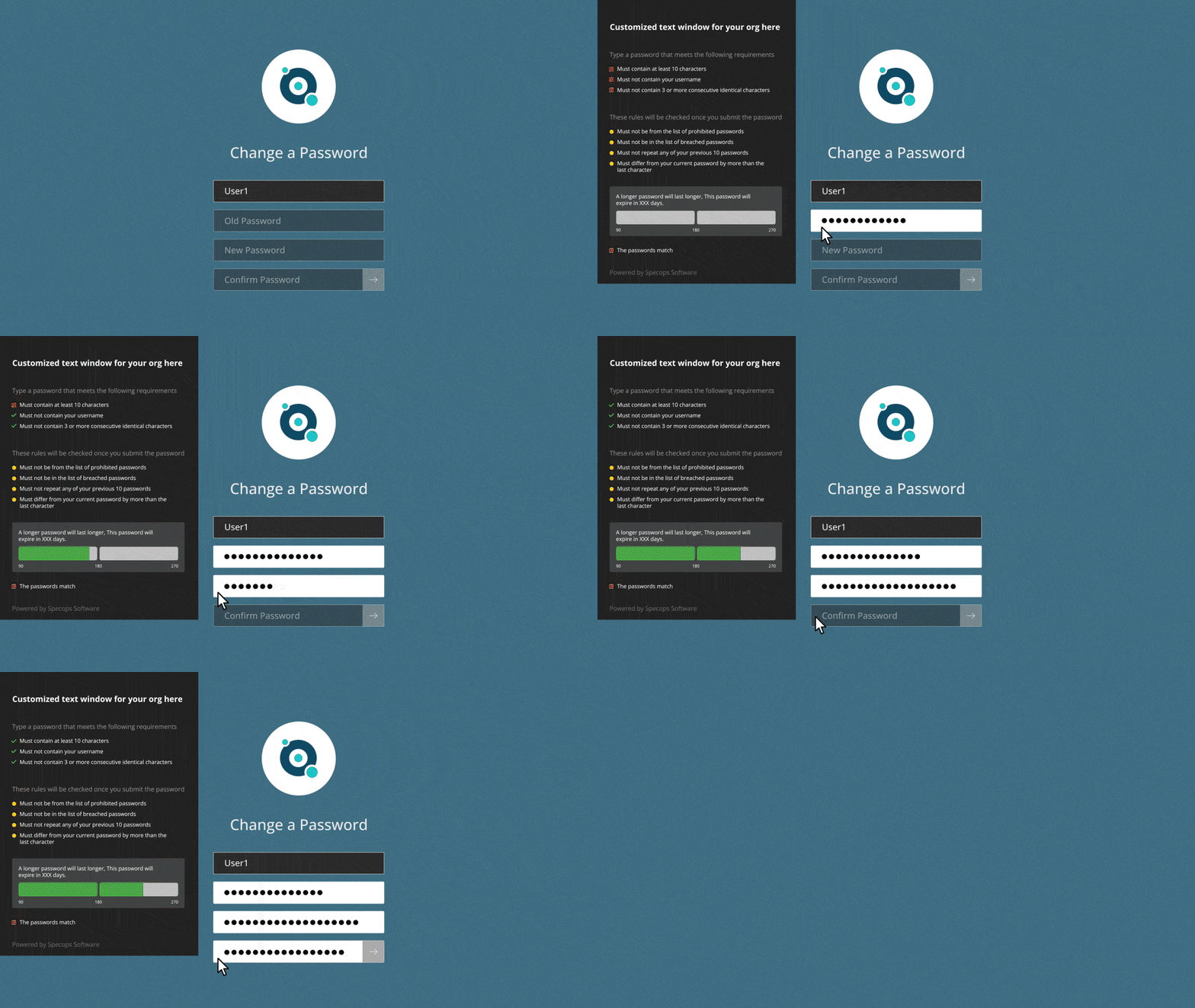
Solutions like Specops Password Policy address this by checking new passwords against databases of known compromised credentials. Their database includes over 5.4 billion unique compromised passwords collected from breach data and malware logs.
- Custom banned word lists tailored to your organization's environment
- Blocking passwords based on usernames, display names, or repeated characters
- Continuous checking against known breach databases
- Preventing incremental changes from previous passwords
The scale of the problem is striking. Analysis of malware logs found 1.1 billion instances of 8-character passwords, making them the most commonly stolen password length. Short passwords aren't just easier to crack. They're also the ones attackers already have.
Rethinking Password Expiration
Mandatory password expiration is one of the most counterproductive legacy policies still in widespread use. When users are required to reset credentials every 30, 60, or 90 days, they make minimal tweaks. Change a digit. Add an exclamation point. The pattern becomes predictable.
Modern guidance suggests moving away from mandatory expiration unless there's evidence of a compromise. A strong, unique password that hasn't been breached is better than a weak one that's technically "fresh."
This doesn't mean expiration should be removed entirely. When a password appears in a breach database, forced rotation makes sense. The key is triggering expiration based on actual risk rather than arbitrary time intervals.
The Helpdesk Problem
Password policies have downstream effects that security teams often overlook. Strict rules generate more helpdesk tickets. Users forget complex passwords. They get locked out. They call IT.
There's also a verification gap. According to research, 48% of organizations lack a formal user verification policy for IT service desk calls. That means password resets, one of the most common helpdesk requests, are also a potential attack vector.
Passphrases reduce both problems. They're easier to remember, so users get locked out less often. And when combined with breach checking, they eliminate the need for frequent forced rotations that drive reset requests.
What the Sysadmin Community Thinks
Discussion on forums like Reddit's r/sysadmin reflects a weary consensus. Administrators are tired of managing forced password rotations. They argue these policies are obsolete and primarily serve to annoy end-users while failing to stop actual credential theft.
The community sentiment heavily favors "length over complexity." Security teams should prioritize long, memorable passwords over short, complex ones that users will inevitably game.
Practical Implementation Steps
- Raise minimum password length to 15 characters or more
- Remove or relax complexity requirements (mixed case, symbols)
- Implement breach database checking for new and existing passwords
- Build custom banned word lists relevant to your organization
- Replace time-based expiration with compromise-triggered rotation
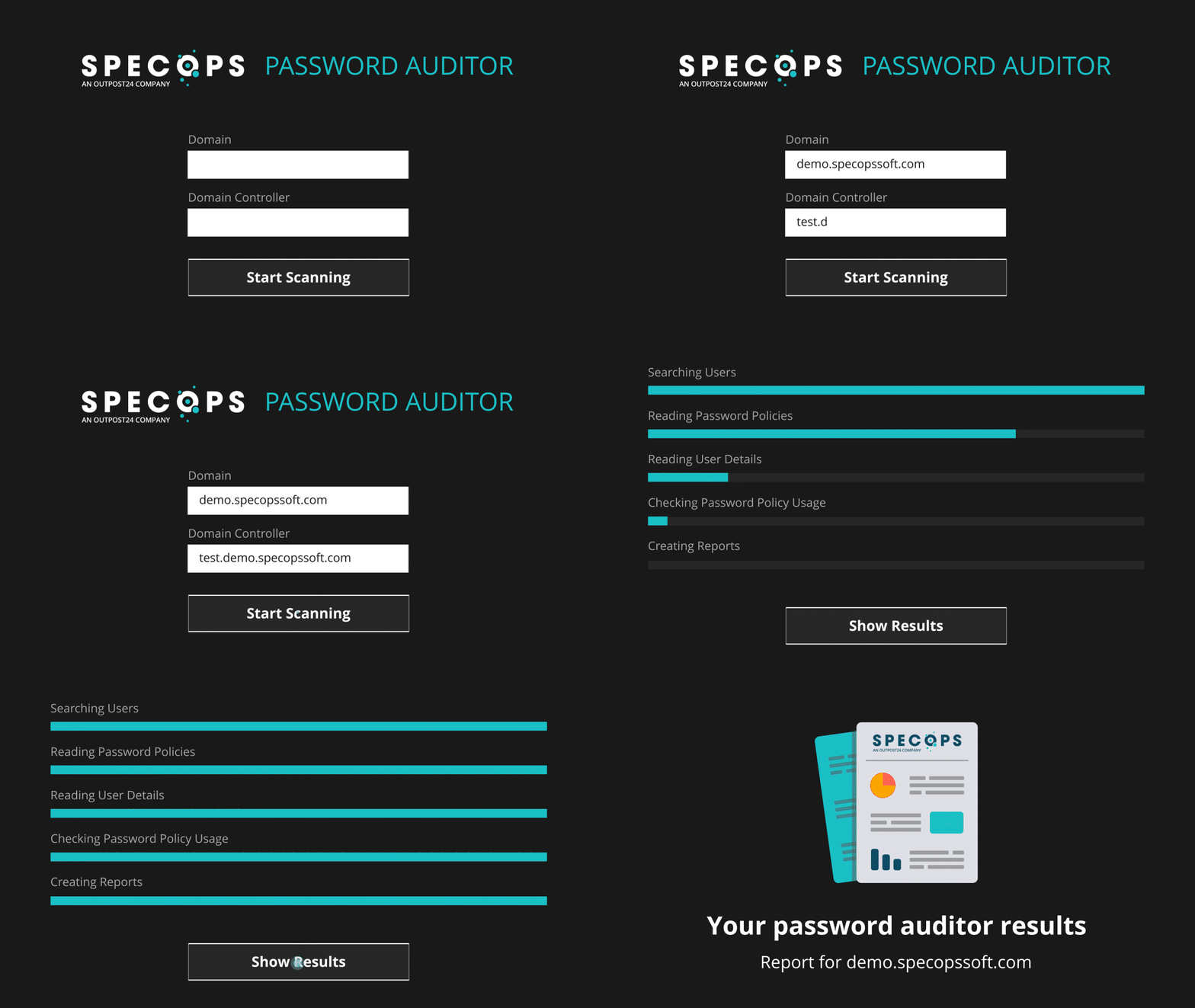
- Audit existing passwords for breach exposure using tools like Specops Password Auditor
Logicity's Take
Frequently Asked Questions
What is the recommended minimum password length for Active Directory?
Modern guidance suggests a minimum of 15 characters. NIST allows up to 64 characters. Longer passphrases are easier to remember and harder to crack than short complex passwords.
Should I still require special characters in passwords?
Current best practice prioritizes length over complexity. Requiring special characters often leads users to predictable patterns like adding "!" at the end, which provides little security benefit.
How often should users be required to change their passwords?
Time-based expiration is falling out of favor. Better practice is to force password changes only when there's evidence of compromise, such as when a password appears in a breach database.
How do breach password databases work?
These databases collect credentials from known data breaches and malware logs. When a user creates or uses a password, it's checked against the database. If it matches a compromised credential, the user is prompted to choose a different password.
What percentage of data breaches involve stolen credentials?
According to the Verizon Data Breach Investigations Report, 44.7% of all data breaches involve stolen credentials, making password security one of the highest-impact areas for security investment.
Need Help Implementing This?
Source: BleepingComputer
Manaal Khan
Tech & Innovation Writer
اقرأ أيضاً

رأي مغاير: كيف يؤثر اختراق الأمن الداخلي الأميركي على شركاتنا الخاصة؟
في ظل اختراق عقود الأمن الداخلي الأميركي مع شركات خاصة، نناقش تأثير هذا الاختراق على مستقبل الأمن السيبراني. نستعرض الإحصاءات الموثوقة ونناقش كيف يمكن للشركات الخاصة أن تتعامل مع هذا التهديد. استمتع بقراءة هذا التحليل العميق

الإنسان في زمن ما بعد الوجود البشري: نحو نظام للتعايش بين الإنسان والروبوت - Centre for Arab Unity Studies
في هذا المقال، سنناقش كيف يمكن للبشر والروبوتات التعايش في نظام متكامل. سنستعرض التحديات والحلول المحتملة التي تضعها شركات مثل جوجل وأمازون. كما سنلقي نظرة على التوقعات المستقبلية وفقًا لتقرير ماكنزي

إطلاق ناسا لمهمة مأهولة إلى القمر: خطوة تاريخية نحو استكشاف الفضاء
تعتبر المهمة الجديدة خطوة هامة نحو استكشاف الفضاء وتطوير التكنولوجيا. سوف تشمل المهمة إرسال رواد فضاء إلى سطح القمر لconducting تجارب علمية. ستسهم هذه المهمة في تطوير فهمنا للفضاء وتحسين التكنولوجيا المستخدمة في استكشاف الفضاء.