Arietid Meteor Shower Peaks June 10: How to See and Hear It

Key Takeaways
- The Arietids peak around June 10, 2026, with a 45-60 minute viewing window before sunrise
- Meteors appear to shoot upward from the eastern horizon, not fall from above
- You can detect Arietids using an FM radio tuned to a distant static frequency
Most meteor showers demand a midnight vigil under dark skies. The Arietids flip that script. Active from May 22 to July 3, this shower peaks around the mornings of June 10, 2026, according to Earth Sky. The catch: the radiant point sits so close to the sun that standard nighttime viewing is impossible.
That proximity to the sun makes the Arietids the strongest daytime meteor shower of the year. At peak, estimates suggest a Zenithal Hourly Rate of 60 to 200 meteors per hour. Most of those are invisible to the naked eye. But with the right timing or a basic radio setup, you can still experience them.
The 45-Minute Window
Visual observation of the Arietids requires precise timing. You have roughly 45 to 60 minutes before sunrise to catch them. Any later, and the sun washes them out completely.
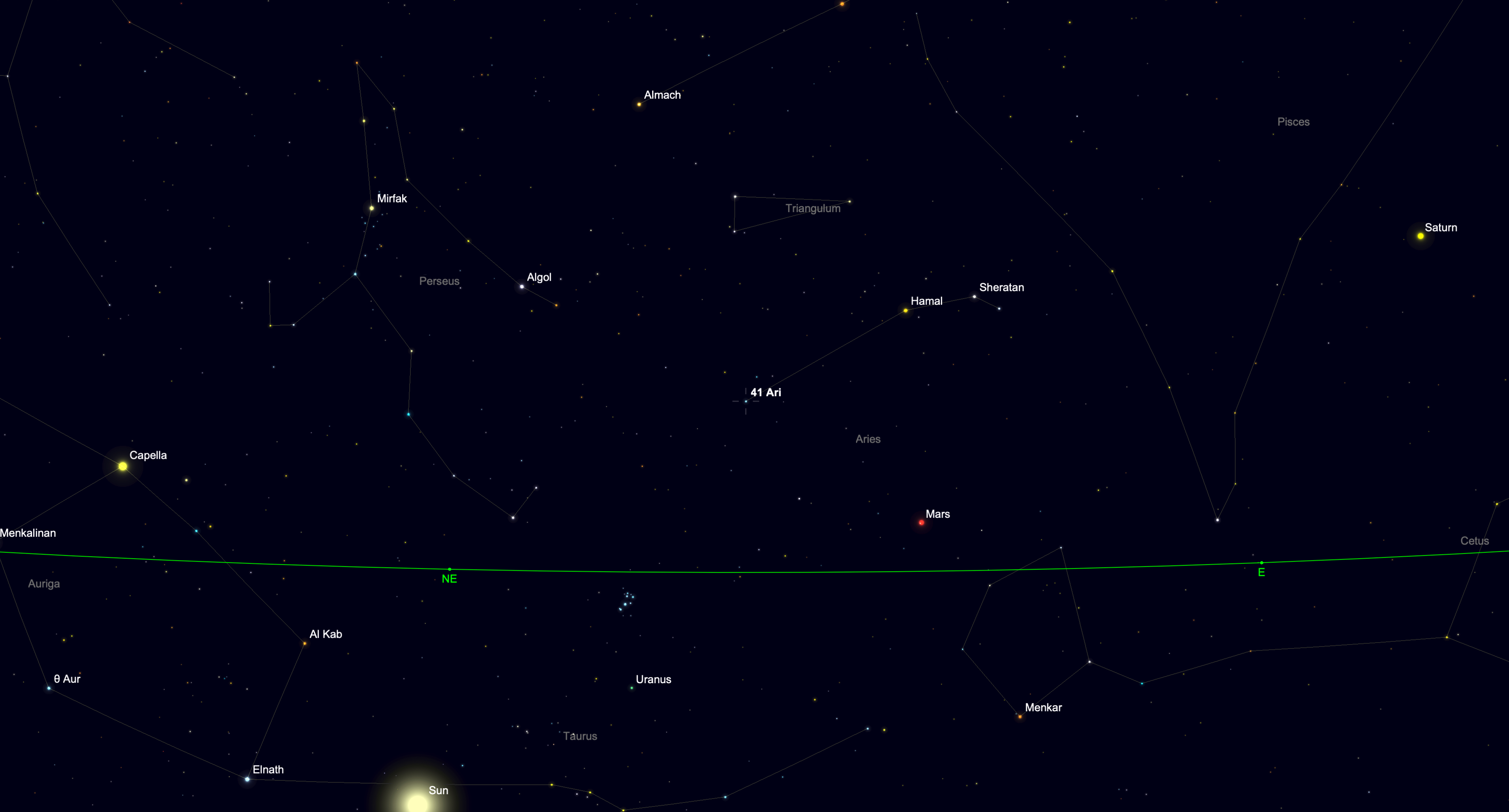
Do not look for these meteors at midnight. Instead, face the eastern horizon just as the earliest hint of dawn touches the sky. The radiant point lies near the star 41 Arietis (Bharani) in the constellation Aries. Because this radiant hugs the horizon at viewing time, the meteors behave differently than most showers.
Rather than falling from above, Arietid meteors appear to shoot straight up from the horizon. Some skim horizontally across the top of the atmosphere. It's a perspective you rarely see with other showers.
Skip the Binoculars
Put away the binoculars and telescopes. They restrict your field of view too much for meteor watching. More importantly, with the sun lurking just below the horizon, pointing optics eastward risks permanent eye damage if you accidentally catch the sun as it rises.
The best way to observe any meteor shower remains the naked eye. Find a spot with a clear view of the eastern horizon, make yourself comfortable, and watch.
Listen to Meteors With an FM Radio
For those who want to experience the Arietids during full daylight, radio detection offers a solution. When a meteor slams into the upper atmosphere at 39 to 42 kilometers per second, it vaporizes and leaves behind a column of ionized gas. That ionized trail acts like a temporary mirror for radio signals.
The technique is called forward scatter. Tune an FM radio to a distant frequency that normally delivers only static. Leave it on. When an Arietid streaks across the sky, the ionized trail bounces distant radio signals into your antenna. The result is an eerie burst of music or voice cutting through the static, lasting just a moment before fading.
On astronomy and amateur radio communities like r/astronomy and r/amateurradio, enthusiasts share "waterfall" spectrograms captured during the Arietid peak using Software Defined Radios. The hobby combines radio engineering with celestial observation, turning daytime hours into meteor-hunting sessions.
“The Arietids are the strongest daytime meteor shower of the year, but because their radiant point is so close to the Sun, they are virtually invisible to the naked eye. Radio detection is our only window into their true intensity.”
— Staff Astronomer, Meteor Research Institute
What You Need for Radio Detection
- An FM radio receiver with manual tuning
- An antenna (the one built into the radio often works)
- A quiet frequency that normally produces only static
- Patience
No expensive equipment required. The basic setup uses gear many people already own. More advanced hobbyists use Software Defined Radios and spectrogram software to visualize the detections, but a standard FM receiver captures the core experience.
Key Dates and Details
- Shower active: May 22 to July 3, 2026
- Peak: Around June 10, 2026
- Visual window: 45-60 minutes before sunrise
- Radiant: Near 41 Arietis (Bharani) in Aries constellation
- Direction: Face east, look toward the horizon
Logicity's Take
The Arietids remind us that space phenomena don't follow convenient schedules. While most meteor guides assume you'll be stargazing at 2 AM, this shower rewards early risers and radio tinkerers. The FM radio detection method in particular offers a low-cost, genuinely educational entry point into amateur radio astronomy.
Frequently Asked Questions
Why can't you see the Arietid meteor shower at night?
The Arietids' radiant point lies very close to the sun. During nighttime hours, the radiant is below the horizon, so no meteors are visible. The only visual window is the brief pre-dawn period before sunrise washes them out.
What time should I wake up to see the Arietids?
Set your alarm for 45 to 60 minutes before sunrise in your location. This narrow window offers the best chance to see Arietid meteors visually before daylight arrives.
How do you detect meteors with a radio?
Tune an FM radio to a distant frequency that produces static. When a meteor ionizes the upper atmosphere, the plasma trail reflects distant radio signals toward your antenna, creating brief bursts of audio through the static.
How many Arietid meteors can you see per hour?
The estimated Zenithal Hourly Rate is 60 to 200 meteors at peak. However, most are only detectable via radio. Visual counts are much lower due to the daylight conditions.
Do I need a telescope to watch the Arietid meteor shower?
No. Telescopes and binoculars restrict your field of view and are dangerous to use near sunrise. The naked eye is the best tool for meteor watching.
Need Help Implementing This?
Interested in setting up radio meteor detection or planning an observation event? Reach out to the Logicity team for guidance on equipment, software, or connecting with local astronomy groups.
Source: Latest from Space.com
Huma Shazia
Senior AI & Tech Writer
اقرأ أيضاً

رأي مغاير: كيف يؤثر اختراق الأمن الداخلي الأميركي على شركاتنا الخاصة؟
في ظل اختراق عقود الأمن الداخلي الأميركي مع شركات خاصة، نناقش تأثير هذا الاختراق على مستقبل الأمن السيبراني. نستعرض الإحصاءات الموثوقة ونناقش كيف يمكن للشركات الخاصة أن تتعامل مع هذا التهديد. استمتع بقراءة هذا التحليل العميق

الإنسان في زمن ما بعد الوجود البشري: نحو نظام للتعايش بين الإنسان والروبوت - Centre for Arab Unity Studies
في هذا المقال، سنناقش كيف يمكن للبشر والروبوتات التعايش في نظام متكامل. سنستعرض التحديات والحلول المحتملة التي تضعها شركات مثل جوجل وأمازون. كما سنلقي نظرة على التوقعات المستقبلية وفقًا لتقرير ماكنزي

إطلاق ناسا لمهمة مأهولة إلى القمر: خطوة تاريخية نحو استكشاف الفضاء
تعتبر المهمة الجديدة خطوة هامة نحو استكشاف الفضاء وتطوير التكنولوجيا. سوف تشمل المهمة إرسال رواد فضاء إلى سطح القمر لconducting تجارب علمية. ستسهم هذه المهمة في تطوير فهمنا للفضاء وتحسين التكنولوجيا المستخدمة في استكشاف الفضاء.