6 Rules for Designing Futuristic Typography in Film
Key Takeaways
- Eurostile Bold Extended is the go-to font for establishing a movie's futuristic timeframe
- Six consistent design rules appear across decades of sci-fi films: italic slant, angular curves, V-shaped terminals, merged letters, removed segments, and metallic textures
- Major franchises from Blade Runner to Guardians of the Galaxy use variations of these same typographic techniques
Why does text in science fiction movies all look the same? That italic slant. Those angular letterforms. The brushed metal texture. Dave Addey, who runs the typography blog Typeset in the Future, has spent years cataloging this phenomenon. His conclusion: Hollywood follows six unwritten rules when designing text that needs to scream 'THE FUTURE.'
The analysis, originally published in 2016 but recently resurfaced on Hacker News, breaks down exactly how production designers create that unmistakable futuristic look. And once you see the pattern, you can't unsee it.
Start With Eurostile Bold Extended
Before applying any tricks, most futuristic typography starts with a specific font family: Eurostile Bold Extended. This squared-off sans-serif has become the default 'future' typeface in film. It appears in everything from 2001: A Space Odyssey to Moon. But Eurostile alone isn't enough. That's where the six rules come in.
Rule 1: Add an Italic Slant
The first trick is simple. Tilt the text forward. The slant creates a sense of motion, as if the letters are racing toward a distant year. Addey jokes that this makes text look like 'it's stretching towards 2020.' The technique is cheap, easy, and immediately effective.
Rule 2: Mix Curves and Angles
Standard typography maintains consistent stroke shapes. Futuristic typography breaks this rule deliberately. Some parts of letters become more curved. Others become sharply angular. The contrast creates visual tension that reads as 'advanced' or 'alien.'
Rule 3: Add V-Shaped Terminals
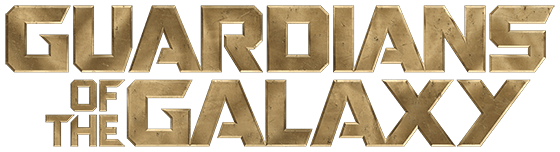
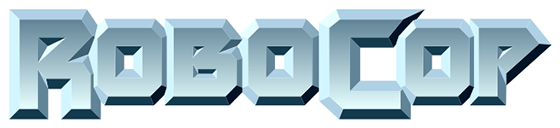
Where standard letters end in flat or rounded terminals, futuristic fonts add sharp V shapes. Addey calls these 'consummate Vs.' They appear at the ends of strokes, inside letterforms, anywhere a designer can sneak them in. The technique shows up prominently in the RoboCop logo, which features some of the most extreme V-shaped terminals in film history.
Rule 4: Merge Letters Together
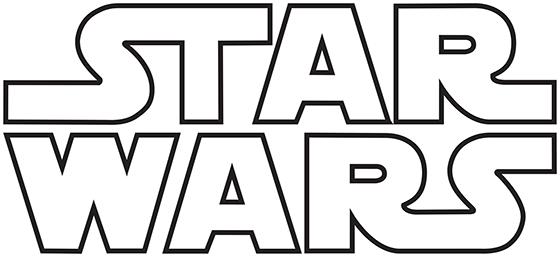
Addey humorously attributes this to 'the devastating Kern Wars of 2067.' In practice, it means combining adjacent letters into single connected forms. Star Wars is the most famous example. The 'A' and 'R' in STAR connect. The 'A' and 'R' in WARS connect. These ligatures create a distinctive silhouette that's instantly recognizable.
Rule 5: Remove Arbitrary Segments
This one seems counterintuitive. Take a letter that's perfectly readable and delete part of it. Remove a horizontal bar. Slice off a corner. Break a stroke. The human brain fills in the gaps, and the resulting letterform looks more stylized and futuristic. It's the typographic equivalent of concept car design: remove elements until you reach the minimum viable shape.
Rule 6: Add Texture, Metal, and Lighting
The final rule wraps everything in a visual package. Apply a brushed metal texture. Add embossing for depth. Include 'moody blue lighting.' Throw in a star field background for good measure. These post-processing effects transform flat typography into something that looks manufactured in an advanced civilization.

How Major Films Apply These Rules
Addey's analysis maps how different franchises combine these techniques. Blade Runner, directed by Ridley Scott in 1982, serves as the 'Ur Example.' It uses nearly every rule and established the template that other films would follow.
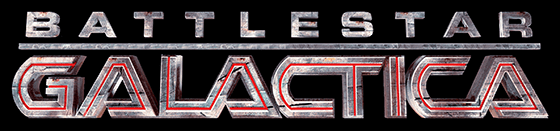
The 2003 Battlestar Galactica miniseries follows 'pretty much every rule to the letter,' adding extruded Eurostile Bold Extended for good measure. Transformers pushes the brushed metal effect to an extreme. Guardians of the Galaxy applies every trick except the italics.
Captain America: The Winter Soldier applies Rules 2 and 3 heavily, with 'some of the best Rule 6 you'll ever see.' Alien vs. Predator goes 'ridiculously italic and metallic.' G.I. Joe: Retaliation uses every trick except the letter merging.

Why This Matters Beyond Movies
These conventions didn't stay in Hollywood. They've spread to tech branding, video games, consumer electronics packaging, and corporate presentations. Any time a company wants to signal 'innovation' or 'forward-thinking,' these typographic shortcuts appear.
Understanding them helps designers and marketers make deliberate choices. Want your brand to feel futuristic? Apply the rules selectively. Want to avoid looking like a sci-fi cliche? Know what patterns to avoid.

Logicity's Take
Frequently Asked Questions
What font do most sci-fi movies use?
Eurostile Bold Extended is the most common base font for futuristic movie typography. It appears in films from 2001: A Space Odyssey to modern Marvel productions.
Why do futuristic fonts have italic slants?
The forward lean creates a sense of motion and progress, suggesting speed toward the future. It's one of the simplest and most effective techniques for making text look 'advanced.'
How do movie designers create the metallic text effect?
They combine brushed metal textures, embossing for depth, moody lighting effects, and often star field backgrounds. These post-processing effects transform flat typography into something that appears manufactured.
Which movie started the futuristic typography trend?
Ridley Scott's Blade Runner (1982) is considered the 'Ur Example' that established most conventions other sci-fi films follow. It combined nearly all six typographic rules that define the genre.
Can these typography rules be applied to brand design?
Yes, but use them selectively. These conventions are so widely recognized that heavy-handed application can make a brand look like a sci-fi cliche rather than genuinely innovative.
Another analysis of design decisions that defined their era
Need Help Implementing This?
Source: Hacker News: Best
Huma Shazia
Senior AI & Tech Writer
اقرأ أيضاً

رأي مغاير: كيف يؤثر اختراق الأمن الداخلي الأميركي على شركاتنا الخاصة؟
في ظل اختراق عقود الأمن الداخلي الأميركي مع شركات خاصة، نناقش تأثير هذا الاختراق على مستقبل الأمن السيبراني. نستعرض الإحصاءات الموثوقة ونناقش كيف يمكن للشركات الخاصة أن تتعامل مع هذا التهديد. استمتع بقراءة هذا التحليل العميق

الإنسان في زمن ما بعد الوجود البشري: نحو نظام للتعايش بين الإنسان والروبوت - Centre for Arab Unity Studies
في هذا المقال، سنناقش كيف يمكن للبشر والروبوتات التعايش في نظام متكامل. سنستعرض التحديات والحلول المحتملة التي تضعها شركات مثل جوجل وأمازون. كما سنلقي نظرة على التوقعات المستقبلية وفقًا لتقرير ماكنزي

إطلاق ناسا لمهمة مأهولة إلى القمر: خطوة تاريخية نحو استكشاف الفضاء
تعتبر المهمة الجديدة خطوة هامة نحو استكشاف الفضاء وتطوير التكنولوجيا. سوف تشمل المهمة إرسال رواد فضاء إلى سطح القمر لconducting تجارب علمية. ستسهم هذه المهمة في تطوير فهمنا للفضاء وتحسين التكنولوجيا المستخدمة في استكشاف الفضاء.