4 Open-Source Projects That Have Been Unfinished for 20+ Years
Key Takeaways
- ReactOS has been trying to clone Windows NT for 27 years and still can't run modern browsers properly
- GNU Hurd's microkernel architecture created debugging problems that were never solved despite 35+ years of work
- These projects survive as technical demonstrations and passion projects rather than mainstream alternatives
The Paradox of Perpetual Development
Open source has given us Linux, Firefox, and countless tools that power the modern internet. But for every success story, there are projects that have been running for decades without ever shipping a stable release. Some of these efforts started in the 1990s. They're still going. They're still not done.
The pattern is consistent: big ambitions, a small developer base, and a target that keeps moving. These projects boot to a desktop but can't open a modern website. They've been in beta so long the word has lost meaning. One has been in development since the early 90s without shipping a stable kernel.
ReactOS: A Windows Clone Stuck in 2001
ReactOS started in 1998 with a clear goal: rebuild Windows NT from scratch to run Windows applications and drivers without using a single line of Microsoft code. It's been at it for 27 years now.
The setup feels like a trip back to 2001. The blue text-based installer mirrors the Windows XP setup screen. The desktop that follows looks like something you'd boot on a Pentium 4. The system runs many legacy 32-bit Windows applications and includes a built-in Application Manager that works like a basic app store for compatible software.
In practice, older apps like Office XP, 7-Zip, and Firefox run with varying degrees of success. Modern apps that need newer libraries crash or refuse to launch. Browsing the modern web is the bigger problem. Chrome struggles. Most sites detect the outdated browser and refuse to load properly.
ReactOS isn't a daily driver, and it probably never will be. But it proves that recreating Windows from scratch is possible, even if the finish line keeps moving every time Microsoft ships a new version.
GNU Hurd: 35 Years Without a Stable Kernel
GNU Hurd holds the unofficial record for the longest-running unfinished software project in history. Development started in 1990. That's 35 years ago. The project aimed to build the kernel for the GNU operating system, which Richard Stallman envisioned as a free alternative to Unix.
The problem was architectural. Hurd uses a microkernel design where the kernel is broken into independent servers. This approach promised modularity and security. It also created performance bottlenecks and debugging nightmares that were never fully solved.
“The design is technically complex; breaking a kernel into independent servers created performance and debugging hurdles that were never fully overcome.”
— Industry analysts on GNU Hurd's challenges
The GNU project eventually adopted Linux as its practical kernel. Hurd development continues, but with minimal activity. The codebase contains over 200,000 lines, representing massive complexity that a small volunteer team can't realistically maintain or improve.
Haiku OS: Finishing What BeOS Started
Haiku OS aims to recreate BeOS, a multimedia-focused operating system that Apple nearly bought in the 1990s before choosing NeXT instead. BeOS was known for its responsiveness and clean design. When Be Inc. folded in 2001, Haiku picked up the torch.
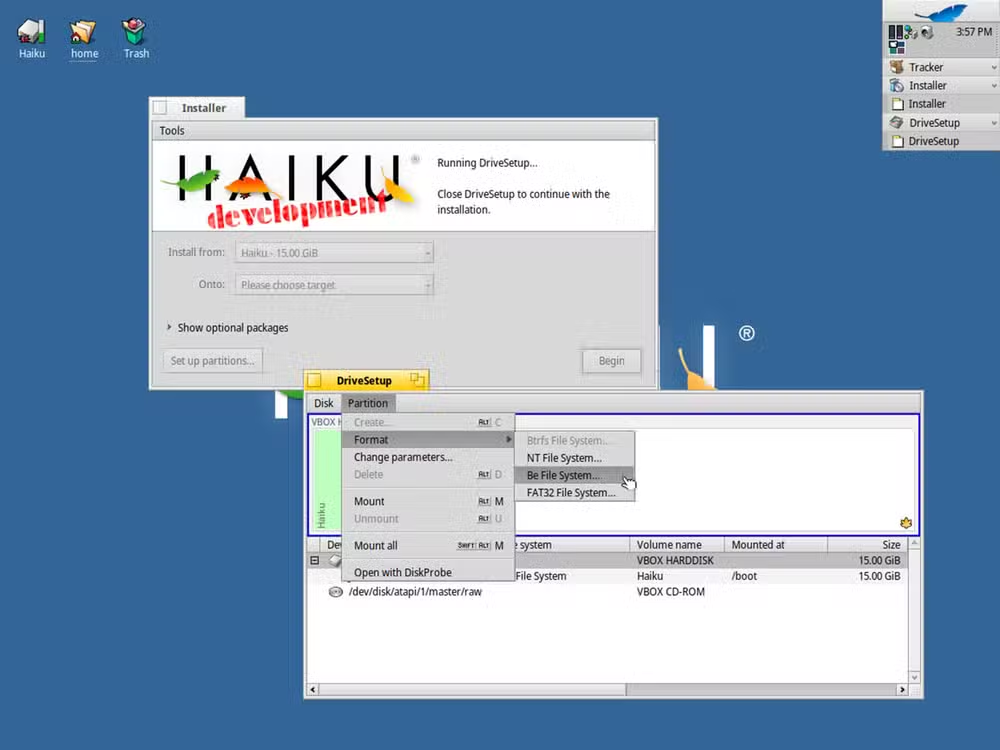
Twenty-plus years later, Haiku runs. It boots quickly. The interface is snappy. It's faster than Windows in many respects. But it remains in beta, with limited hardware support and a software library that can't compete with mainstream operating systems.
“It is a 'finished' vision of a 90s OS, but an 'unfinished' modern desktop.”
— Tech community consensus on Haiku OS
Haiku works best as a nostalgia trip or a technical curiosity. Its developers have built something functional, but the world moved on while they were building it.
Why These Projects Never Finish
The common thread is a mismatch between scope and resources. Building an operating system or kernel requires sustained effort from dozens or hundreds of skilled developers. These projects rely on volunteers who contribute in their spare time.
- Moving targets: Windows and macOS ship updates constantly, so clones fall further behind with each release
- Limited contributors: ReactOS has a handful of active developers tackling a project that Microsoft employs thousands to maintain
- Architectural debt: Decisions made in the 1990s become harder to change as codebases grow
- Ecosystem gaps: Even if the OS works, users need applications, drivers, and hardware support
Reddit communities like r/opensource frequently debate whether these projects are failures or monuments to dedication. The consensus leans toward respect for the developers' persistence, paired with acknowledgement that without a massive influx of contributors, they'll likely remain in their current state indefinitely.
The Value of Unfinished Work
These projects aren't worthless. ReactOS proves that Windows NT can be reverse-engineered. Haiku shows that alternative operating system designs are viable. GNU Hurd explored microkernel concepts that influenced other systems.
They function as digital museums, preserving computing history and demonstrating what's technically possible. For hobbyists and researchers, they offer playgrounds for experimentation that commercial software doesn't allow.
But as practical alternatives to Windows, macOS, or Linux? Not really. And after 20, 27, or 35 years, that probably won't change.
Logicity's Take
Understanding Linux documentation helps when exploring alternative operating systems
Another example of passion projects that prioritize specific use cases over mainstream appeal
Frequently Asked Questions
Can ReactOS actually run Windows software?
ReactOS runs many legacy 32-bit Windows applications like Office XP and 7-Zip. Modern apps that require newer Windows libraries typically crash or refuse to launch.
Why did GNU Hurd never finish?
Hurd's microkernel architecture created performance and debugging problems that the small volunteer team couldn't solve. Linux filled the practical need for a free Unix kernel, reducing pressure to complete Hurd.
Is Haiku OS usable as a daily operating system?
Haiku boots quickly and runs smoothly, but it remains in beta with limited hardware support and a small software library. It works better as a technical curiosity than a primary OS.
Are these projects still being developed?
Yes. ReactOS, Haiku, and even GNU Hurd still receive commits and occasional releases. Progress is slow due to small developer pools, but development continues.
What can we learn from these long-running projects?
They demonstrate that scope must match resources. Building an operating system requires sustained effort from many developers. Volunteer projects tackling commercial-scale challenges often remain perpetually unfinished.
Need Help Implementing This?
Source: MakeUseOf
Manaal Khan
Tech & Innovation Writer
اقرأ أيضاً

رأي مغاير: كيف يؤثر اختراق الأمن الداخلي الأميركي على شركاتنا الخاصة؟
في ظل اختراق عقود الأمن الداخلي الأميركي مع شركات خاصة، نناقش تأثير هذا الاختراق على مستقبل الأمن السيبراني. نستعرض الإحصاءات الموثوقة ونناقش كيف يمكن للشركات الخاصة أن تتعامل مع هذا التهديد. استمتع بقراءة هذا التحليل العميق

الإنسان في زمن ما بعد الوجود البشري: نحو نظام للتعايش بين الإنسان والروبوت - Centre for Arab Unity Studies
في هذا المقال، سنناقش كيف يمكن للبشر والروبوتات التعايش في نظام متكامل. سنستعرض التحديات والحلول المحتملة التي تضعها شركات مثل جوجل وأمازون. كما سنلقي نظرة على التوقعات المستقبلية وفقًا لتقرير ماكنزي

إطلاق ناسا لمهمة مأهولة إلى القمر: خطوة تاريخية نحو استكشاف الفضاء
تعتبر المهمة الجديدة خطوة هامة نحو استكشاف الفضاء وتطوير التكنولوجيا. سوف تشمل المهمة إرسال رواد فضاء إلى سطح القمر لconducting تجارب علمية. ستسهم هذه المهمة في تطوير فهمنا للفضاء وتحسين التكنولوجيا المستخدمة في استكشاف الفضاء.