3 Linux Distros That Bridge the Gap After Mint
Key Takeaways
- Fedora KDE offers a familiar Windows-style layout with more customization than Mint's Cinnamon
- Fedora releases every six months with cutting-edge packages while maintaining stability
- Proprietary drivers and codecs require extra setup on Fedora due to its open-source focus
Linux Mint works well for beginners. It's stable, familiar, and stays out of your way. But after a few months, you might notice the older packages, the limited customization, or the feeling that there's more to explore. That's when distro-hopping starts to look appealing.
The challenge is finding a distribution that adds flexibility without demanding hours of configuration. You want newer software and more control, but you don't want to compile your own kernel just to get Wi-Fi working.
Three distributions fit this middle ground well. They're more current than Mint, more customizable, and still usable out of the box.
Fedora KDE: The General-Purpose Upgrade
Fedora is the obvious first recommendation for anyone leaving Mint. It's backed by Red Hat, ships with recent packages, and goes through serious testing before each release. The distribution sits in a sweet spot: cutting-edge enough to feel modern, stable enough for daily work.
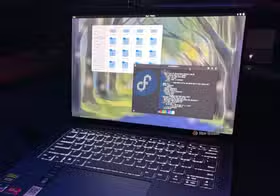
The default Fedora install uses GNOME, which can feel like a lateral move from Mint's Cinnamon desktop. Both work fine, but they're different philosophies. If you want something closer to what you know, grab the KDE Spin instead.
KDE Plasma keeps the traditional Windows-style layout: taskbar at the bottom, application menu in the corner, system tray on the right. But it adds layers of customization that Cinnamon doesn't match. You can tweak panel layouts, window behaviors, keyboard shortcuts, and visual themes without touching config files.
Why Fedora Feels More Current
New Fedora releases arrive roughly every six months. Each one brings updated packages across the system. Mint, by contrast, follows Ubuntu's LTS schedule, which prioritizes stability over freshness. That's fine if you just need a browser and an office suite. It's limiting if you want the latest version of development tools, creative software, or system utilities.
Fedora also serves as a testing ground for technologies that eventually reach other distributions. Wayland, PipeWire, and Btrfs all saw early adoption on Fedora before becoming standard elsewhere.
The Open-Source Tradeoff
Fedora ships strictly with open-source software. That's a principled choice, but it means proprietary drivers and media codecs aren't included by default. NVIDIA users need to add RPM Fusion repositories and install drivers manually. Anyone who wants to play MP3 files or watch certain video formats needs to install codec packages.
This isn't difficult. A few terminal commands or a settings toggle handles it. But if you're coming from Mint, where these things just work, it's a small adjustment.
- KDE Spin provides a familiar desktop layout with deep customization options
- Six-month release cycle keeps packages current
- Proprietary drivers require manual installation via RPM Fusion
- Strong community and documentation for troubleshooting
Beyond the Default: Spins and Window Managers
Fedora offers official spins for most major desktop environments. If KDE doesn't appeal, you can grab versions with XFCE, LXQt, MATE, or others. Each spin is a full Fedora system with a different interface.
For users ready to go further, Fedora also supports window managers like i3, Sway, or Hyprland. These replace the traditional desktop with keyboard-driven, tiling interfaces. They're not beginner-friendly, but they're a natural next step for intermediate users who want maximum control over their workflow.
Logicity's Take
What Makes a Good Intermediate Distro
The best intermediate distributions share a few traits. They ship with recent packages but don't require constant maintenance. They offer customization without demanding it. They have active communities that can help when something breaks.
Fedora checks all these boxes. It's also a gateway to understanding how enterprise Linux works, since Red Hat Enterprise Linux shares its DNA. That's useful context if you ever manage servers or work with cloud infrastructure.
Another practical project for getting more from your existing hardware
When to Stay on Mint
Not everyone needs to switch. If Mint does what you need, there's no reason to add complexity. Distro-hopping for its own sake wastes time. But if you've hit the limits of what Mint offers, or if you're curious about what else Linux can do, Fedora is a solid next step.
The learning curve is gentle. Most things work similarly. You'll spend a few hours setting up proprietary software, and then you'll have a system that feels more powerful and more yours.
Frequently Asked Questions
Is Fedora harder to use than Linux Mint?
Slightly. The main difference is that proprietary drivers and codecs need manual installation. Day-to-day use feels similar, especially with the KDE Spin.
How often does Fedora release new versions?
Roughly every six months. Each version receives about 13 months of support, so you have time to upgrade without rushing.
Can I use Fedora for gaming?
Yes. Steam and other gaming platforms work well, though NVIDIA users need to install proprietary drivers from RPM Fusion first.
Should I use Fedora Workstation or the KDE Spin?
If you're coming from Linux Mint's Cinnamon desktop, the KDE Spin will feel more familiar. GNOME (Fedora Workstation's default) uses a different design philosophy.
Need Help Implementing This?
Source: How-To Geek
Manaal Khan
Tech & Innovation Writer
اقرأ أيضاً

رأي مغاير: كيف يؤثر اختراق الأمن الداخلي الأميركي على شركاتنا الخاصة؟
في ظل اختراق عقود الأمن الداخلي الأميركي مع شركات خاصة، نناقش تأثير هذا الاختراق على مستقبل الأمن السيبراني. نستعرض الإحصاءات الموثوقة ونناقش كيف يمكن للشركات الخاصة أن تتعامل مع هذا التهديد. استمتع بقراءة هذا التحليل العميق

الإنسان في زمن ما بعد الوجود البشري: نحو نظام للتعايش بين الإنسان والروبوت - Centre for Arab Unity Studies
في هذا المقال، سنناقش كيف يمكن للبشر والروبوتات التعايش في نظام متكامل. سنستعرض التحديات والحلول المحتملة التي تضعها شركات مثل جوجل وأمازون. كما سنلقي نظرة على التوقعات المستقبلية وفقًا لتقرير ماكنزي

إطلاق ناسا لمهمة مأهولة إلى القمر: خطوة تاريخية نحو استكشاف الفضاء
تعتبر المهمة الجديدة خطوة هامة نحو استكشاف الفضاء وتطوير التكنولوجيا. سوف تشمل المهمة إرسال رواد فضاء إلى سطح القمر لconducting تجارب علمية. ستسهم هذه المهمة في تطوير فهمنا للفضاء وتحسين التكنولوجيا المستخدمة في استكشاف الفضاء.